
Last updated November 2, 2026
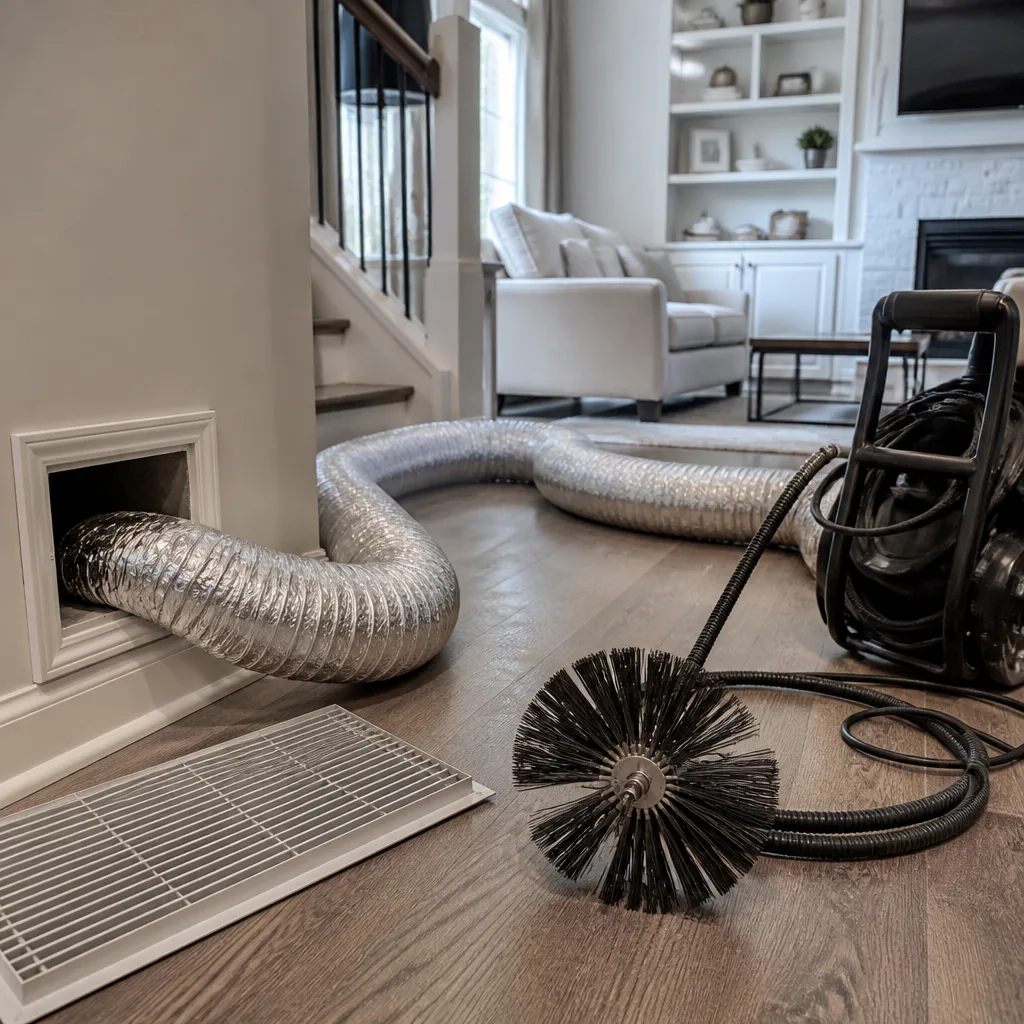 Whole-home duct cleaning
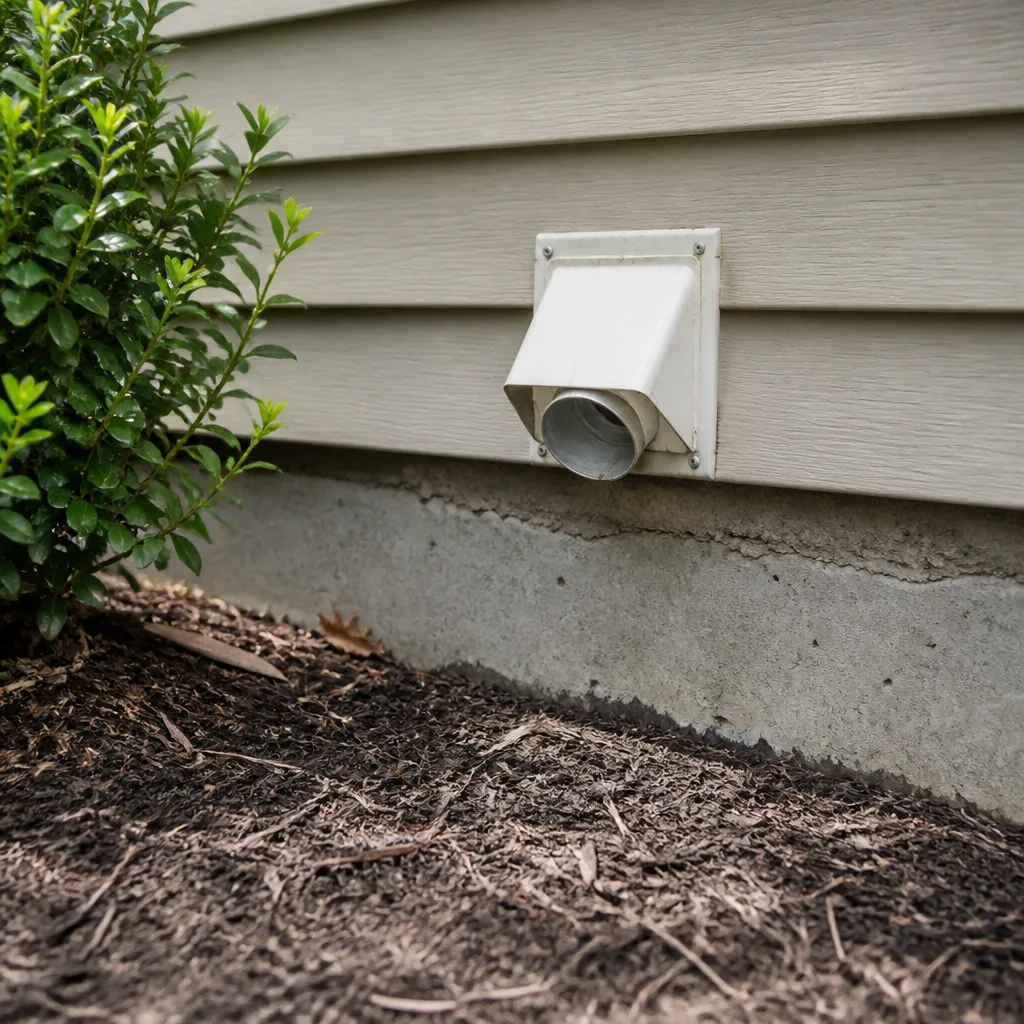 Dryer vent cleaning
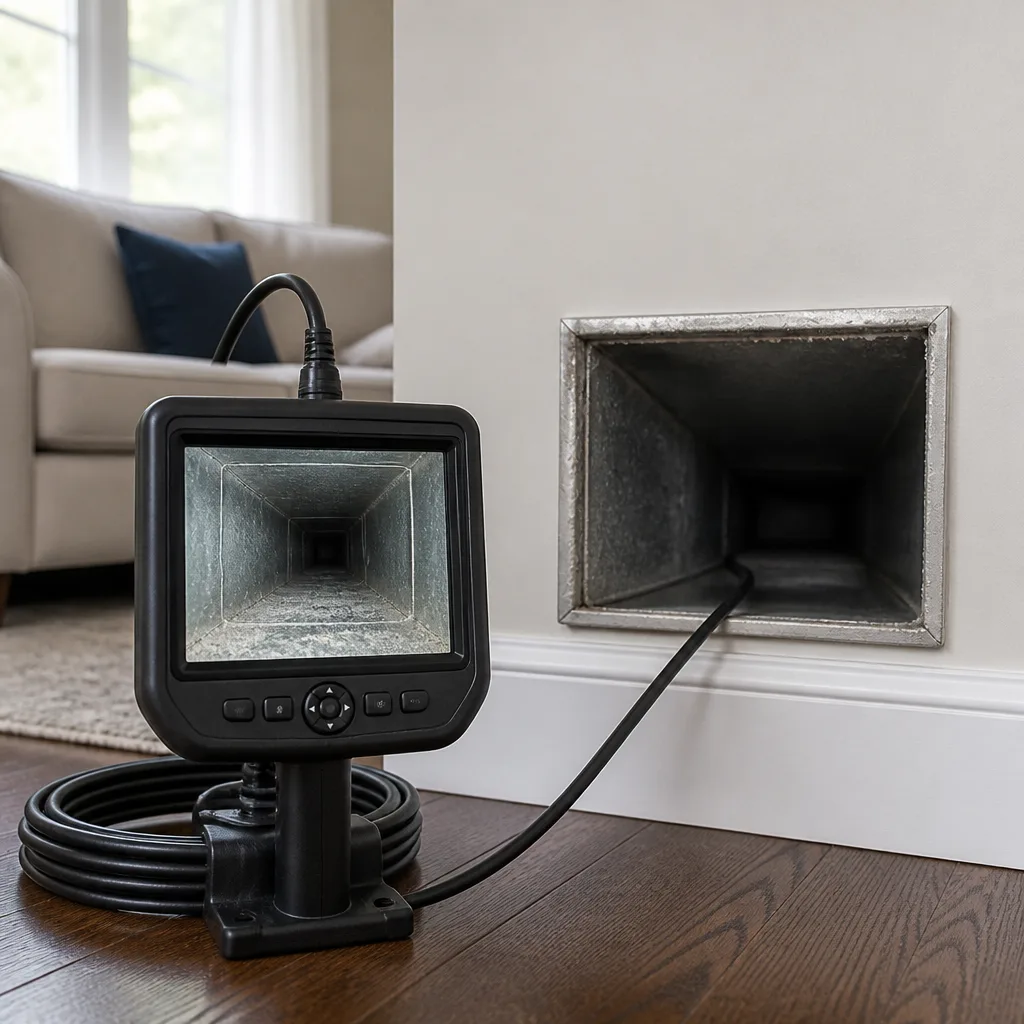 Camera inspection
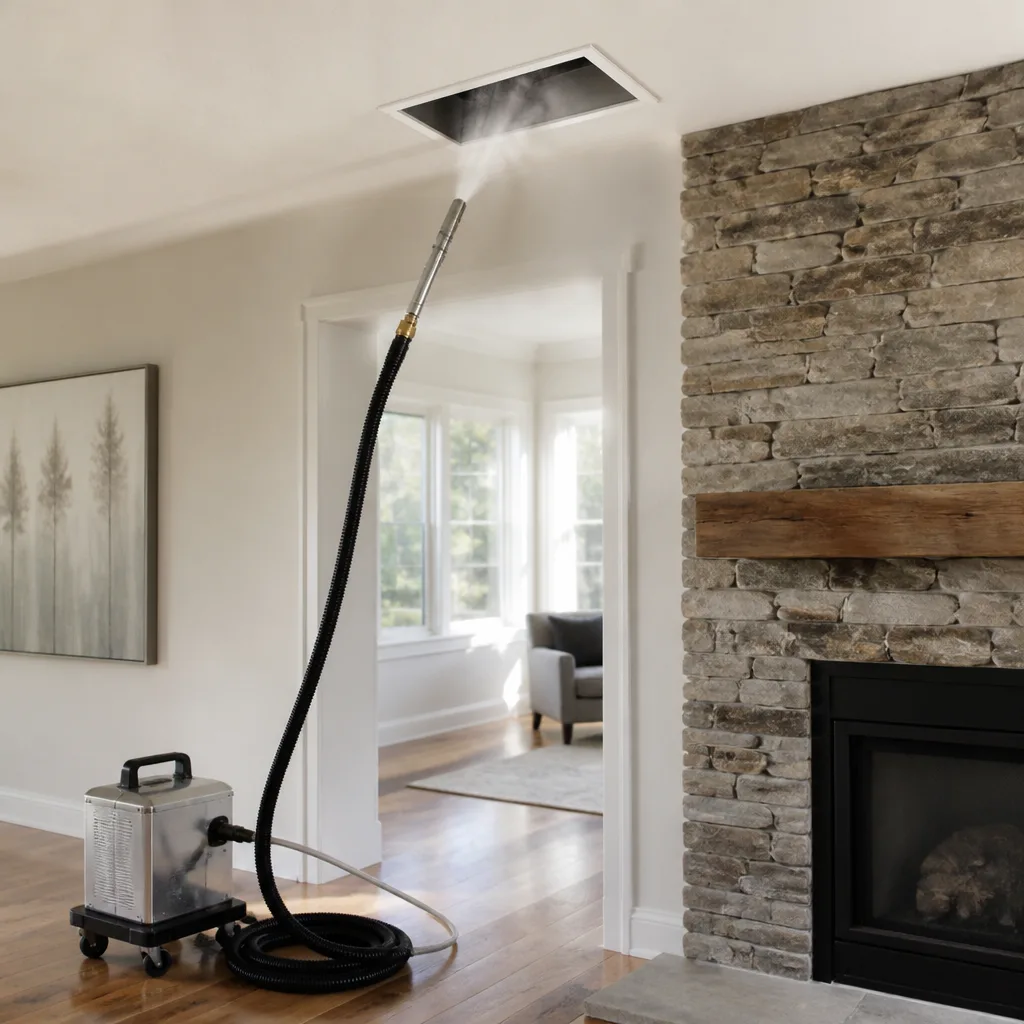 Sanitizing & deodorizing
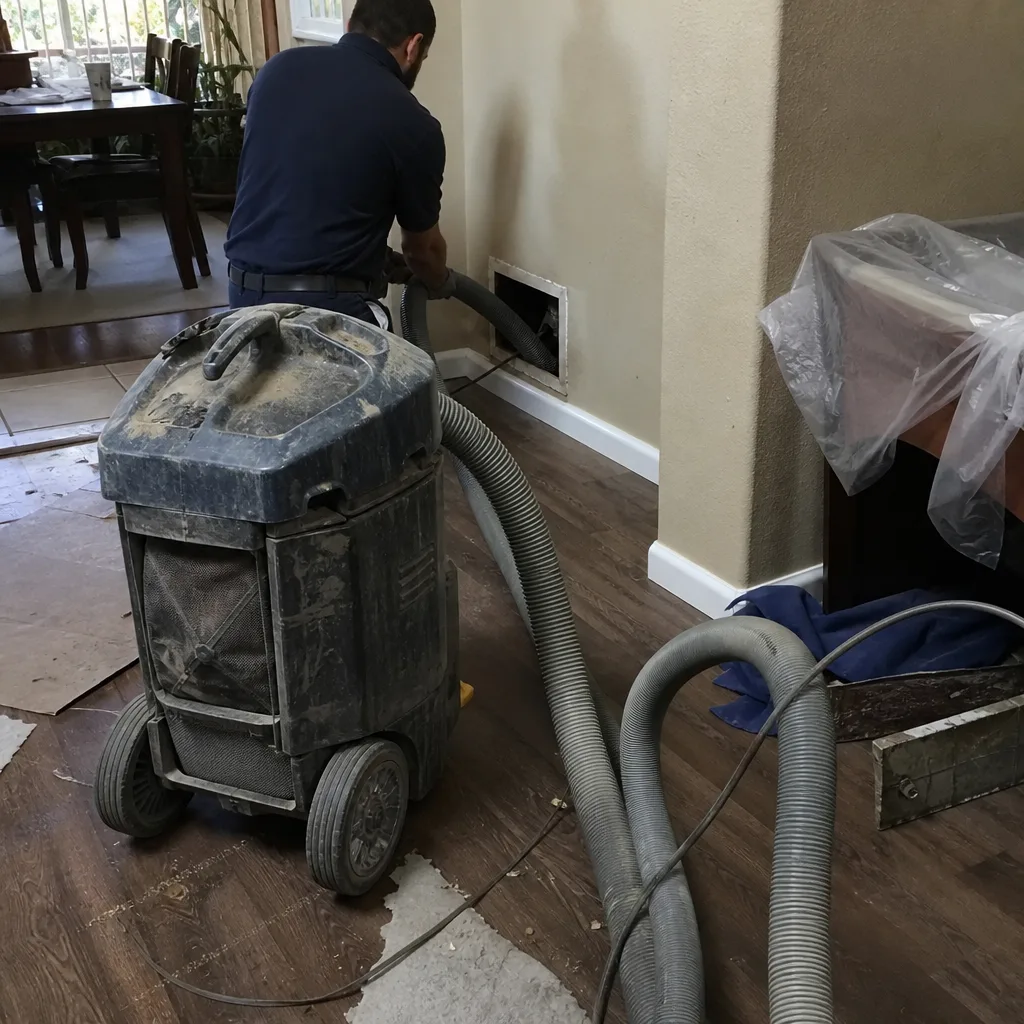
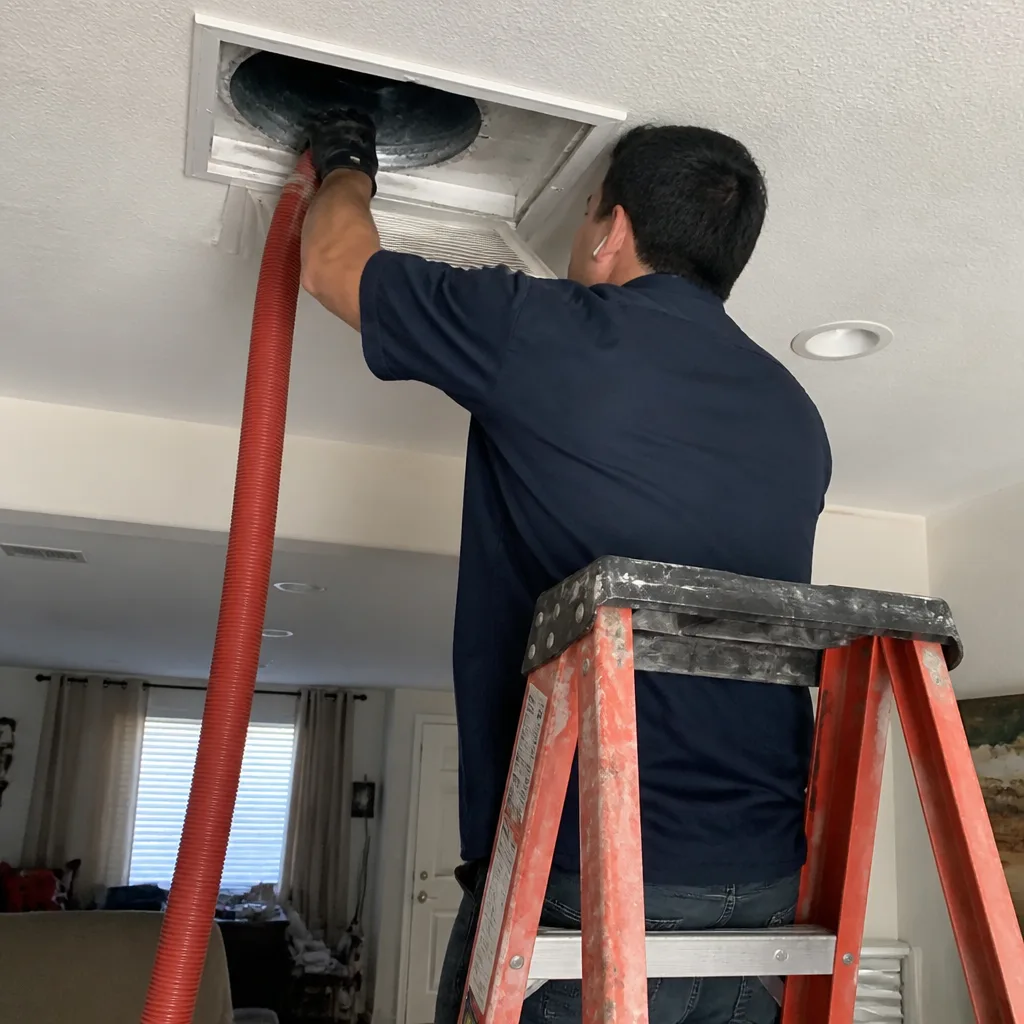
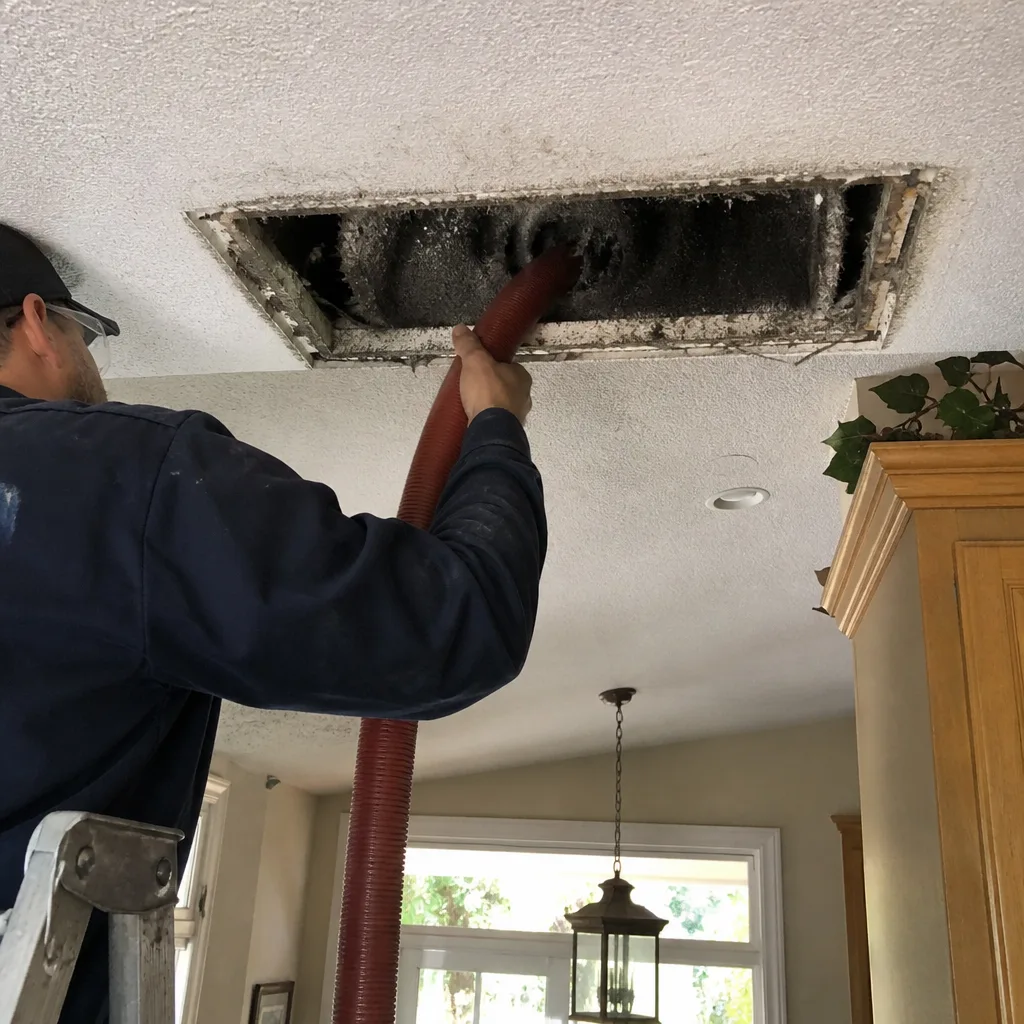
Whole-system duct and dryer vent check with before-and-after photos - you see exactly what came out of your vents
That "$99 whole-house special" is a bait ad - the real number appears once they are in your hallway, or the "clean" is a shop-vac at the register. We photograph the inside of your ducts before and after instead.
Air Duct Cleaning Cost Breakdown: The Chula Vista Homeowner’s Reference for 2026
Here’s a number that wakes people up: the average Chula Vista home circulates roughly 1.5 million cubic feet of air through its ductwork every single day, yet most homeowners couldn’t tell you what a fair price to clean that system actually is. That knowledge gap is precisely what the $99 specials exploit. This guide lays out, in plain terms, what full-system our Air Duct Cleaning services actually cost in Chula Vista in 2026, what each line item buys you, and how to spot the difference between a real cleaning and a truck-roll upsell operation.
Styles & brands we work with
- Whole-home duct cleaning
- Dryer vent cleaning
- Camera inspection
- Sanitizing & deodorizing
Quick Answer
A legitimate full-system air duct cleaning in Chula Vista costs between $450 and $850 for most single-family homes in 2026, depending on home size, duct configuration, and contamination level. Anything priced below $300 is mathematically incapable of covering the labor, equipment, and time a real cleaning requires. The $99 specials you see advertised are loss-leader bait designed to get a technician into your home where the upsell begins.
Table of Contents
- What Actually Drives the Cost of Air Duct Cleaning in Chula Vista
- The Real Line-Item Breakdown of a Full-System Cleaning
- What You Get at Every Price Point: $99 vs. $450 vs. $800
- The Per-Vent Pricing Problem: Why Cheap Structures Produce Bad Outcomes
- Legitimate Findings-Based Add-Ons vs. Universal Upsells
- How Chula Vista’s Climate and Housing Stock Affect Your Price
- How to Get a Useful Quote: Information to Have Ready
- Common Mistakes to Avoid
- When to Call a Professional
- Frequently Asked Questions
- The Bottom Line
What Actually Drives the Cost of Air Duct Cleaning in Chula Vista
Duct cleaning pricing is not arbitrary. Three variables determine almost the entire cost: the physical size and layout of your duct system, the level of contamination inside it, and the equipment and process the company uses. In Chula Vista, where a large share of homes were built during the 1980s and 1990s construction boom, the dominant duct configuration is flex duct running through attic spaces. Flex duct, unlike rigid metal pipe, has an inner plastic liner with spiral ribs that trap dust mechanically rather than passively. Cleaning it properly requires rotary-brush agitation, not just suction.
Home size is the most predictable cost driver, but not because more square footage automatically means more vents. It’s because larger homes in neighborhoods like Eastlake, Rolling Hills Ranch, and Otay Ranch typically have longer duct runs, more branch lines, and larger main trunks. A 3,000-square-foot home in Eastlake might have 200 to 300 linear feet of ducting, while a 1,200-square-foot home in the older west Chula Vista neighborhoods might have 80 to 120 linear feet. That’s a real difference in labor time, and it shows up in the quote.
Contamination level matters more than most homeowners realize. A system that hasn’t been opened in 15 years, in a home with pets and a smoker, might take three hours longer to clean than a system in a two-year-old home with a MERV-13 filter and no animals. When we scope a job, we look for four contamination signals: visible dust accumulation on vent covers, pet hair wrapped around return grilles from homes with shedding dogs or cats, construction debris from a renovation where drywall dust entered the system, and the fine gray dust that accumulates in homes near busy roadways. Chula Vista’s position between I-805 and the 125 freeway, plus prevailing winds from the southwest, means homes in western neighborhoods like Terra Nova and Rancho del Rey often see higher ambient dust levels than coastal homes further south.
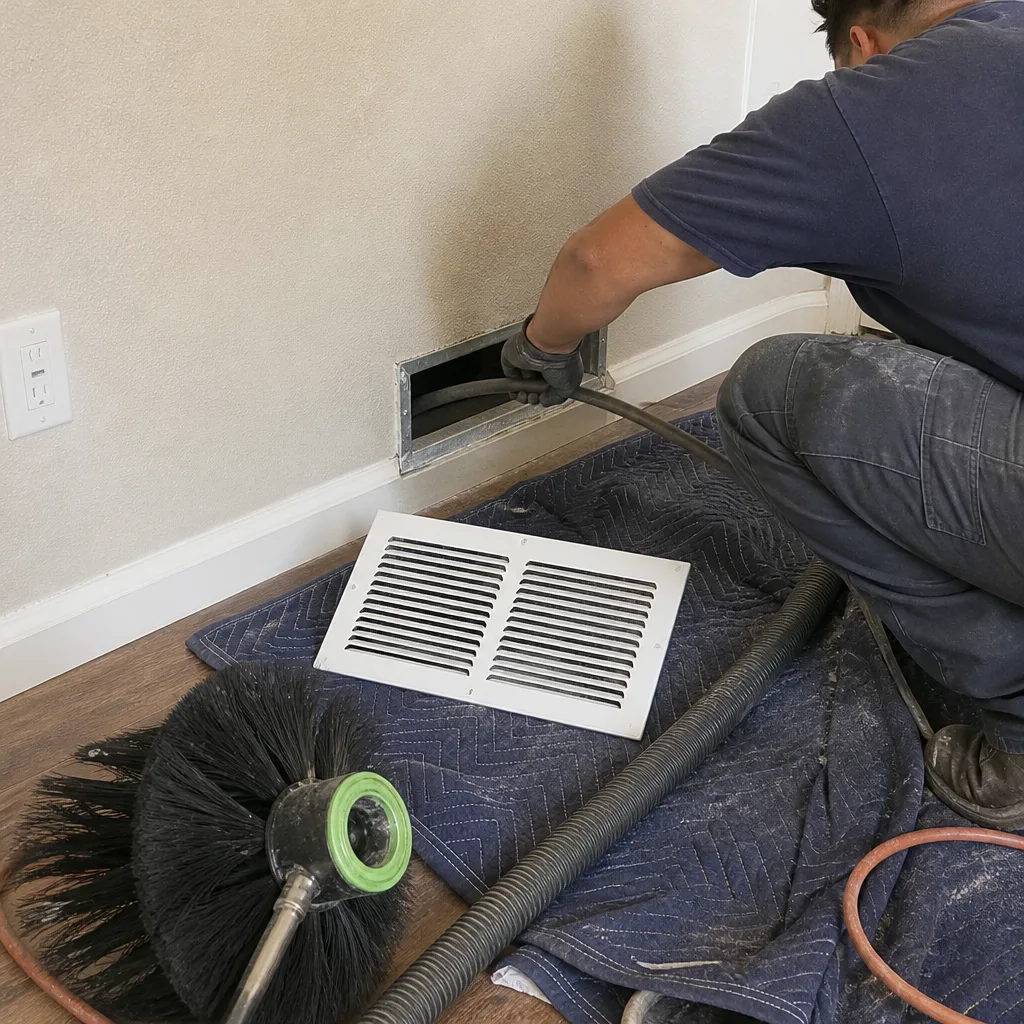
Equipment is the third variable, and it’s the one most consumers never ask about. A truck-mounted vacuum with a rotary-brush system, like the Rotobrush equipment used by professional HVAC contractors, agitates and extracts dust in a single pass. A portable shop vac with a long hose does not. The difference shows up in the time required: 4 to 6 hours for a proper full-system cleaning with commercial equipment, versus the 45-minute “cleaning” a discount operator can complete with suction alone. You’re paying for time on task, and time on task is what actually removes material from your duct walls.
The Real Line-Item Breakdown of a Full-System Cleaning
When you pay $600 for a legitimate duct cleaning in Chula Vista, here is where that money actually goes. This is not proprietary information. It’s simple arithmetic that any honest contractor can walk you through, and if a company won’t explain their line items, that’s your signal to call someone else.
Labor: $250 to $400 (3 to 5 hours at $75 to $90 per hour). A full-system cleaning on a median Chula Vista home takes two technicians roughly 4 hours. That includes setup, protecting the work area, accessing each supply and return register, running the agitation and extraction equipment, and post-cleaning inspection with photographic documentation. This is not unskilled labor, and technicians who know how to properly clean a system without damaging flex duct runs or knocking loose connections command higher hourly rates.
Equipment amortization: $80 to $150 per job. A professional rotary-brush system with HEPA-filtered extraction, like the Nikro and Abatement Technologies units used on restoration jobs, costs $15,000 to $40,000. That equipment has a service life of roughly 1,000 to 1,500 jobs before major component replacement. Spread across the cost of each job, equipment represents $80 to $150 just to break even.
Consumables and materials: $40 to $80. This includes HEPA filters that must be changed periodically, brush heads that wear down against duct interiors, disinfectant or sanitizing solutions when specified, protective floor covering, and register sealing tape. If a job includes Guardsman-brand finish or antimicrobial products, that adds $30 to $60 depending on system size.
Insurance, licensing, and compliance: $50 to $100. A legitimate Chula Vista HVAC service carries general liability insurance, workers’ compensation, and California contractor licensing. Those costs run $5,000 to $12,000 per year for a small operation and get allocated across every job. The $99 operator is almost certainly not carrying these loads, which means if they damage your system or property, you’re absorbing the cost.
Overhead and profit: $100 to $200. Office staff, scheduling software, vehicle maintenance, fuel, and a reasonable profit margin. This is what keeps the company in business so they’re available when you need a duct repair in Chula Vista six months from now.
Add those numbers: a legitimate full-system cleaning on a 1,500 to 2,500 square foot home lands between $450 and $850. That’s the honest math, and it’s why the $99 coupon is structurally impossible to deliver as a full-system cleaning.
What You Get at Every Price Point: $99 vs. $450 vs. $800
Understanding what each price tier actually buys you is the fastest way to evaluate whether a quote represents value or bait. Here’s what the three most common price points look like in practice, based on our experience running air duct cleaning in Chula Vista jobs.
The $99 Special: A Truck-Roll, Not a Cleaning
The $99 advertised price covers, at most, 45 minutes of a technician’s time. In that window, they might vacuum the visible interior of 8 to 12 vents, but there’s no mechanical agitation of duct walls, no cleaning of the main trunk line, no return-side cleaning, and no before-and-after photo documentation. The $99 is a customer acquisition cost, and the company’s profit model depends on converting that truck roll into $400 to $1,200 of additional charges once the technician is standing in your living room. Common add-ons during these visits include $175 for “deep cleaning” each section of trunk line, $95 per vent for “sanitizing,” and $300 for “mold treatment” regardless of whether any mold is visible or verified.
What you get: Partial vacuuming of visible dust. A sales pitch in your living room. No documentation. No measurable improvement in system airflow or indoor air quality.
The $450 to $600 Professional Cleaning: Real Scope, Real Work
This is the honest market range for a full-system cleaning on an average Chula Vista home. At this price, you should expect two technicians on site for 3 to 4 hours, mechanical agitation of every supply and return line using a rotary-brush system, HEPA-filtered extraction, cleaning of both the supply and return plenums, inspection of accessible duct sections for damage or disconnection, and photographic documentation of what was removed and what the interior looks like after. This scope addresses the entire air pathway, not just the vent covers you can see from your couch.
What you get: Documented cleaning of the full duct system. Measurable improvement in system static pressure. Photos proving the work was done. A cleaner baseline for air quality.
The $700 to $850 Restoration-Level Cleaning: Full Scope Plus Findings
The upper tier of the range applies to homes with documented contamination issues: visible microbial growth in duct sections, significant construction debris from a renovation, or systems that have never been cleaned in 20-plus years. At this price, the job includes everything in the professional cleaning plus additional time for heavier agitation, possible removal and cleaning of register boots, sanitizing fog application when findings justify it, and a detailed written report with photo documentation for your records. Homes in older Chula Vista neighborhoods like Castle Park or Harborside, where houses date to the 1960s and 1970s, often see this tier because duct systems of that era were frequently undersized, patched, and reconfigured over decades.
What you get: The deepest scope available. Documentation sufficient for a property file or resale disclosure. Remediation of chronic issues, not just surface dust removal.
The Per-Vent Pricing Problem: Why Cheap Structures Produce Bad Outcomes
Some Chula Vista operators quote duct cleaning by the vent: $15 to $25 per opening, with a 20-vent house totaling $300 to $500. On paper, it sounds transparent. In practice, per-vent pricing incentivizes the wrong kind of work, because the parts of your system that matter most are the parts with no vents attached.
Here’s what per-vent pricing misses. The main trunk line that runs the length of your attic, carrying conditioned air from the air handler to each branch line, has zero vents. The return air drop, which pulls air back into the system and is typically the dirtiest component in any duct system due to bypass air, has one or two grilles but represents a large share of the total interior surface area. The supply plenum, where dust accumulates at the first bend out of the furnace or air handler, has no vent. When a company quotes per vent, they’re pricing the 20 visible openings and treating the rest of the system as an afterthought. The work slows down after the visible vent covers are done.
The math reveals the problem. A legitimate cleaning of a 20-vent house takes 3 to 4 hours with two technicians. At $15 per vent, that’s $300. After equipment costs, that leaves roughly $100 for labor, which means the company can afford about 40 minutes of actual time on site. You cannot clean 150 linear feet of ducting in 40 minutes. A flat-rate job at $600 for that same house funds the full 3-to-4-hour job scope. The per-vent structure produces a worse outcome at a lower price, which is why it’s so commonly advertised: it creates a favorable comparison against honest flat-rate pricing without any reference to scope.
When evaluating a per-vent quote, ask this direct question: “Does this price include the main trunk line, the return drop, and both plenums?” If the answer is vague, or if those components are listed as separate line items that get added after the tech arrives, walk away.
Legitimate Findings-Based Add-Ons vs. Universal Upsells
Not every add-on is a scam. Some are genuinely warranted by what the tech finds inside your ducts, and refusing them outright means leaving problems unsolved. The key is distinguishing findings-based recommendations from universal ones, and in our experience across hundreds of Chula Vista homes, that distinction is clear.
Legitimate, findings-based add-ons include:
- Evaporator coil cleaning ($150 to $350): If your coil shows visible dust or biofilm accumulation during the cleaning, this is a legitimate finding. A dirty coil reduces system efficiency by 10 to 20 percent and creates the damp, dark conditions where biological growth thrives. We recommend this when we can see and measure the problem, not as a blanket addition.
- Sanitizing fog application ($150 to $300): Applied when there’s evidence of microbial growth, persistent odor that returns after cleaning, or a documented history of water intrusion in the system. Brand-name antimicrobial products like Guardsman formulations are applied after physical cleaning, not instead of it. Sanitizing without cleaning first is wasting the product.
- Duct sealing or repair ($200 to $600): Many Chula Vista homes have leaks at duct joints that waste 15 to 30 percent of conditioned air. This is the duct repair scope we handle separately from cleaning, and it’s warranted when we can show you the leak with a manometer reading or a physical inspection photo.
Universal upsells that signal a revenue-tactic operation:
- “Mold treatment” charged to every customer regardless of findings: If a tech claims mold without lab testing or visible evidence, they’re selling fear, not remediation.
- Deodorizer application quoted before the tech has seen the system: A fresh scent sprayed into ducts masks odor rather than removing its source.
- UV light installation as a “standard add-on” during a cleaning visit: UV equipment has legitimate applications, but selling it at a duct-cleaning appointment without an IAQ assessment is a revenue play.
The test for any add-on is simple: “Can you show me the finding that justifies this?” If the tech can point to a photo, a reading, or a visible condition, the recommendation is probably sound. If the add-on appears on the invoice before the tech has even opened a return grille, you’re being upsold.
How Chula Vista’s Climate and Housing Stock Affect Your Price
Chula Vista’s specific conditions shape both the need for duct cleaning and its cost. This is not a generic discussion about dust, because Chula Vista has particular atmospheric conditions that most national cost guides ignore.
The marine layer that rolls in from the Pacific Ocean brings cool, moisture-heavy air into the Otay Valley and across the eastern mesas almost every morning from May through August. That humidity, combined with the cool interiors of attic duct runs during summer air conditioning season, creates condensation on the exterior of flex duct in some installations. That’s a normal phenomenon, but it contributes to dust adhesion inside the ducts because the interior surfaces run cooler and dust particles are slightly tackier in humid conditions. Homes in west Chula Vista, closer to San Diego Bay, see this more than homes in Otay Ranch or Eastlake, which sit at higher elevations with slightly drier air.
Housing stock matters in specific ways. A large portion of Chula Vista’s single-family homes were built between 1970 and 1995. These homes typically have crawl spaces or slab foundations with attic-mounted air handlers and flex duct distribution. The flex duct installed during that era often has a 15 to 25 year useful life, and many Chula Vista homes are now on their second or third generation of duct material. Ducts that have been patched, reconnected, or partially replaced over the years accumulate dust at different rates in different sections, which means cleaning time varies even between similar-sized homes.
For the practical homeowner, the climate and housing stock findings translate to this: if you live in an older west Chula Vista home within 5 miles of the bay, expect slightly longer cleaning times and more frequent cleaning recommendations than a homeowner in a newer east Chula Vista development. And if your home has original 1980s ductwork that’s been through multiple HVAC system replacements, the cleaning will likely take longer because older flex duct interiors degrade and catch more debris.
How to Get a Useful Quote: Information to Have Ready
The quality of a quote depends on the quality of the information you provide before the tech ever arrives. Here’s the step-by-step preparation that makes competing bids genuinely comparable, and we recommend it to any Chula Vista homeowner evaluating Cornerstone Duct Cleaning home services against other providers.
- Know your square footage and the year your home was built. This gives the estimator an immediate baseline for system size and likely duct configuration. A 1988 home in the Rancho del Rey area will have a different duct profile than a 2015 home in Escaya.
- Count your supply registers and return grilles. Walk the house with a notepad. Supply registers are the small vents that blow air into rooms; return grilles are the larger openings that pull air back, usually located in hallways or central living areas. Typical Chula Vista homes have 8 to 14 supplies and 1 to 3 returns.
- Note any known issues. Tell the estimator about rooms that are consistently hotter or colder than the rest of the house, visible dust on vent covers, pet hair accumulation, recent renovations, or a history of water intrusion in the attic.
- Ask these three questions before booking:
- “Does your price include the main trunk line, return drop, and both plenums, or just the vent openings?”
- “Do you use mechanical agitation, or is it suction-only?”
- “Will I receive before-and-after photography of the duct interior?”
If a company can’t answer those three questions directly and confidently, their price is not comparable to a full-system quote no matter what number they give you. The goal is not to find the lowest price; it’s to find two or three quotes that cover the same actual scope of work so you can compare value honestly.
Common Mistakes to Avoid
- Choosing a contractor based on the coupon price alone. The $99 special exists to get a salesperson into your home. The final invoice will not be $99, and the quality of work done at that price point cannot be a full-system cleaning by any honest definition.
- Assuming all quotes cover the same scope. A per-vent quote, a flat-rate quote, and a “$99 whole house” quote are three different scopes of work wearing the same name. Ask the three scope questions up front.
- Skipping the visual verification. If a company cannot provide before-and-after photos of your actual duct interior, you have no way to verify any work was done beyond the visible vent covers. Legitimate cleaners document their work.
- Accepting universal add-ons without findings. Mold treatment, deodorizer, and UV light installation should be recommended based on what the tech sees and measures in your specific system, not added to every invoice as a matter of policy.
- Waiting until the system smells or airflow visibly drops. By the time you notice these symptoms, the accumulation is significant. Cleaning based on a schedule, typically every 4 to 6 years for Chula Vista homes, prevents the heavy-scope, higher-cost cleanings that result from decades of neglect.
- Not clarifying whether duct repair is included in the cleaning scope. A cleaning is not a repair, and a cleaner who finds a disconnected joint or a crushed flex run during the work should be able to tell you, quote the repair separately, and perform it if you approve. That’s the complete air pathway approach, and it’s why we offer air duct repair in Chula Vista as a distinct service.
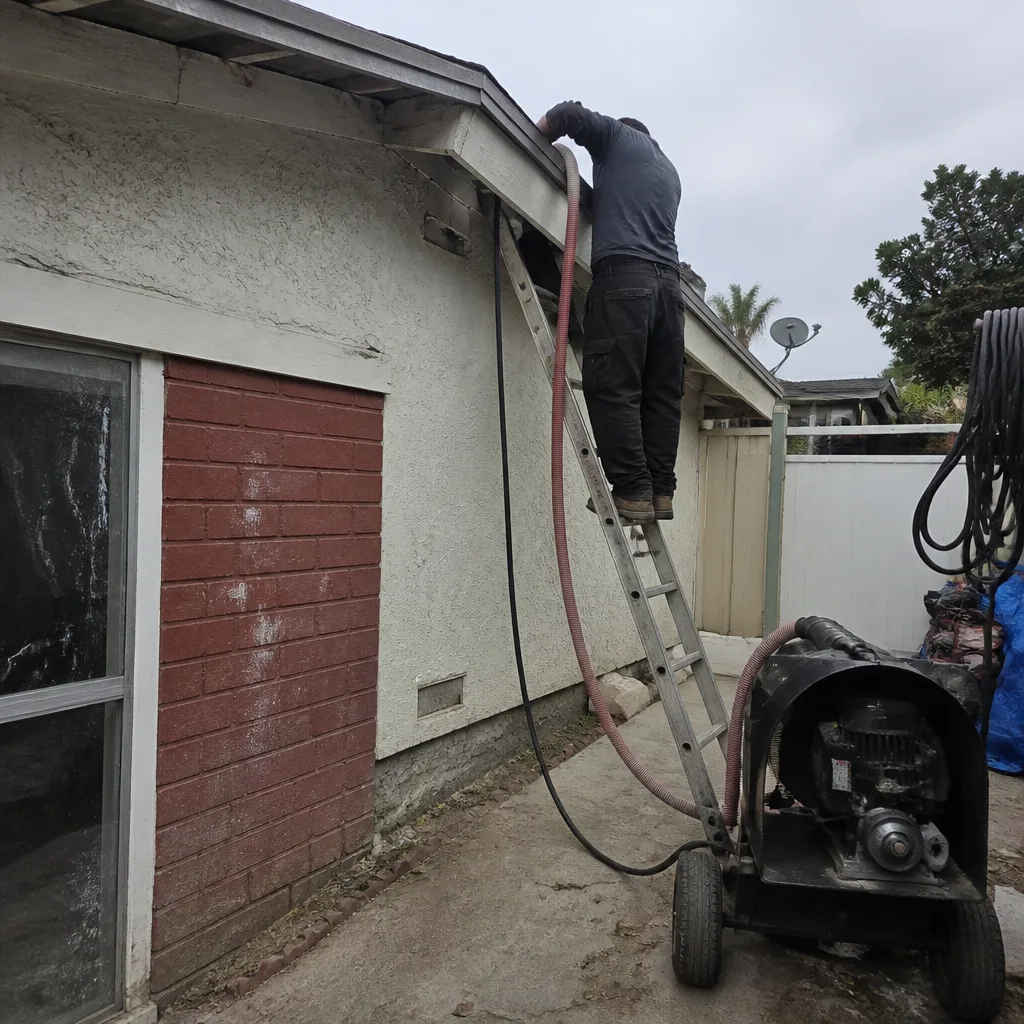
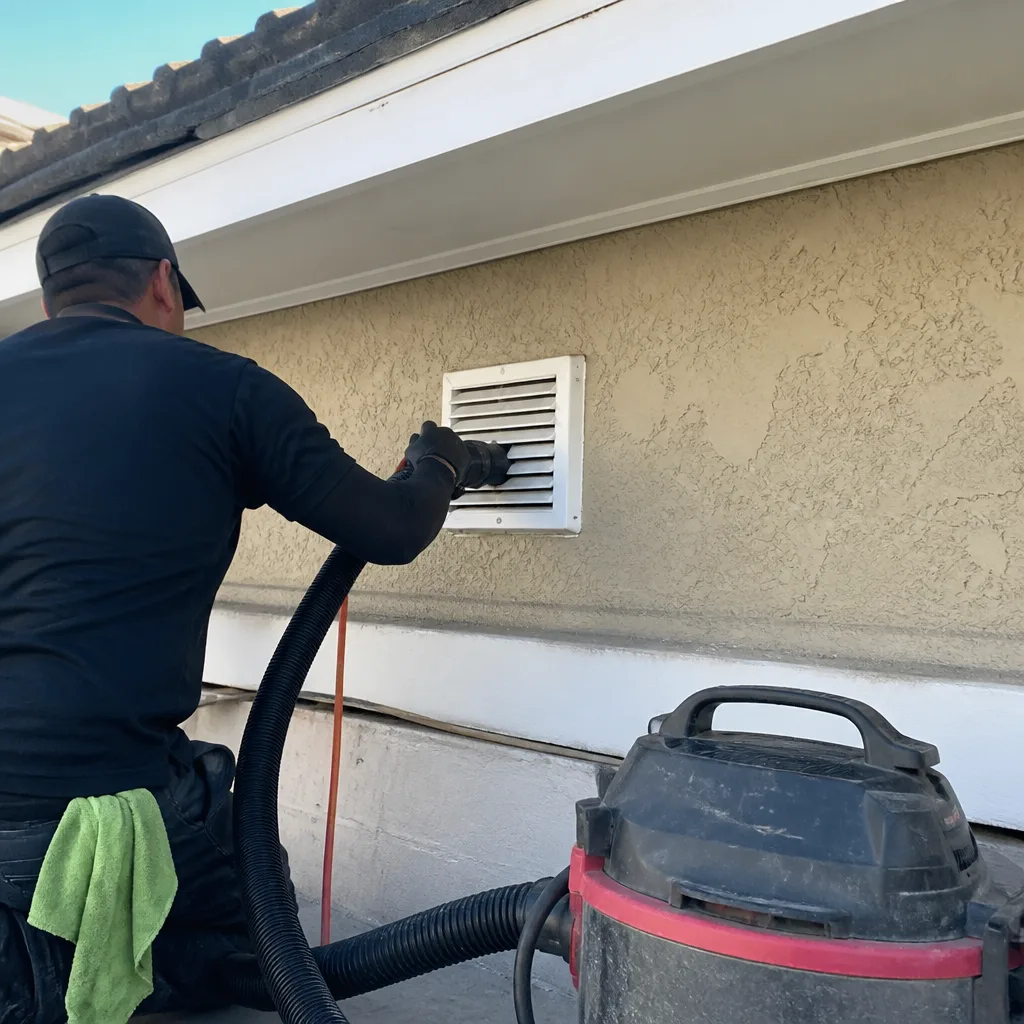
- Ignoring the dryer vent. A home’s dryer exhaust is part of the air pathway, and it’s the most dangerous component when neglected. Lint accumulation in dryer vents is a leading cause of house fires. If you’re cleaning your ducts, the dryer vent should be on the same call. We handle it as a dryer vent cleaning in Chula Vista service alongside the main duct scope.
When to Call a Professional
Some conditions make duct cleaning urgent rather than routine. If you can see dust being released from supply registers when the system turns on, that’s visible evidence of significant internal accumulation. If you’ve completed a remodel that involved drywall work, construction dust has entered the system and will circulate for months unless removed. If there’s visible mold growth inside ducts or on register covers, or if someone in the home has chronic respiratory symptoms that worsen when the HVAC runs, a professional assessment is warranted. And if you’ve never had your ducts cleaned and your home is more than 10 years old, you’re overdue for at least an inspection – see our Air Duct Cleaning Maintenance Checklist for Chula Vista Homeowners. Cornerstone Duct Cleaning offers free estimates in Chula Vista. Call (877) 824-2920 to schedule a walkthrough.
Frequently Asked Questions
A legitimate full-system air duct cleaning in Chula Vista costs between $450 and $850 for most single-family homes in 2026. The final price depends on home size, the length and condition of the duct runs, and the level of contamination inside the system. Call (877) 824-2920 for a precise quote based on your home’s specifics.
Cheaper quotes generally cover less scope. A $99 special pays for a truck roll and a 45-minute suction pass at visible vent openings, not the trunk line, return drop, or plenums. A $600 quote covers the entire air pathway with mechanical agitation and documentation. When quotes differ by hundreds of dollars, you’re comparing different services that happen to share a name.
Ask for before-and-after photography of the duct interior. A legitimate cleaning produces visual documentation showing the condition of the trunk line and branch ducts before extraction and after. If a company cannot provide that, you have no independent verification that anything beyond the visible vent covers was cleaned.
Every 4 to 6 years is a reasonable interval for most Chula Vista homes, with more frequent cleanings justified for homes with shedding pets, smokers in the household, recent renovation debris, or occupants with severe allergies. Homes near busy roadways or in dusty construction zones may also trend toward the shorter end of that range.
No. Per-vent pricing ignores the components of your system with no vents: the main trunk line, return drop, and plenums. A $15 per vent quote on a 20-vent house generates roughly 40 minutes of actual work, which cannot clean 150 linear feet of ducting. Flat-rate pricing tied to a documented scope produces better outcomes.
Yes. The marine layer that affects Chula Vista from May through August creates exterior condensation on cool attic duct runs, which contributes to dust adhesion on the interior surfaces. Homes in west Chula Vista neighborhoods closer to the bay typically accumulate more internal dust than homes in east Chula Vista at higher elevations, all else equal.
The Bottom Line
Duct cleaning in Chula Vista is a service where the price range says less about the market and more about what’s included in the job. A full-system cleaning on a typical home costs $450 to $850 because that’s what it takes to run professional equipment, pay trained technicians for real time on task, and document the work. Anything significantly below that range is a different service wearing the same name. Cheap duct cleaning usually means no cleaning at all beyond the visible vent covers. Ask the scope questions, demand documentation, and price the actual job, not the coupon. For more guides & resources, visit our blog.
Written by the team at Cornerstone Duct Cleaning, serving Chula Vista since 2013.
See the difference
 Before
 After
 Before
 After
 Before
 After