
Last updated November 2, 2026
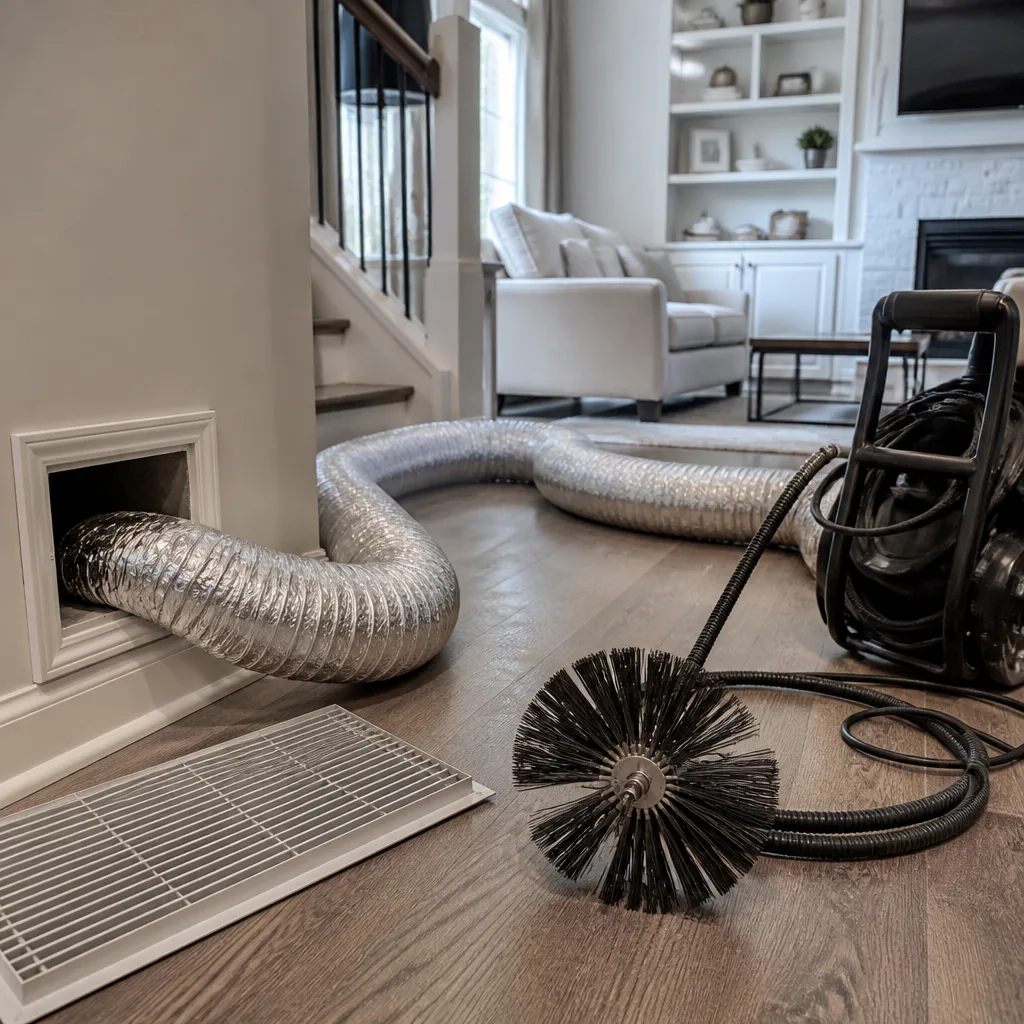 Whole-home duct cleaning
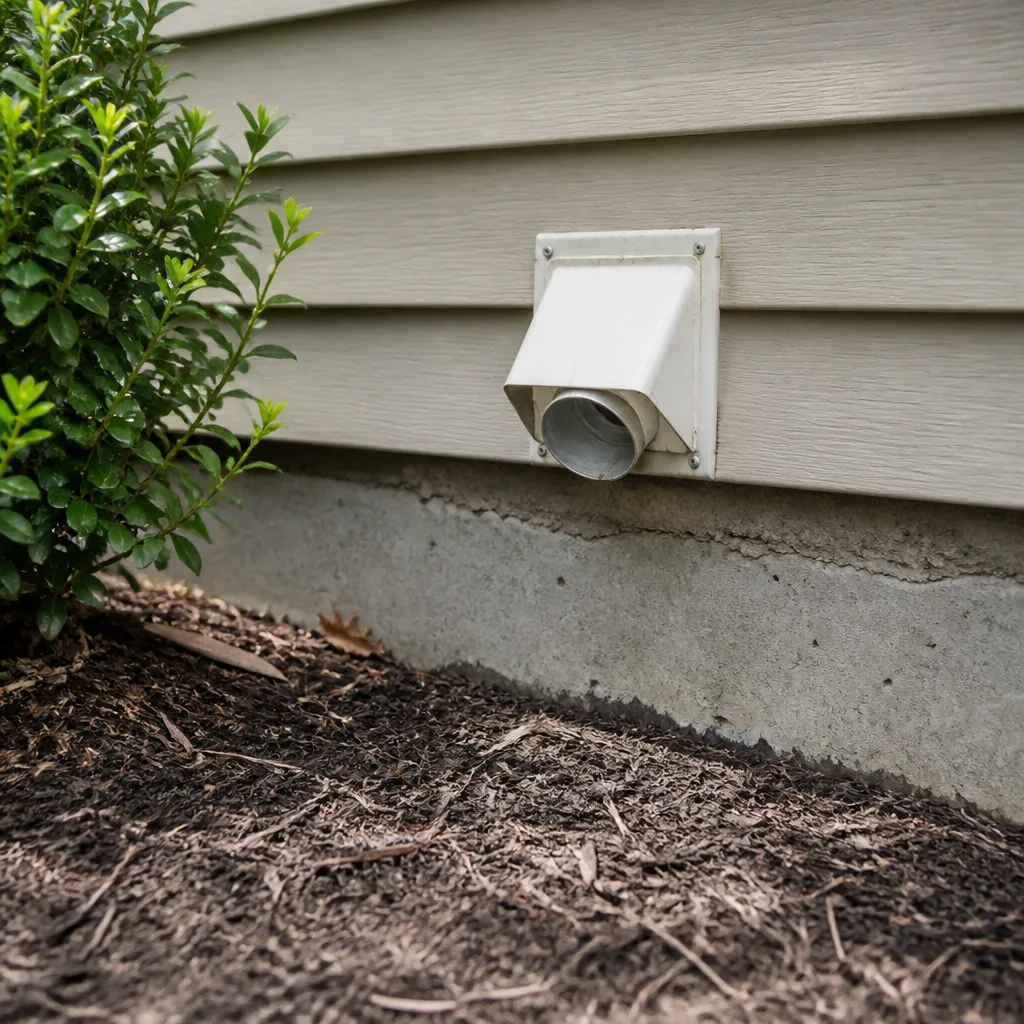 Dryer vent cleaning
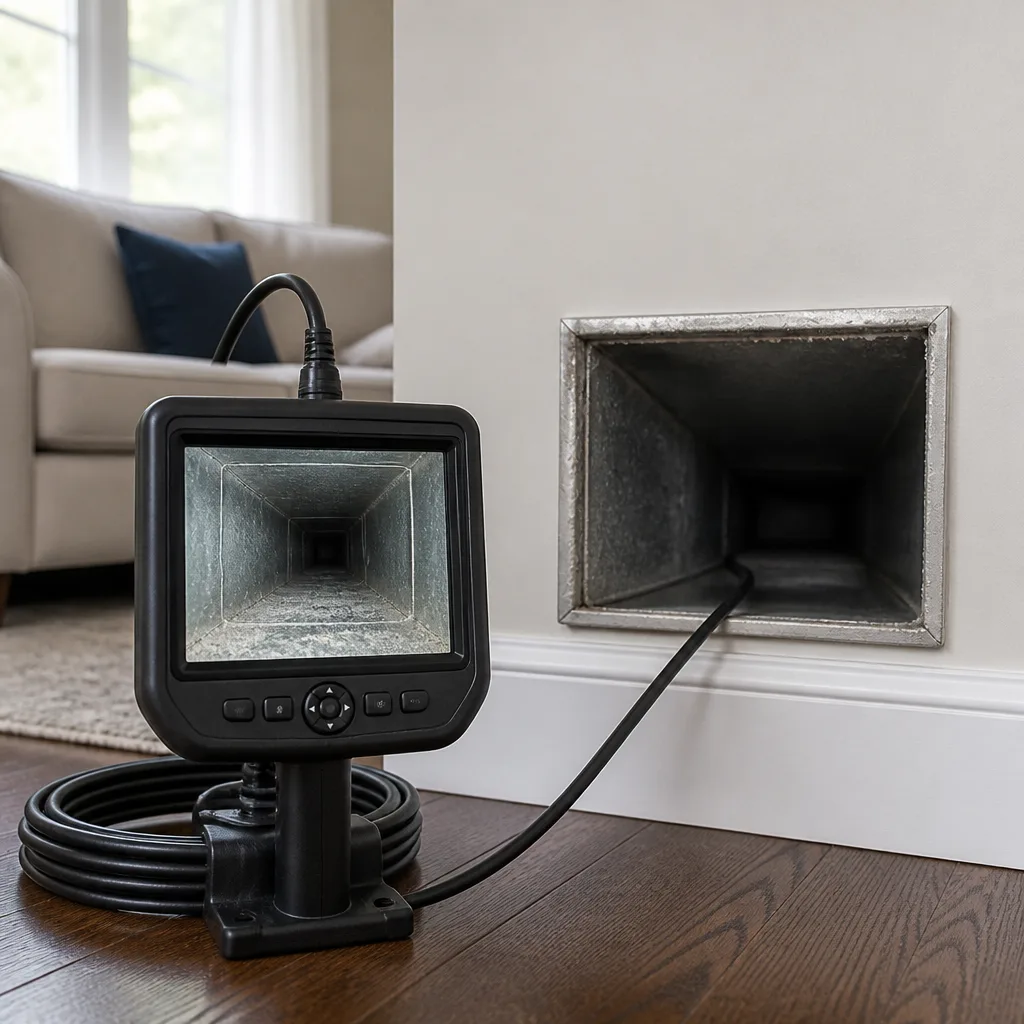 Camera inspection
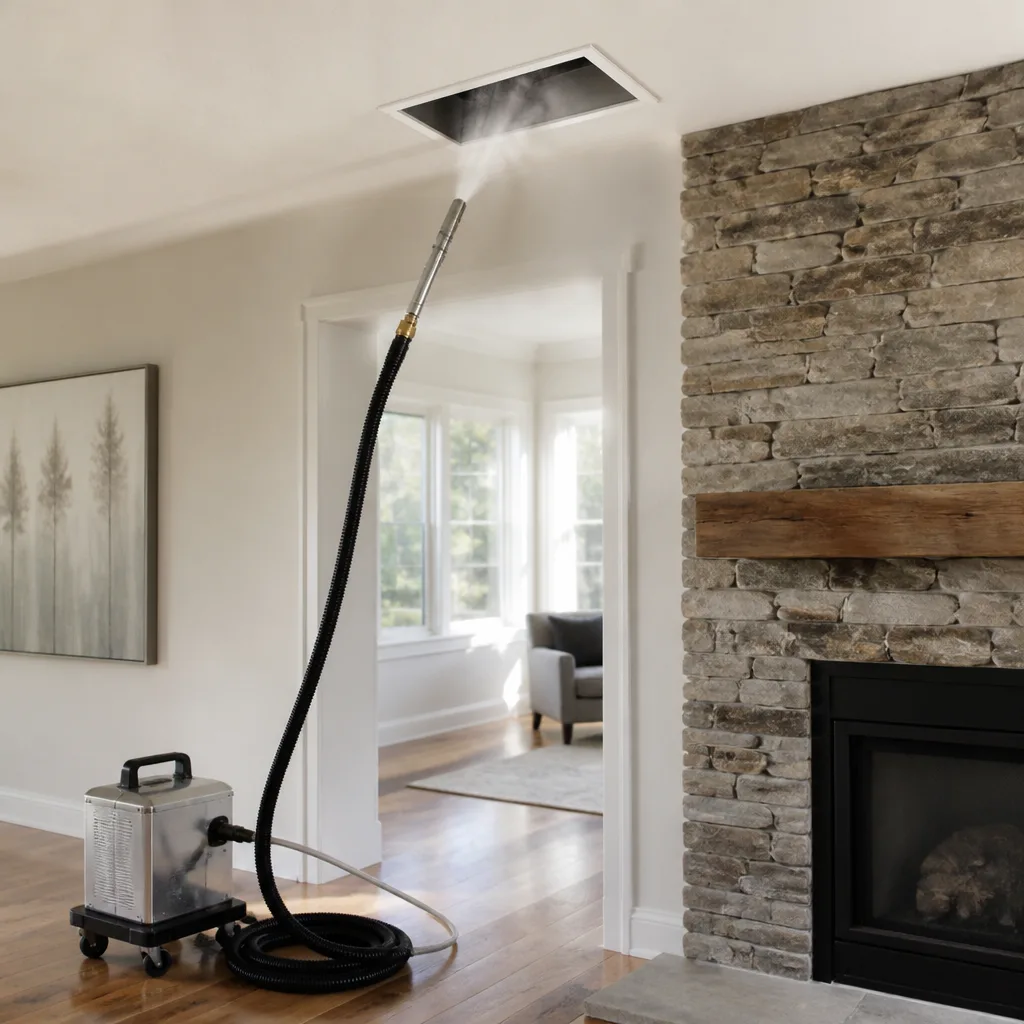 Sanitizing & deodorizing
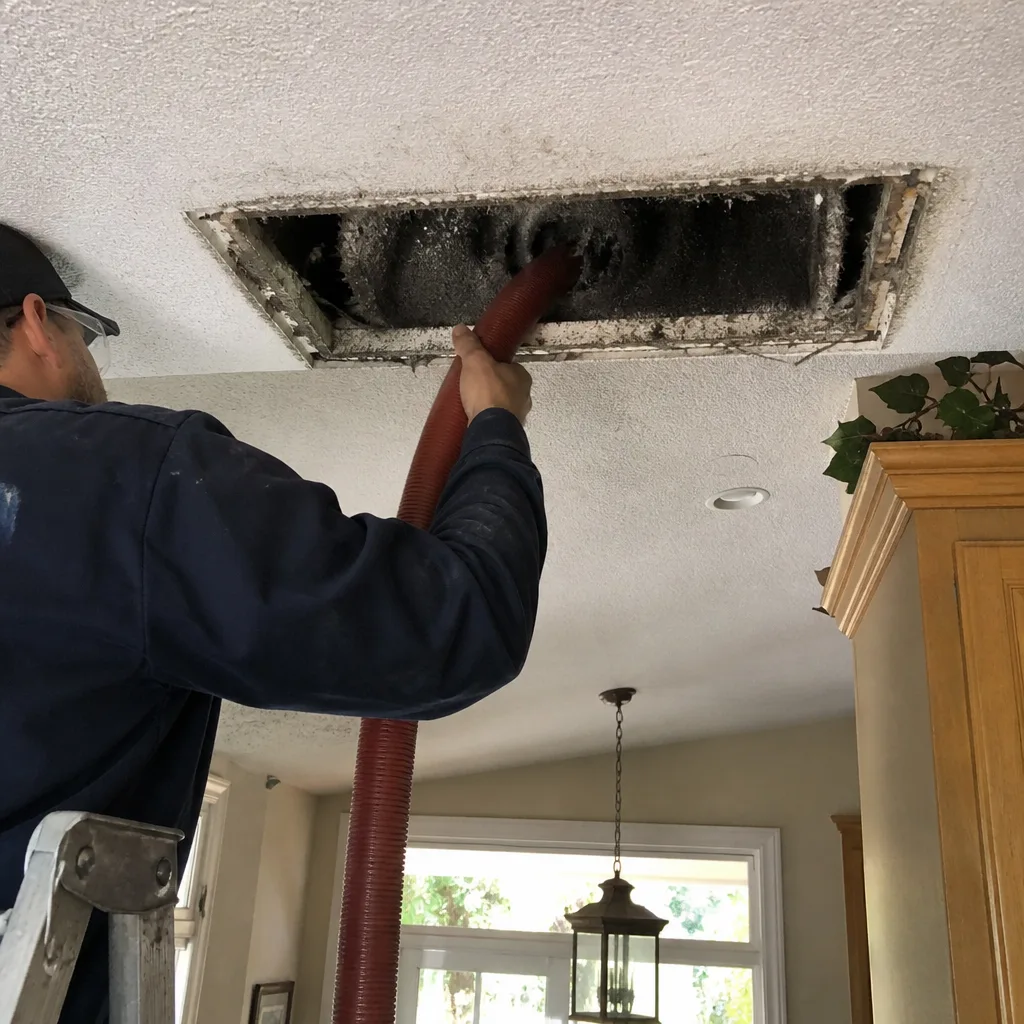
Whole-system duct and dryer vent check with before-and-after photos - you see exactly what came out of your vents
That "$99 whole-house special" is a bait ad - the real number appears once they are in your hallway, or the "clean" is a shop-vac at the register. We photograph the inside of your ducts before and after instead.
Air Duct Cleaning Maintenance Checklist for Chula Vista Homeowners
If your maintenance checklist doesn’t account for the Santa Ana wind season, you’re using a generic template written for a climate that isn’t yours. Most homeowner checklists floating around the internet were written by content mills for a national audience, as if a house in Ohio and a house in Chula Vista deal with the same air. They don’t. A home three miles from San Diego Bay deals with marine layer moisture that condenses inside ductwork every summer night. A home in Rolling Hills Ranch deals with fine silty dust that blows in from the eastern foothills during Santa Ana events. And every Chula Vista home, regardless of neighborhood, shares one thing: ducts that were probably installed when the house was built and haven’t been opened since. This guide replaces the generic calendar with a condition-based checklist built around what actually accelerates contamination in our specific airshed.
Quick Answer
Air duct maintenance in Chula Vista should follow a condition-triggered schedule, not just a calendar one. Inspect your grilles, filter, and return air path at minimum every 90 days, and immediately after four specific events: Santa Ana wind episodes, wildfire smoke advisories, nearby construction, and any HVAC repair work. Keep a simple log of filter loading rate and visible grille condition so you can detect when contamination is accelerating, and call a pro when you see fibrous growth, dust that returns within a week of cleaning, or airflow that has dropped noticeably across multiple rooms.
Styles & brands we work with
- Whole-home duct cleaning
- Dryer vent cleaning
- Camera inspection
- Sanitizing & deodorizing
Table of Contents
- Why Calendar-Based Checklists Fail in Chula Vista
- The Five Physical Signs at Your Grille and Filter
- Event-Triggered Checkpoints: When to Inspect Outside Your Routine
- Logging Your Baseline: How to Detect Change
- The Full Air Pathway: Dryer Vents and Bathroom Exhaust in the Same Pass
- DIY Filter Swap vs. Professional Call: The Decision Threshold
- A Seasonal Calendar for Chula Vista Homeowners
- Common Mistakes to Avoid
- When to Call a Professional
Why Calendar-Based Checklists Fail in Chula Vista
Every generic duct maintenance guide says the same thing: change your filter every 90 days, clean your grilles once a year, and schedule a professional cleaning every three to five years. Those aren’t bad suggestions, but they assume a stable environment. Chula Vista doesn’t have one. We sit at the meeting point of two distinct climate forces: coastal marine influence from San Diego Bay and the Pacific, and arid inland air that pushes through the canyons during wind events. That combination produces conditions that accelerate contamination on a schedule no quarterly calendar can predict.
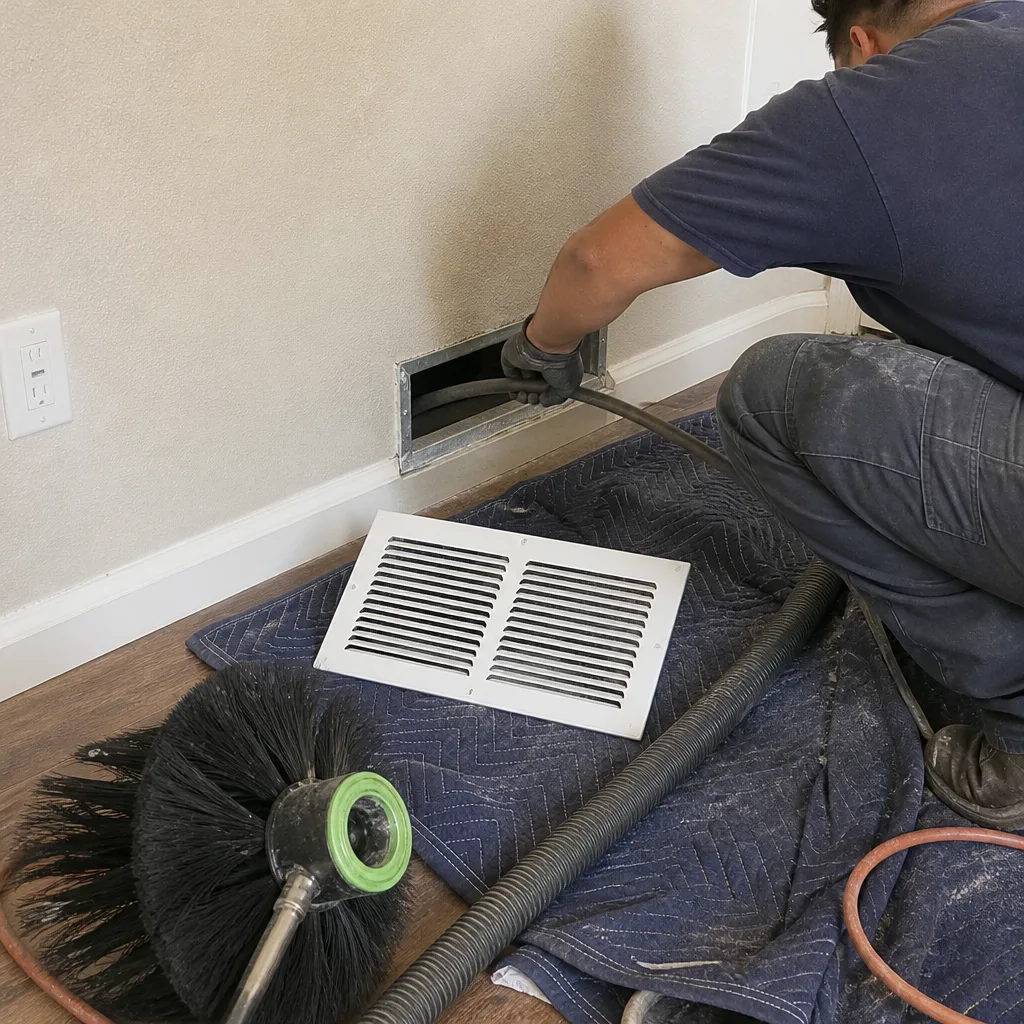
The marine layer is the quiet culprit. From May through August, cool, moisture-laden air settles over the western half of Chula Vista nearly every night. That air carries salt particles and organic spores, and when it’s drawn into your ductwork by the AC system, it hits the cooler metal surfaces inside the supply runs and condenses. Condensation inside ducts creates a thin film that traps dust, pollen, and whatever else is moving through the air stream. Over time, that film dries and re-wets with each cycle, building up a layer of bonded material that suction-only cleaning can’t remove. It needs mechanical agitation to break it loose. This is why we run Rotobrush rotary-brush systems on every job: the brushes disrupt what’s adhered to the duct walls, not just what’s floating loose.
Then there’s the Santa Ana season. Between October and February, high-pressure systems over the Great Basin push dry, dusty air westward through the mountains and into the coastal plain. That air picks up fine particulate from the Otay Mountain wilderness and the construction zones east of the 805, and it forces its way into homes through every gap, vent, and fresh-air intake. The dust is so fine it passes through most standard filters and settles directly inside your return plenum and supply runs. If you’re only checking your system quarterly, you’ll miss the fact that a single three-day Santa Ana event deposited more material than three months of normal operation.
Chula Vista also has one of the highest rates of residential development activity in South Bay. New construction in Otay Ranch, Millenia, and eastern Chula Vista kicks up concrete dust, drywall particulate, and landscaping debris that travels for miles. If a development project started within a mile of your home in the last year, your ducts are seeing elevated loading regardless of your filter schedule.
The Five Physical Signs at Your Grille and Filter
Your ducts will tell you when they need attention before a calendar will. Here are the five signs we tell Chula Vista homeowners to check at their supply grilles and return filter, and what each one means.
- Gray felt-like buildup on the supply grille vanes. This is not normal household dust. It’s a combination of fine wind-blown particulate and condensed-moisture residue that has bonded to the metal. If you run your finger across it and it smears rather than blows away, the same material is coating your duct walls upstream. This is your single most reliable early indicator.
- Filter loading that darkens unevenly. A filter that’s uniformly gray after three months is doing its job. A filter that’s dark in the center but light at the edges, or dark on one side only, suggests air is bypassing the filter somewhere or that return air is entering the system through unsealed joints in the return plenum. You’re filtering less air than you think.
- Visible dust on the ceiling or wall within two feet of a supply register. This is often called “ghosting” and it means particles are being pushed out of the register, not settling from room air. If you wipe it clean and it reappears within a week, the duct run feeding that register needs attention.
- A musty or stale odor that appears only when the fan runs. In most cases this points to accumulated material inside the ducts being re-wetted by condensation cycles, then passing that odor into the living space every time the blower kicks on. It’s not your house; it’s the air delivery system.
- Particles visible on the filter that you can identify by type. If you see what looks like sand, tiny seeds, or dark sooty material on the return filter, you can often trace it to a specific source: landscaping work, a recent brush fire, or construction dust. Identifying the particle type tells you whether you need a one-time professional cleaning or a longer-term filtration upgrade.
One filter-related point that matters for Chula Vista specifically: standard fiberglass filters, the blue ones, are nearly useless against the fine particulate that comes through during wind events. They were never designed for that particle size. If you’re running a basic MERV 4 filter, your ducts are acting as the filter. Upgrading to a MERV 11 or MERV 13 can reduce the loading rate dramatically, though it’s important to verify your system can handle the increased pressure drop. In some cases we recommend pairing a higher-MERV filter with a Honeywell or Aprilaire media cabinet, which provides much more surface area than a one-inch filter and keeps static pressure within the blower’s operating range.
Event-Triggered Checkpoints: When to Inspect Outside Your Routine
The most useful part of any Chula Vista duct maintenance checklist is the list of events that should trigger an immediate inspection, regardless of when you last changed your filter. These are the four event types that, in our experience, cause the fastest accumulation.
1. After a Santa Ana Wind Event
Santa Ana winds in Chula Vista typically arrive in bursts that last two to four days, often in October, November, and again in February. During those days, sustained winds of 20 to 40 miles per hour with higher gusts push dry, fine dust across the entire South Bay. Your home’s fresh-air intake, attic vents, and even the gaps around doors and windows pull that dust in constantly. Within 48 hours after the wind dies down, do a visual check of your return grille and filter. If the filter is noticeably darker than it was before the event, assume the ducts have taken on material too. If you run an HVAC system during a Santa Ana event with a clean filter and the filter loads visibly within three days, that’s your baseline reference for how quickly your system accumulates under wind loading. A filter that clogs that fast is telling you the ductwork itself needs a professional cleaning to remove the accumulated reservoir that keeps re-contaminating your air stream.
2. After a Wildfire Smoke Advisory
Chula Vista sits downwind of major wildfire zones in the Otay Mountain watershed, the Cleveland National Forest, and the backcountry east of Jamul. When Cal Fire issues smoke advisories, fine particulate and combustion byproducts travel westward and settle into coastal neighborhoods. Smoke particles are extremely fine, often under 2.5 microns, which means they penetrate standard filters and deposit deep inside duct runs. After any smoke advisory that lasts more than 24 hours, inspect not just the filter but the supply registers in the rooms farthest from the air handler. If smoke residue settled in your ducts, it will outgas a smoky odor for weeks and continue circulating through the home long after the outdoor air has cleared. This is one of the scenarios where a professional cleaning with HEPA-filtered equipment matters most, because the material you’re removing is so fine it requires containment-level filtration to capture rather than redistribute.
3. After Nearby Construction
Chula Vista’s construction activity has been relentless, particularly in the Otay Ranch and Millenia corridors. Concrete cutting, drywall sanding, and site grading generate inorganic particulate that travels much farther than most homeowners assume. If a project breaks ground within a mile of your home, especially upwind, start checking your filter every two weeks instead of every three months. The dust from active construction is heavier and sharper than household dust, and it abrades blower bearings and settles into duct corners where it builds up quickly. We’ve worked in homes where a single summer of nearby grading filled return ducts with enough material to reduce airflow measurably. Air Duct Cleaning in Chula Vista after a major construction phase in your area isn’t overcautious; it’s responsive maintenance.
4. After Any HVAC Repair
This one surprises people. When a technician opens your air handler, replaces a coil, re-runs a duct section, or even just replaces a blower motor, they disturb the accumulated material inside the system. That disturbance can break loose debris that then gets blown into living spaces, or it can leave ducts open to construction dust, insulation fibers, and drywall particulate from the repair area. If you’ve had any significant HVAC work done, do a full grille-and-filter inspection one week after the repair. If the work involved opening duct runs or replacing sections, consider a professional cleaning as follow-up: repair work often leaves the interior of the duct runs disturbed but not cleaned, which then recirculates for months.
Logging Your Baseline: How to Detect Change
The reason most homeowners miss duct contamination until it’s severe is that they have no reference point for what “normal” looks like in their own system. Without a baseline, you can’t detect change. Setting one up takes about 15 minutes and requires nothing more than your phone camera and a simple notebook or spreadsheet.
Start by documenting three things on the same day, preferably right after a fresh filter is installed and the system is clean:
- Filter loading rate: Photograph the filter against a plain background on installation day. Then photograph it again at the two-week mark and at the one-month mark, using the same lighting and angle. What you’re measuring is how quickly the filter darkens. A filter that goes from white to noticeably gray in two weeks under normal operation tells you your return air is dirtier than it should be, or that your ducts are releasing accumulated material into the air stream.
- Return static pressure: If you have a manometer or your HVAC technician recorded static pressure during the last service, write that number down. It’s the single best objective measure of how hard your blower is working against the resistance of your filter, coil, and ducts. Rising static pressure over months means something is restricting airflow, and in a system with a clean filter, the usual suspect is accumulated material in the return plenum or supply runs.
- Visual grille condition: Photograph one supply grille in a high-use room, like a bedroom or living room, immediately after cleaning it. Then re-photograph it at the 30-day and 90-day marks. Compare the images. If you can see visible deposition returning within 30 days, your duct cleaning is overdue regardless of what the calendar says.
The point of this log is straightforward: you can’t assess the rate of change if you don’t know the starting condition. The baseline is your own home’s reference point, specific to your system, your filter type, your household size, and your specific location in Chula Vista. A house in the western neighborhoods between the 5 and the bay sees more marine-layer moisture. A house in Rancho del Rey or Eastlake sees more wind-driven dust from the mesas. Your baseline reflects your actual conditions, not a national average.
The Full Air Pathway: Dryer Vents and Bathroom Exhaust in the Same Pass
Duct maintenance in a home is not a single-system conversation. The same conditions that load your HVAC ducts, especially fine wind-blown particulate and marine-layer moisture, also affect the exhaust pathways in your home. The dryer vent is the most obvious example.
Dryer vents in Chula Vista accumulate lint, and they also accumulate the same fine dust that enters every other opening in the house. When that dust mixes with the lint and the residual moisture that every dryer vents release, it creates a dense, compacted layer inside the vent pipe. That layer reduces airflow, extends drying times, and in serious cases creates a fire hazard. The National Fire Protection Association has long identified dryer vent obstruction as a leading cause of residential dryer fires, and the specific mechanism is simple: lint plus restricted airflow equals heat buildup.
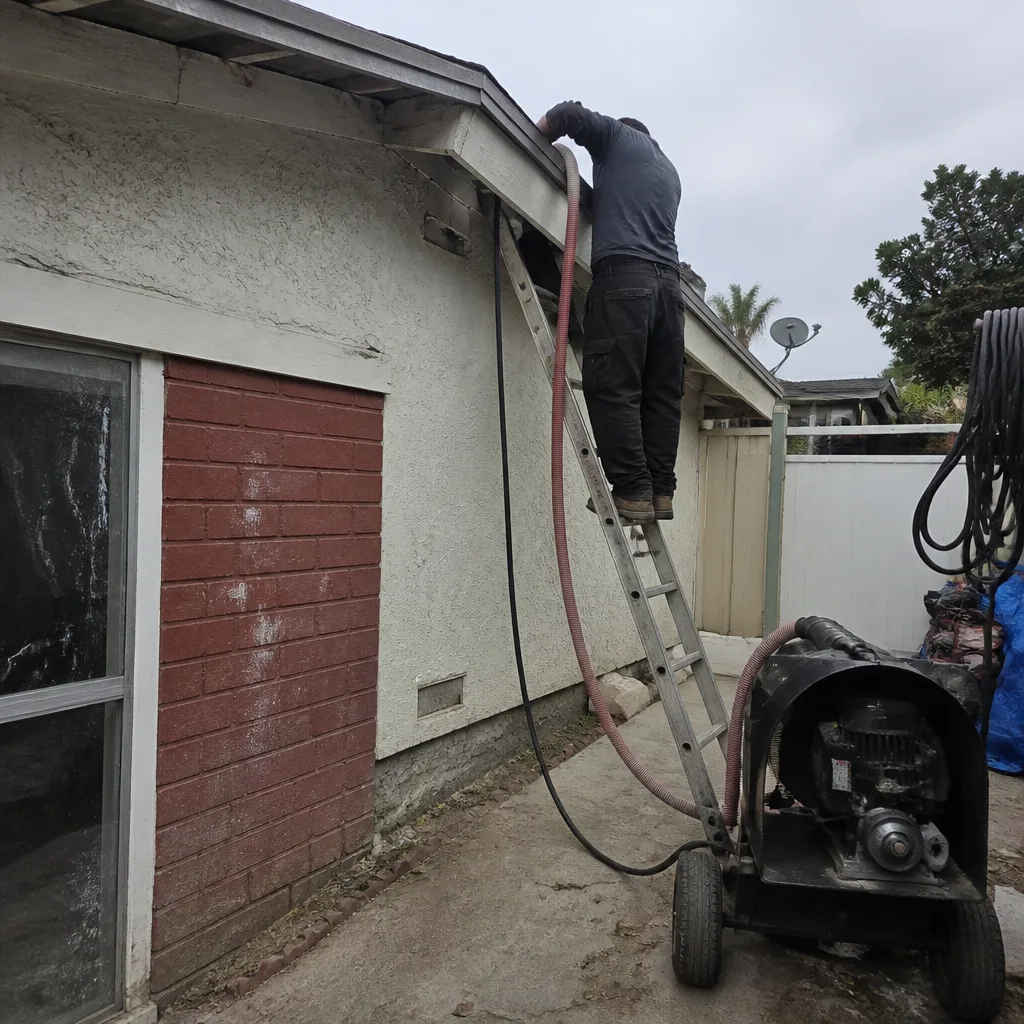
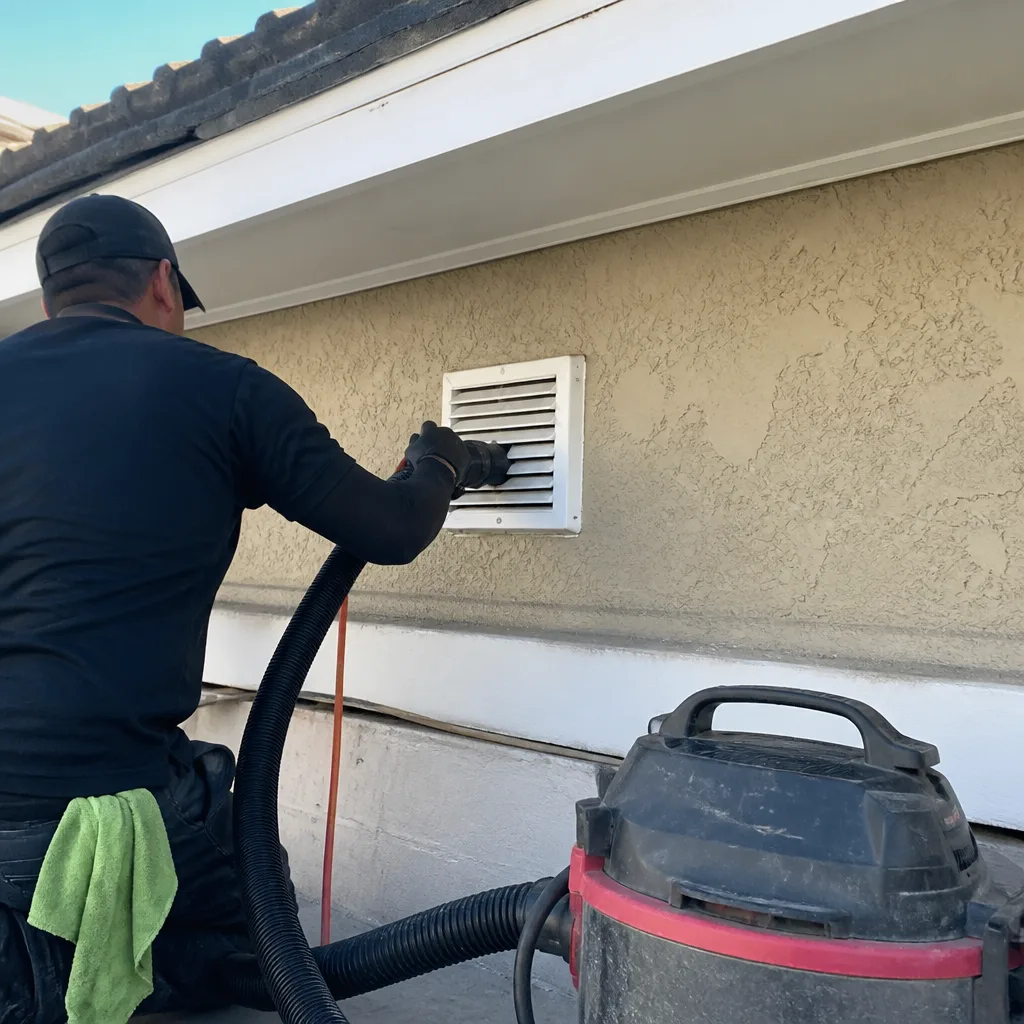
The inspection interval that makes sense in Chula Vista’s climate is every 12 months for a single-family home with typical usage, or more often if you notice drying times creeping upward. To include it in the same pass as your HVAC duct inspection, do this: while you’re already checking supply grilles and the filter, run a dryer cycle with the dryer running and step outside to feel the exhaust vent. If the airflow at the exterior vent feels weak compared to a year ago, the vent needs cleaning. If you can see lint hanging from the exterior cover, it’s overdue. Dryer Vent Cleaning in Chula Vista is a service we perform with the same professional equipment we use on HVAC ducts, and it belongs on the same annual inspection pass because the failure modes are similar: restricted airflow, trapped moisture, and material accumulation that gets worse with time.
Bathroom exhaust vents deserve the same treatment. In Chula Vista, the marine layer means bathroom fans run against humidity that never fully dries out, especially in homes without air conditioning during the shoulder months. That moisture condenses inside the exhaust duct and traps dust, pet hair, and bathroom particulate, eventually reducing the fan’s ability to move moist air out. A bathroom exhaust duct that’s restricted means longer showers with more visible condensation on the walls, which then leads to ceiling staining and mold at the fan grille. Check the exterior bathroom exhaust cover twice a year, and if you see material accumulating around the damper or the grille, include that vent in your next cleaning pass. The full air pathway is one system, and a homeowner checklist that only covers the HVAC portion is doing half the job.
DIY Filter Swap vs. Professional Call: The Decision Threshold
We’re not going to tell you that every issue requires a truck roll. Part of being a responsible company is telling homeowners what they can handle themselves and what genuinely needs professional-grade equipment. Here’s the decision threshold we use, and you should too.
DIY territory: Changing your filter is a homeowner task. Full stop. Checking your grilles, photographing your filter for the baseline log, vacuuming the return grille cover when you notice surface dust, and replacing a damaged filter slot cover are all within normal homeowner scope. You do not need a professional for any of this.
Professional territory: Any of these five conditions should prompt a call:
- Fibrous growth, regardless of color, on the inside of supply registers or visible on the return plenum. This is not a cleaning task; it’s a remediation assessment.
- Dust that reappears on cleaned surfaces within one week. If you wipe the grille and it reloads immediately, the source is inside the ducts, and suction-only cleaning will not resolve it.
- Airflow that has dropped in multiple rooms simultaneously. A single room with reduced airflow might be a damper issue or a kinked flex run. Multiple rooms means the main trunk line is restricted.
- An odor that appears only when the blower runs and persists after filter replacement. That’s material inside the system, not the filter.
- Visible debris falling from supply registers when the system starts. That’s accumulated material in the supply runs breaking loose, and it’s been building for a long time.
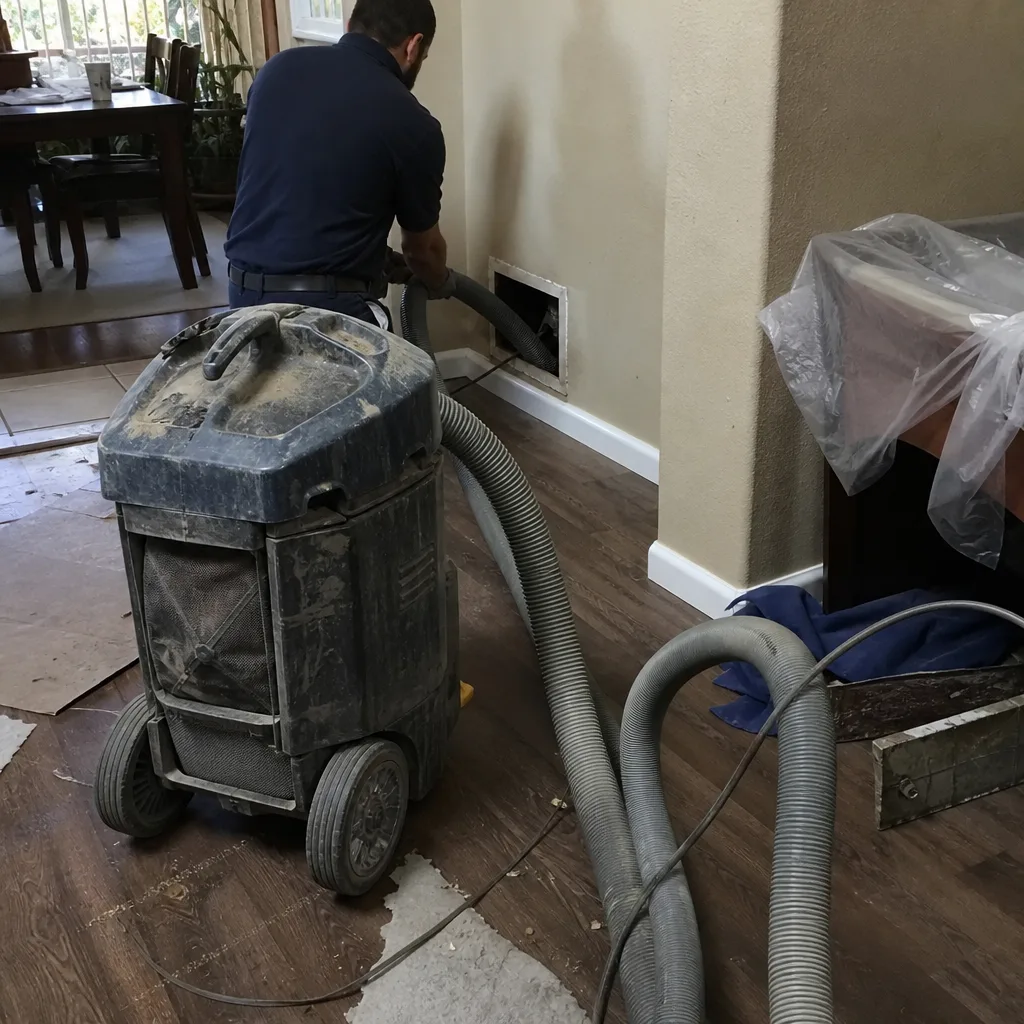
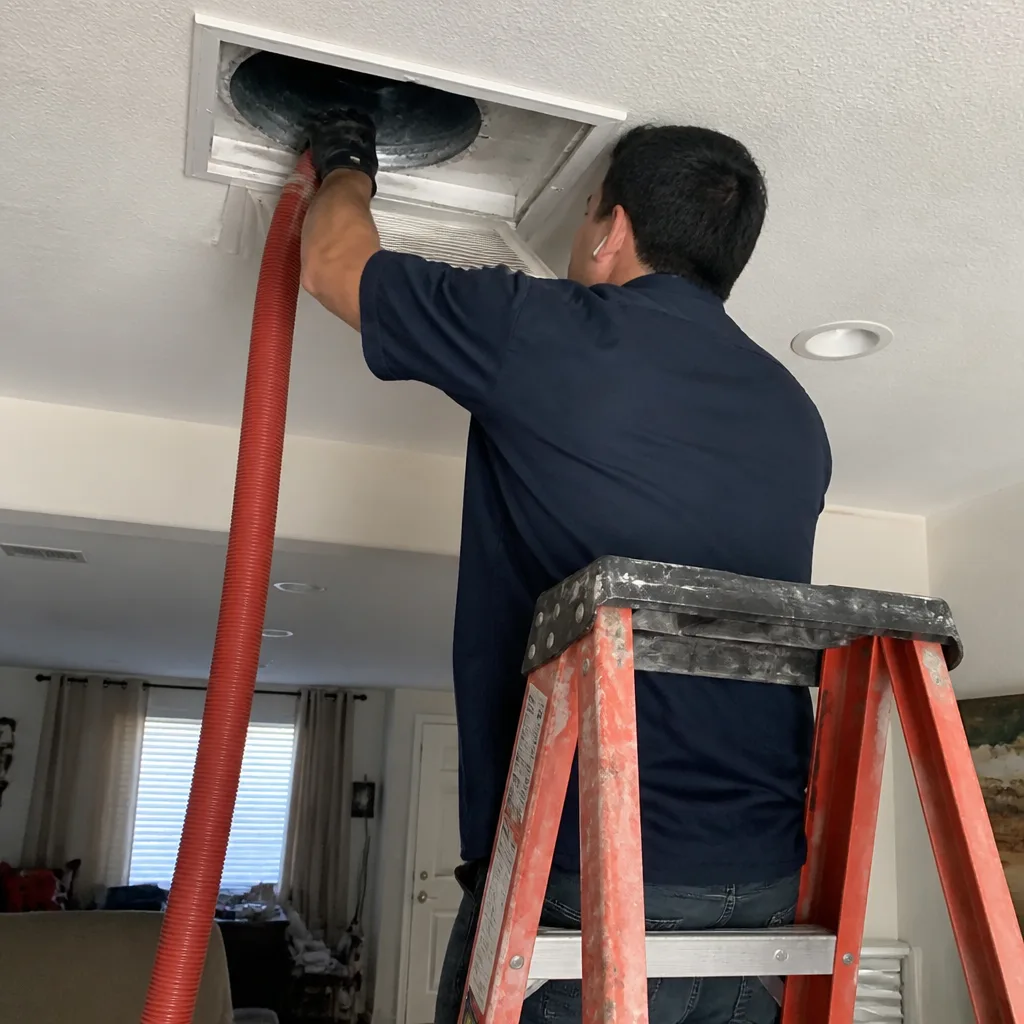
The difference matters because the equipment does. A shop vac with a long hose cannot reach the interior surfaces of a duct run, and it certainly cannot remove the bonded film that forms from repeated condensation cycles. Professional cleaning uses rotary agitation to break that film loose, and it uses HEPA-filtered extraction to capture the fine material that would otherwise be blown through the house during the cleaning process. That’s what separates a real cleaning from a surface wipe-down, and in Chula Vista, where fine particulate is a constant, the difference shows up in how long the cleaning lasts.
A Seasonal Calendar for Chula Vista Homeowners
Here’s the condition-based schedule we recommend for Chula Vista specifically. It replaces the generic “every 90 days” advice with timing that matches our local weather patterns.
January through March: Post-Santa Ana inspection window. The peak Santa Ana season runs from October through February, so by January most homes have accumulated a season’s worth of wind-driven dust. This is the time for a full-system visual inspection and, for most homes, the most logical time for a professional cleaning. Ducts that were clean going into Santa Ana season are frequently measurably loaded by February. Air Duct Repair in Chula Vista issues like separated joints and crushed flex runs also tend to surface during this window, because the dry, dusty air makes system noise and airflow problems more obvious.
April through May: Pre-marine-layer baseline. This is the best time to establish or refresh your baseline. The air is typically dry, the filter is starting from a clean slate, and you’re about to enter the period when the marine layer causes condensation inside ducts. If your system shows visible deposition in May before the marine layer even arrives, you have an existing contamination problem that’s going to get worse.
June through August: Marine-layer monitoring. This is the period when moisture drives the bonding process inside ducts. Check your grilles monthly during these months. The combination of moisture and accumulated dust is what creates the gray felt-like material that becomes the stubborn layer a professional cleaning has to later remove. If you catch accelerating buildup early, a cleaning now prevents the layer from hardening into something worse.
September through November: Pre-Santa Ana preparation. September is the month to have your system professionally cleaned if it’s been more than three years since the last service. Going into Santa Ana season with clean ducts means the wind-driven dust that enters the system has nothing to bond to and passes through more easily. It’s also the window when many Chula Vista homeowners schedule Air Duct Cleaning in Chula Vista because they want the system clean before the holiday season when the house is closed up and the heater runs.
December: Dryer vent and exhaust pass. While you’re thinking about holiday laundry loads and the house is full, do the dryer vent check described earlier. Restricted dryer vents are most dangerous during high-usage periods, and December is the highest-usage month in most households.
This calendar is a starting point. If you log your baseline and track your filter loading rate, you’ll quickly see whether your home tracks faster or slower than this schedule, and you can adjust accordingly. The point is to let the conditions drive the schedule, not the other way around.
Common Mistakes to Avoid
- Using a one-inch fiberglass filter and calling it maintenance. The blue fiberglass filters catch large particles and almost nothing else. In Chula Vista’s airshed, that means your ducts are doing the filtering, and the material that accumulates there will require professional removal. A MERV 11 or MERV 13 pleated filter is a better default, provided your system can handle the pressure drop.
- Assuming a new house has clean ducts. New construction in Otay Ranch or Millenia means the HVAC system was likely used during construction to condition the space, pulling drywall dust, sawdust, and insulation fibers directly into the return ducts. Every new build should have a professional duct cleaning before or shortly after move-in, regardless of what the builder says.
- Waiting for a musty smell to investigate. By the time you can smell material in your ducts, the problem has been building for months or years. Odor is a late-stage signal. The early signals are visual: grille deposition, rapid filter loading, and ghosting around supply registers.
- Cleaning only the supply side and ignoring the return. The return side of your system carries all the unfiltered air from your home back to the air handler. If the return plenum and return runs aren’t cleaned, the system just redistributes that material through the newly cleaned supply side within weeks. A proper cleaning addresses the entire air pathway.
- Trusting a per-vent price quote without verification. Some duct cleaning operations quote a low per-vent price and then discover “problems” once they’re in the attic. Before you hire anyone in Chula Vista, ask how they verify the cleaning: a company using rotary-brush agitation and HEPA-filtered extraction should be able to show you before-and-after photos of your actual ducts, not stock images.
- Skipping the dryer vent because it’s a separate appliance. The dryer vent is part of your home’s air pathway, and it’s the one component that carries an active fire risk when neglected. In Chula Vista’s dusty conditions, dryer vents load faster than the national average, and an annual check should be non-negotiable.
- Assuming a filter change fixes everything you can’t see. Your filter captures what’s in the air moving through it. It does nothing for the material already bonded to your duct walls, sitting in your return plenum, or trapped in flex-run sags. If you’ve gone years without a professional cleaning, a new filter is like changing the oil in a car with a clogged fuel filter: necessary but insufficient.
When to Call a Professional
You need a professional duct cleaning when something in your system has changed that you can’t fix with a filter and a rag. If your grilles reload with dust within a week of cleaning, if you have visible fibrous material anywhere in the air path, if airflow has dropped across multiple rooms, or if an odor persists after filter replacement, the reservoir of contamination is inside the ducts, and no homeowner tool can reach it. In Chula Vista’s specific climate, with its combination of marine-layer moisture and wind-driven fine particulate, the bonded material on duct walls is the reason professional cleaning exists, and it’s the reason suction-only methods fall short. Cornerstone Duct Cleaning offers free estimates in Chula Vista, call (877) 824-2920. We use Rotobrush rotary-brush systems and HEPA-filtered extraction on every job, and we show you what we removed.
See the difference
 Before
 After
 Before
 After
 Before
 After
Frequently Asked Questions
Every three to five years is the standard interval for a typical Chula Vista home, but local conditions can shorten that significantly. Homes in the eastern neighborhoods that experience regular Santa Ana wind loading, homes with allergy sufferers or pets, and homes near active construction may need cleaning every two to three years. The best way to know is to log your filter loading rate and grille condition: if visible deposition returns within a month of cleaning, your interval is shorter than the standard. Call (877) 824-2920 for a free assessment if you’re unsure.
The clearest signal is deposition that returns quickly after you’ve cleaned the accessible surfaces. If you wipe your supply grilles clean and they show visible gray buildup again within 30 days, the material is coming from inside the ducts, not from room air. A new filter won’t fix that. The second signal is uneven filter loading: a filter that darkens in patches or on one side only suggests air is bypassing the filter or carrying material from inside the duct runs.
You can clean the accessible surfaces: the grille covers, the first few inches of visible duct at the register, and the filter slot. You cannot clean the interior of the duct runs themselves. The interior surfaces of supply and return runs require mechanical agitation to break loose the bonded film that forms from repeated condensation cycles, and they require extraction with HEPA-level filtration to capture the fine material rather than blowing it into your living space. That’s what professional equipment does, and it’s not something a household vacuum can replicate.
September, before Santa Ana season starts. Cleaning in September means your ducts are clean going into the period when wind-driven dust loads them fastest, and it also means the system is clean before winter when the house is closed up and the heater recirculates whatever is inside. The second-best window is February or March, after the Santa Ana season has deposited a season’s worth of material. Both windows are better than summer, when the marine layer makes the bonded material more difficult to remove.
It can, if the ducts are actually the reservoir. In Chula Vista, the allergens that matter most are often the fine wind-blown particulates and mold spores that enter during marine-layer months and get trapped in duct material. If your ducts have accumulated years of bonded dust and pollen, every blower cycle re-suspends a portion of that material into your living space. A professional cleaning removes the reservoir. But it’s not a substitute for proper filtration, so ask about upgrading to a higher-MERV filter or a media cabinet as part of the same service.
In Chula Vista, professional air duct cleaning for a typical single-family home runs $400 to $900 for the full system, depending on the number of returns, the number of supply runs, the system’s accessibility, and the level of contamination. Homes with multiple systems or extensive ductwork run higher. Be wary of quotes significantly below that range: they typically reflect suction-only methods that leave the bonded material on the duct walls, and the cleaning won’t last. Call (877) 824-2920 for a free estimate on your specific system.
The Bottom Line
Your duct maintenance schedule in Chula Vista should be built around the things that actually happen here: Santa Ana wind events from October through February, marine-layer moisture from May through August, construction dust in the developing corridors, and wildfire smoke from the eastern backcountry. A condition-based checklist catches contamination while it’s still manageable. A calendar-based one waits until it’s obvious. The homeowner’s job is to watch the grilles, track the filter load, and log the baseline. The professional’s job is to remove what the filter never caught. When those two jobs work together, the house is cleaner, the system runs more efficiently, and the air your family breathes every day is not carrying a decade of accumulated South Bay dust. Call the team at Cornerstone Duct Cleaning at (877) 824-2920 for a free estimate, or explore Dryer Vent Cleaning in Chula Vista and Air Duct Repair in Chula Vista if those services are on your maintenance calendar too.
Written by the team at Cornerstone Duct Cleaning, serving Chula Vista since 2013.