
Last updated November 2, 2026
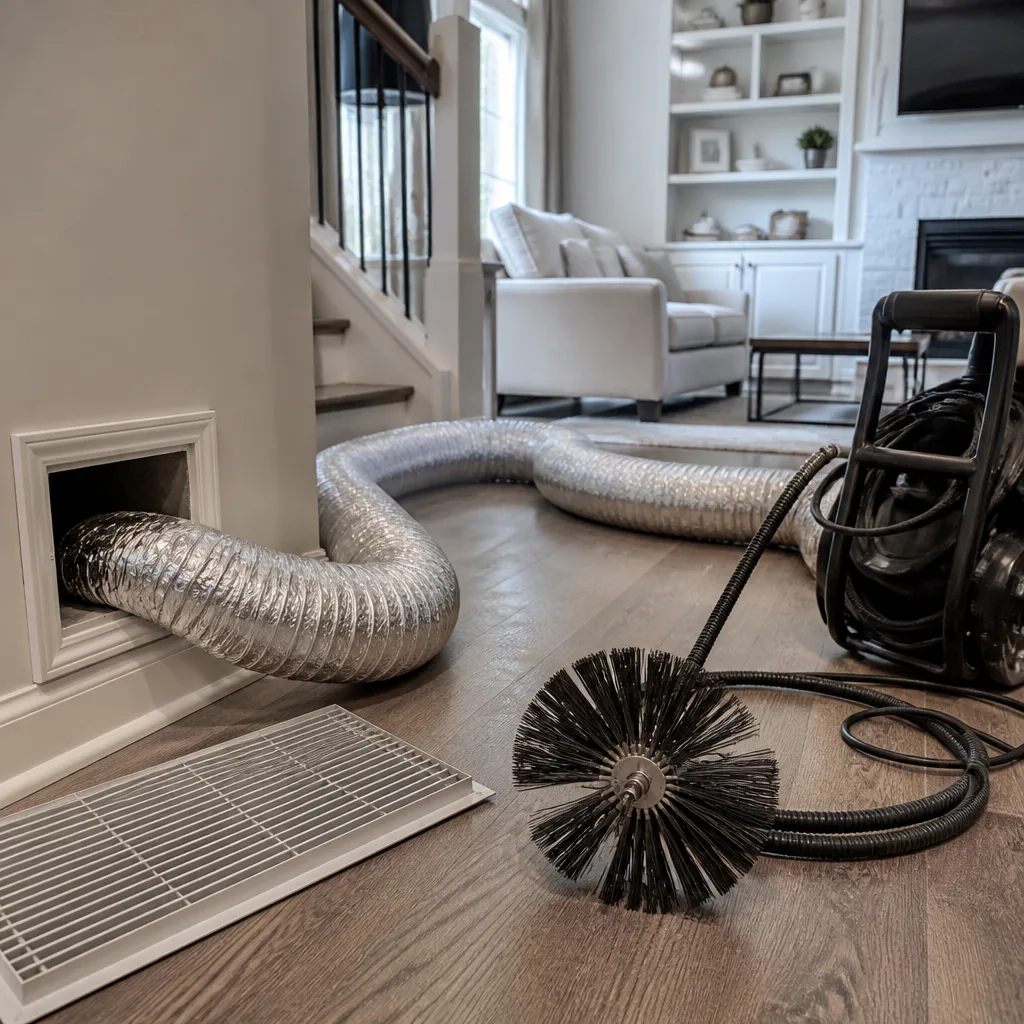 Whole-home duct cleaning
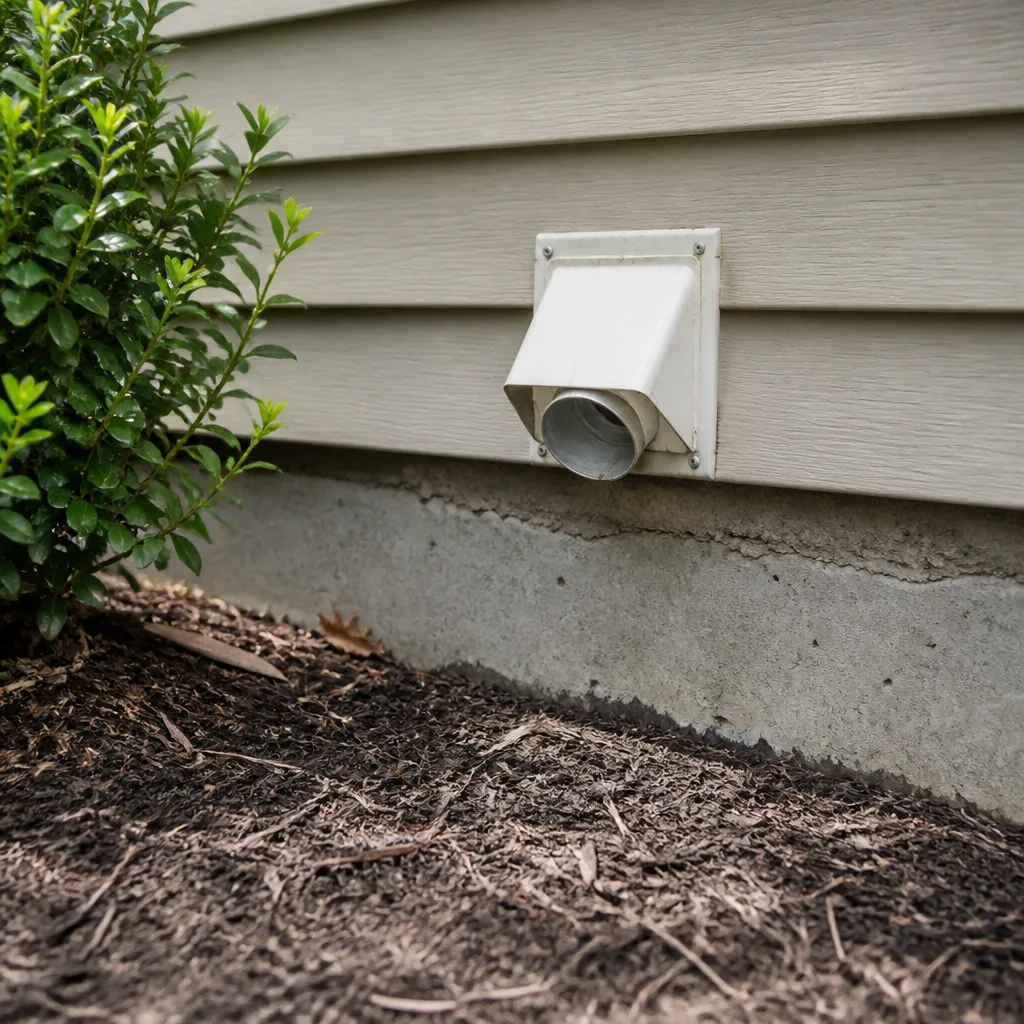 Dryer vent cleaning
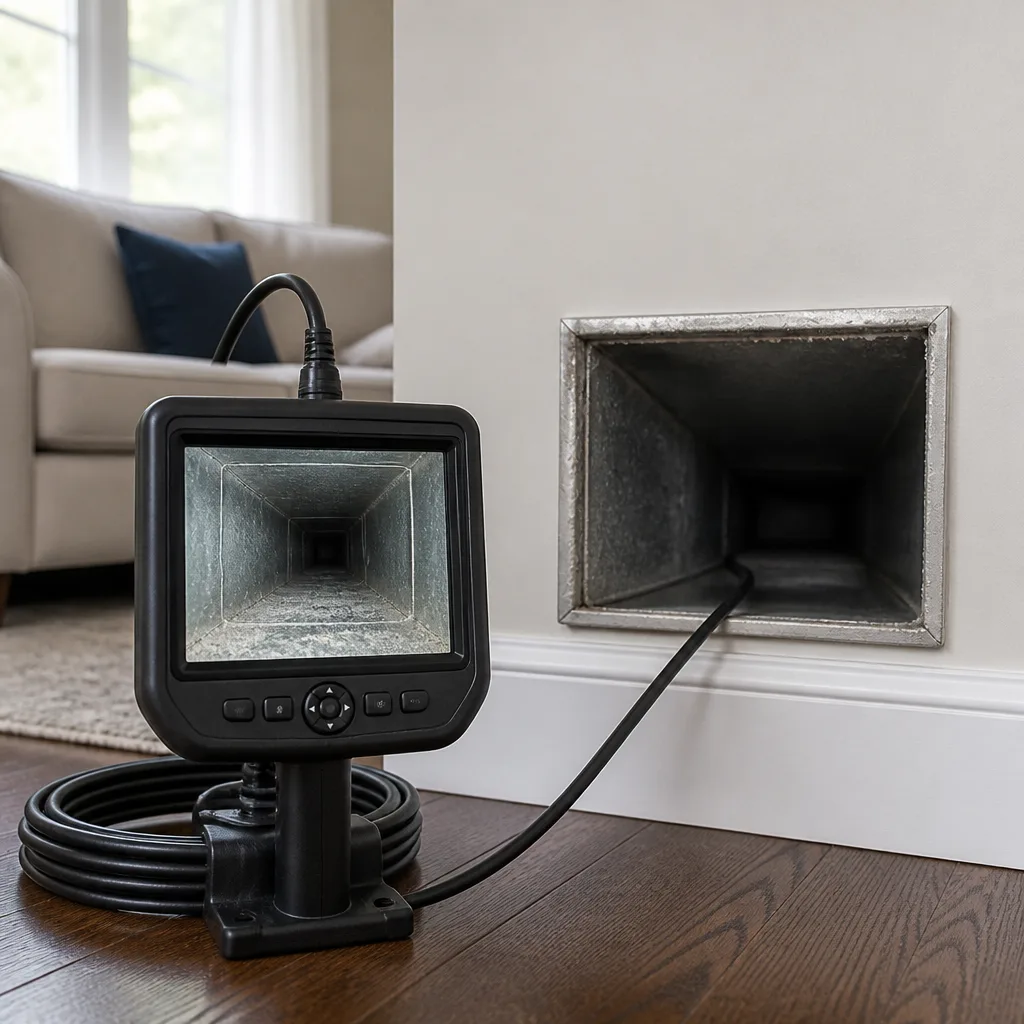 Camera inspection
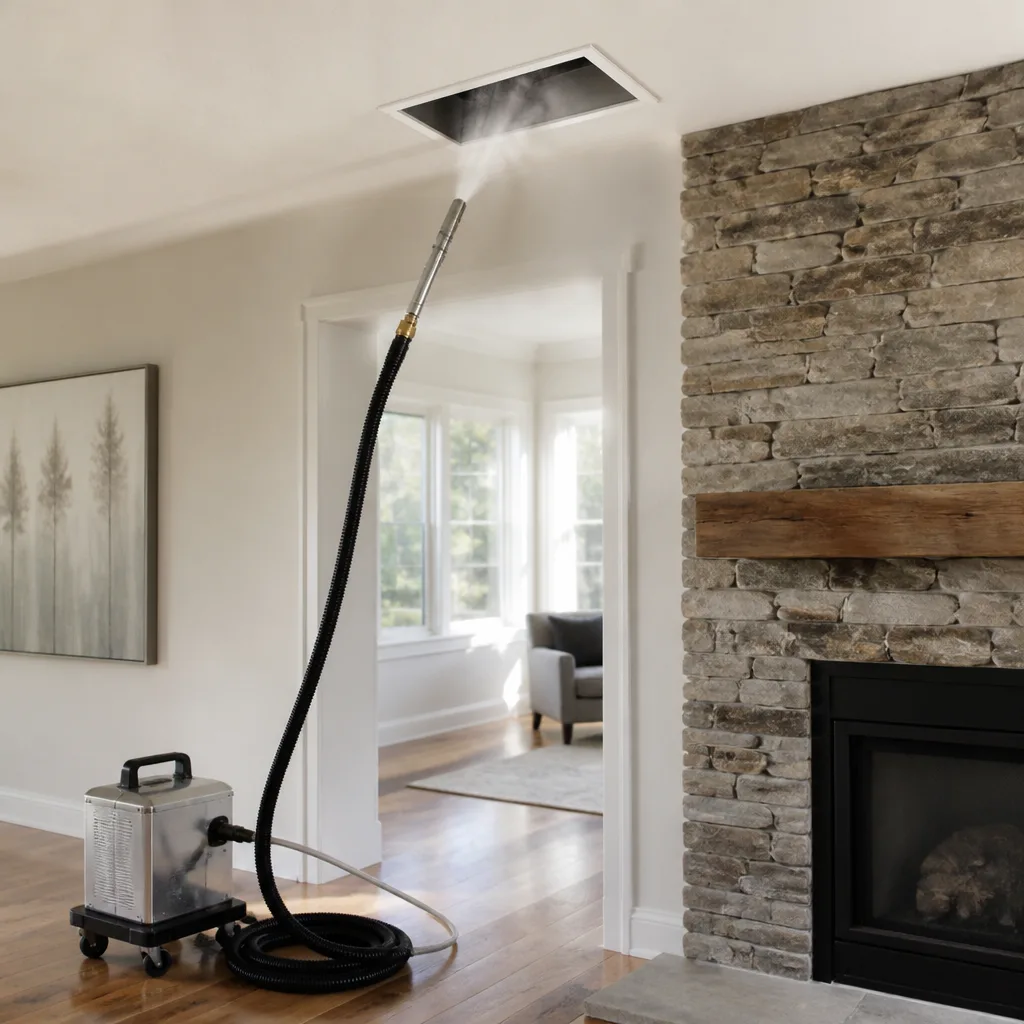 Sanitizing & deodorizing
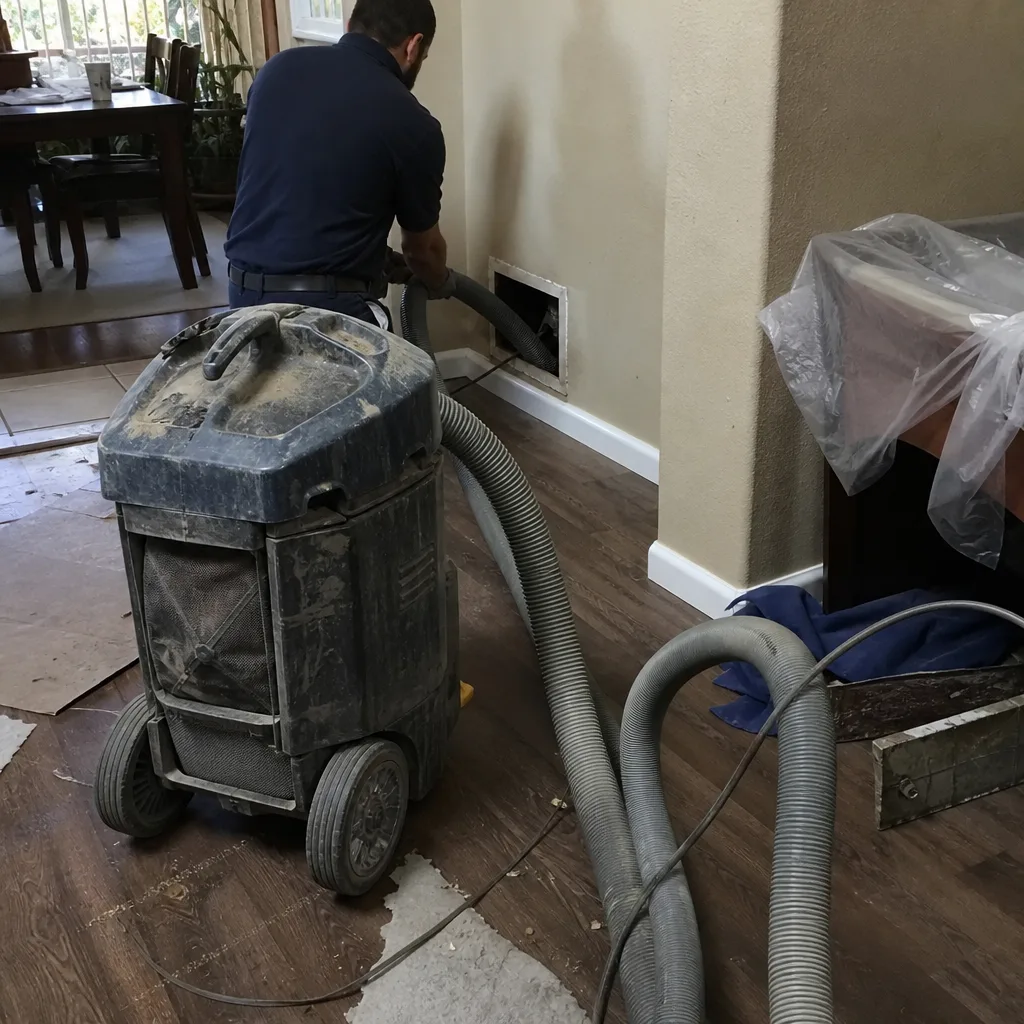
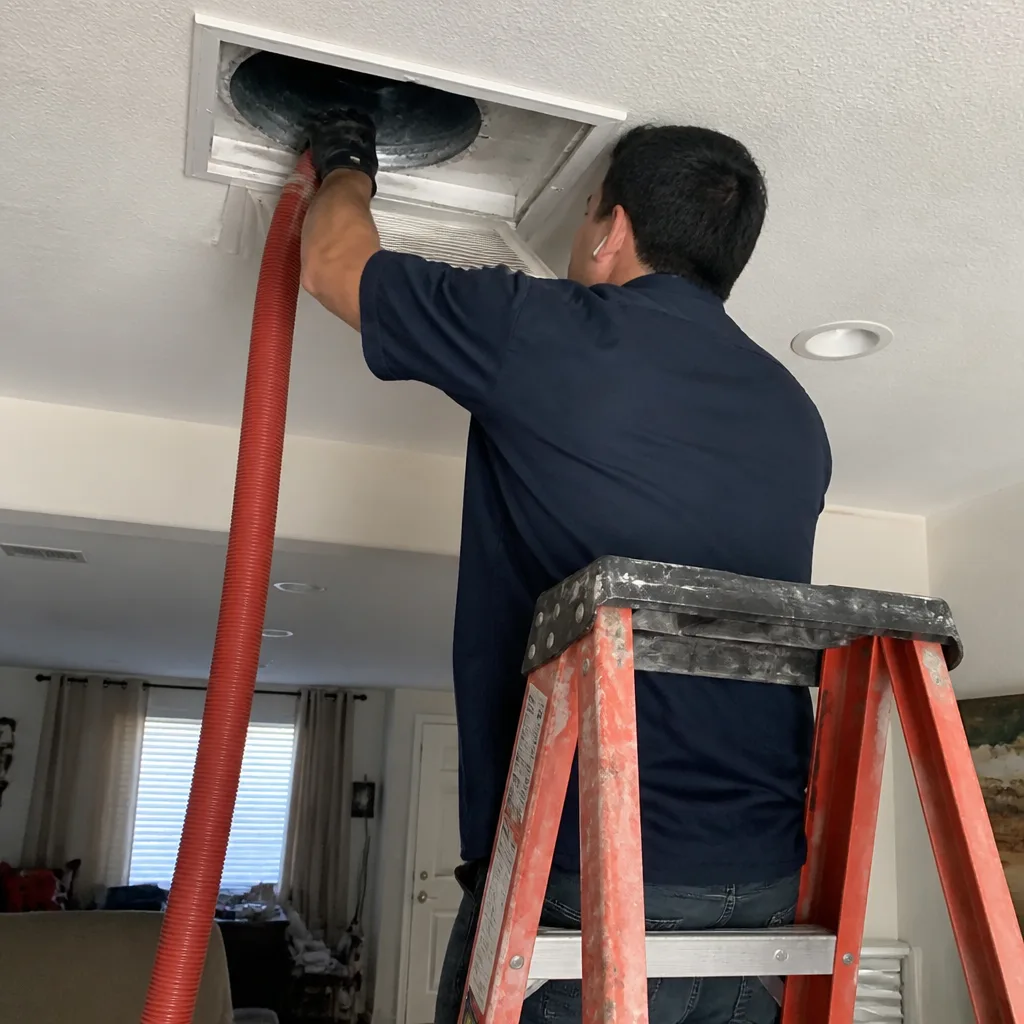
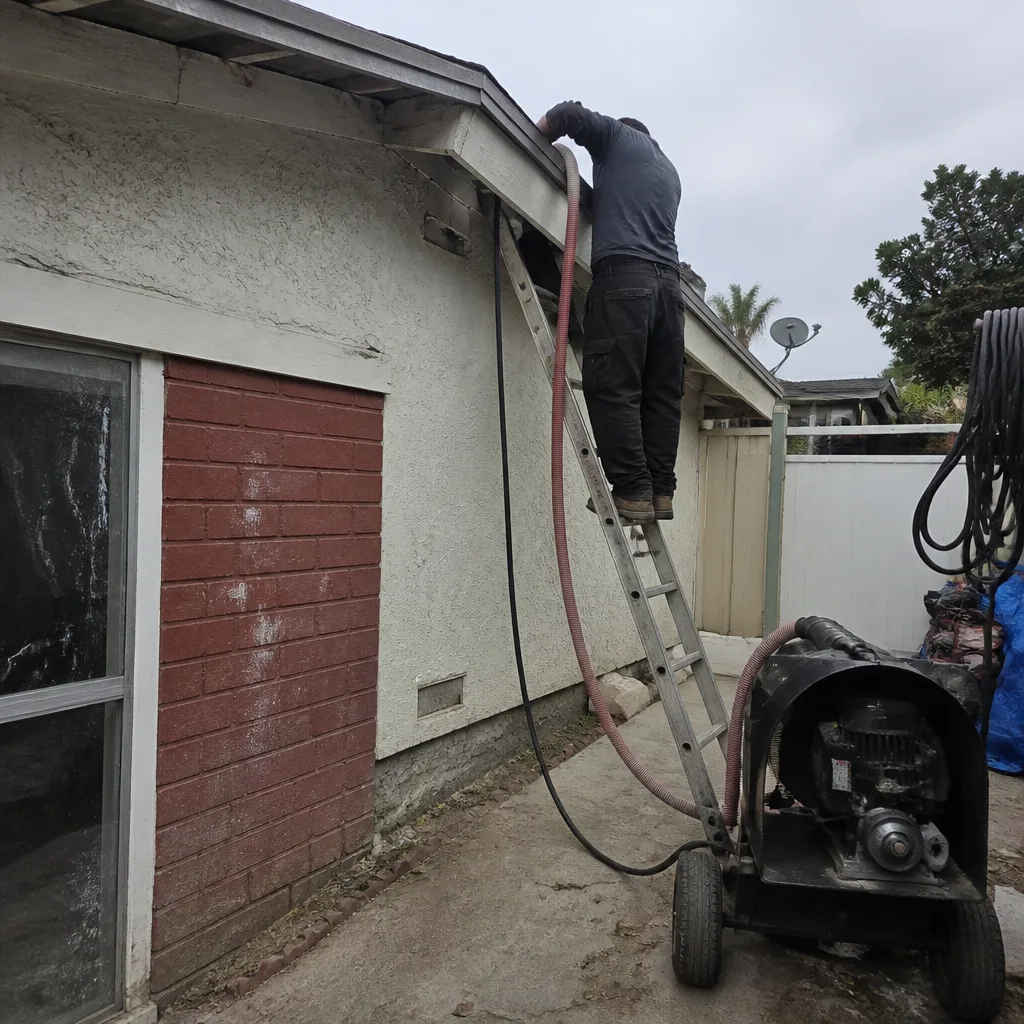
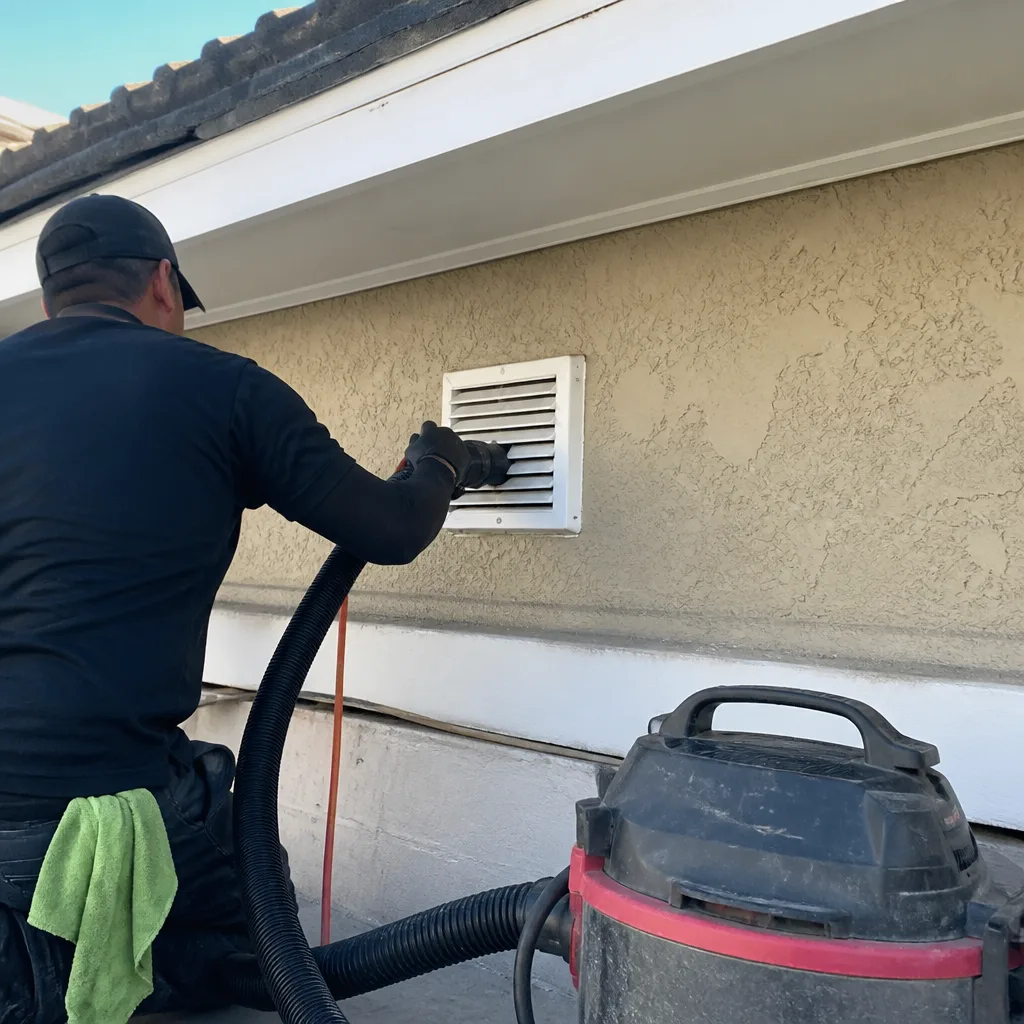
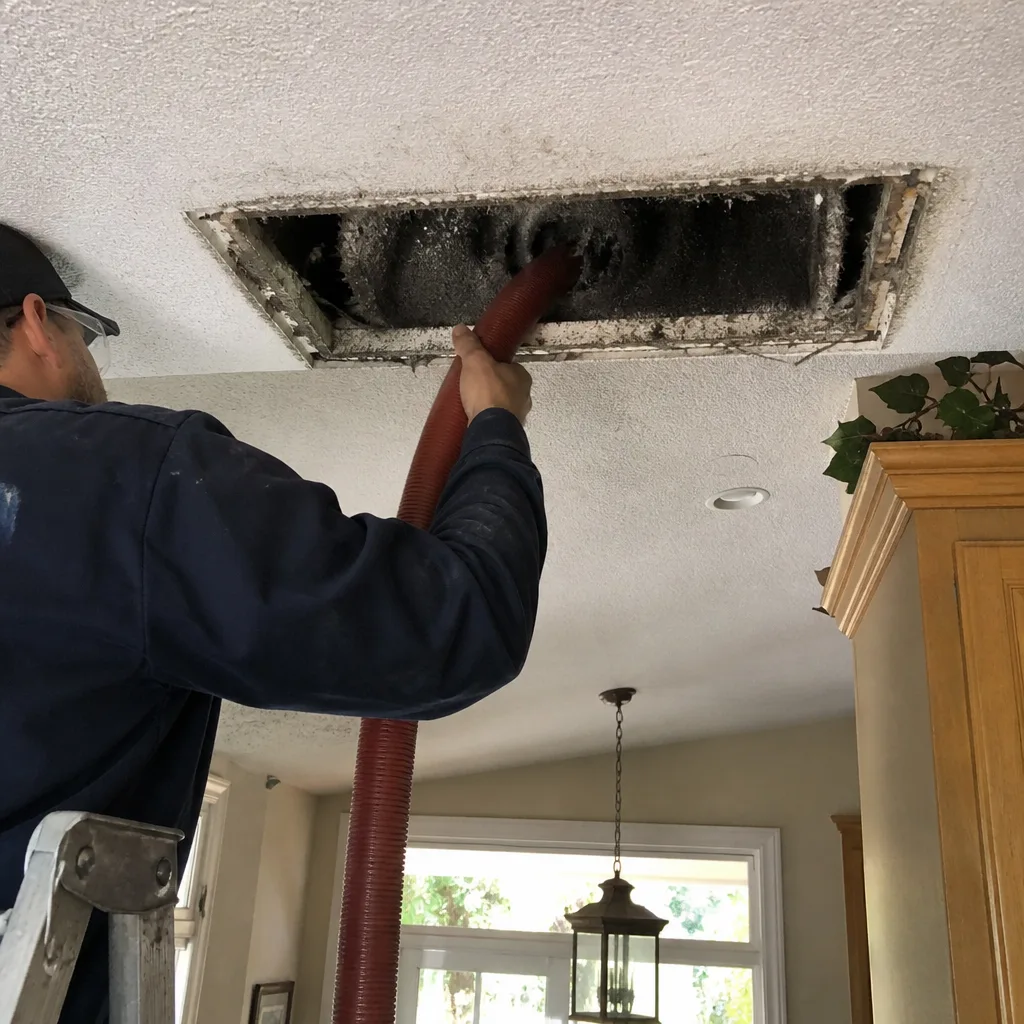
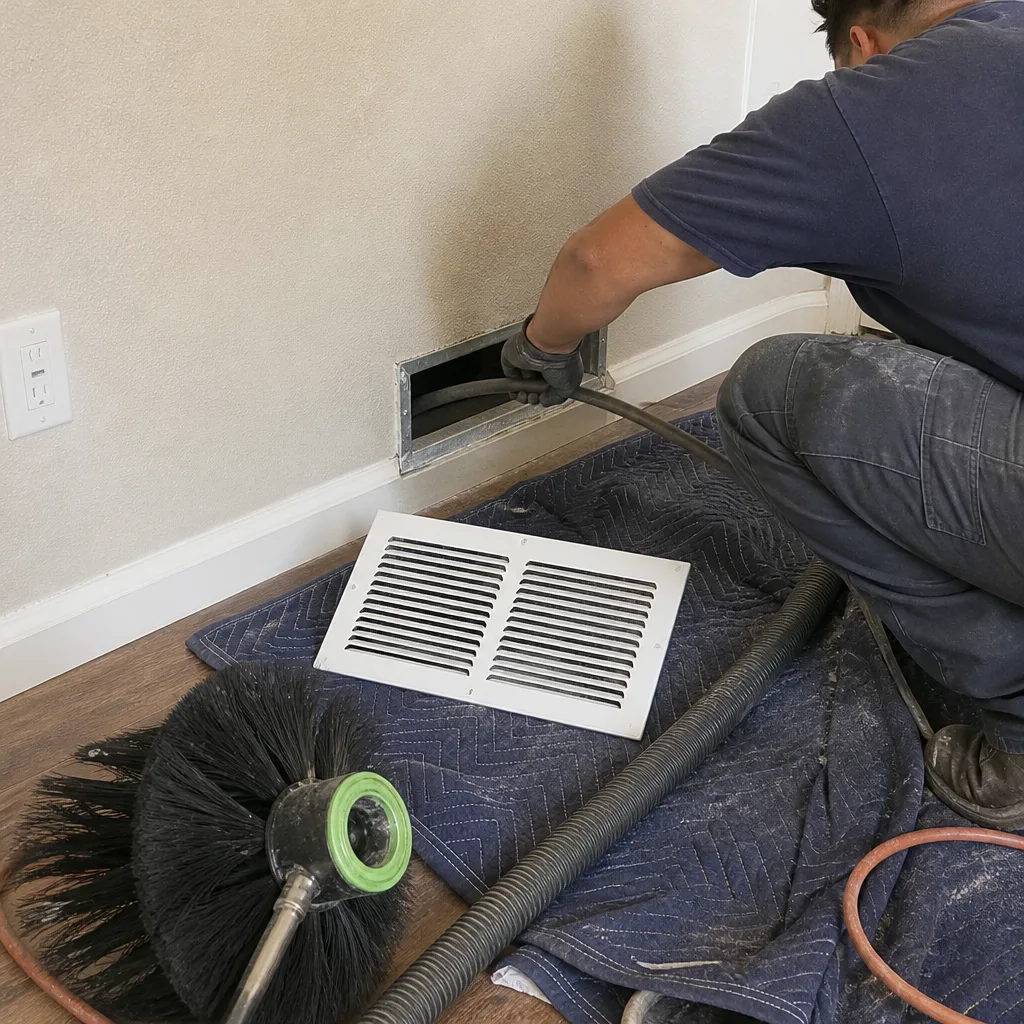
Whole-system duct and dryer vent check with before-and-after photos - you see exactly what came out of your vents
That "$99 whole-house special" is a bait ad - the real number appears once they are in your hallway, or the "clean" is a shop-vac at the register. We photograph the inside of your ducts before and after instead.
Air Duct Cleaning Warning Signs: A Chula Vista Homeowner’s Reference Guide
Most duct warning sign lists hand you a symptom checklist and leave you to guess which part of your system is failing. Here’s what that leaves out: a musty smell from your vents and a musty smell from your air handler are two different problems requiring two different responses. This guide – along with The Complete Air Duct Cleaning Guide for Chula Vista Homeowners – maps each warning sign to its probable root cause inside the system, so when you talk to a technician in Chula Vista, you’re describing a location and a condition, not a vague smell you can’t explain. By the end, you’ll know what you’re looking at, what’s urgent, and what can wait.
Styles & brands we work with
- Whole-home duct cleaning
- Dryer vent cleaning
- Camera inspection
- Sanitizing & deodorizing
Quick Answer
Air duct cleaning warning signs in Chula Vista include persistent dust accumulation on registers and surfaces within 48 hours of cleaning, musty or stale odors that intensify when the HVAC fan runs, visible mold staining around supply vents, reduced airflow from multiple rooms, unexplained allergy symptoms that subside when you leave home, and visible debris inside ducts visible through register openings. These symptoms point to specific conditions inside the system, and they’re best evaluated by a contractor-grade duct cleaning specialist offering our Air Duct Cleaning services rather than a discount suction-only service.
Table of Contents
- Odor Types and What They Point To
- Dust Patterns That Reveal the Source Location
- Airflow Changes and What They Mean
- Allergy Timing as a Diagnostic Tool
- Noises Inside the Ductwork
- Warning Signs Specific to Chula Vista Construction
- Signs a Previous Duct Cleaning Was Incomplete
- Common Mistakes to Avoid
- When to Call a Professional
- Frequently Asked Questions
- The Bottom Line
Odor Types and What They Point To
The smell coming from your vents is a diagnostic signal, and different odors point to different locations. Before you call for air duct cleaning in Chula Vista, spend five minutes identifying what the smell actually is. Here’s the symptom-to-source map we use when a homeowner describes an odor.
Musty or earthy smell, strongest when the fan first kicks on: This points to microbial growth inside the ductwork itself, most commonly on dust that has accumulated on duct walls. In Chula Vista’s coastal air, duct interiors stay damp longer than inland homes, and once the fan shuts off, that moisture settles into debris. The smell you notice at startup is the accumulated odor being pushed through the system. If the smell dissipates after a few minutes of running, the source is inside the ducts. If it lingers while the system runs continuously, see the next entry.
Musty smell that persists the entire time the system runs: This is the air handler or evaporator coil. The coil sits in a dark, damp environment and collects everything the filter misses. When microbial growth establishes on the coil or in the drain pan, the fan blows air across it constantly. A duct cleaning will not resolve this. What you need is a technician who understands the full air pathway, one who can identify that the odor source is at the coil and direct you accordingly rather than cleaning ducts that aren’t the problem.
Burning or dusty smell on first use after summer: This is typically accumulated dust on the heat exchanger or heating elements burning off. One cycle and it should clear. If it doesn’t, you may have debris sitting directly on a heating surface, which is a fire-safety concern worth addressing quickly.
Chemical or solvent smell: This can indicate a refrigerant leak, off-gassing from materials stored near a return, or cleaning products that were used inside the ductwork by a previous service provider. A chemical smell that appeared shortly after a duct cleaning is worth investigating; some discount providers spray deodorizers that mask rather than remove the underlying condition.
Rotten egg or sulfur: This is natural gas, and it requires immediate action. Shut off the system, avoid sparks, and contact your utility provider. This has nothing to do with duct cleaning, but we include it because a homeowner should never mistake it for a routine odor.
Dust Patterns That Reveal the Source Location
Dust that settles everywhere is not a duct problem. Dust that settles in specific patterns is. The distribution of dust in your home tells you whether the issue is inside the ducts, at the filter, or in the return air path.
Dust accumulating on the wall or ceiling directly above a supply register: This is one of the clearest indicators of debris inside the supply side of your duct system. The fan pushes air through the register, and if the duct walls are coated with accumulated material, that material gets carried out and deposited on the nearest surface. If you see gray or dark streaks forming above registers, especially in rooms you use daily, what you’re seeing is the duct system shedding its contents into your living space.
Even, fine dust on horizontal surfaces throughout the home within two days of cleaning: This points to the return side. Return ducts pull air from the home into the system, and if return duct interiors are coated, the system redistributes that material. It also points to an undersized or overloaded filter. A filter that’s overwhelmed passes particulate into the air handler and the supply side. In Chula Vista homes with aging systems, we frequently see homes where the filter slot was designed for a 1-inch fiberglass filter and the homeowner is running a high-resistance pleated filter that’s choking airflow while still passing fines.
Visible dust or debris inside a register when you remove the cover and shine a light in: This is direct observation. If you can see accumulated material coating the duct surface, you’re looking at the problem. What a suction-only service can’t address is material that has adhered to duct walls. A rotary-brush system such as Rotobrush mechanically agitates that material loose before extraction, which is the difference between a cleaning that removes visible debris and one that just vacuums the loose stuff.
Dark particulate accumulating specifically around return grilles: This is the filter doing its job poorly or the return duct interior shedding. If the return grille itself is caked, the air stream is dragging material from somewhere. It’s worth checking whether the duct interior has ever been cleaned, because if not, that return side is a reservoir.
How to Check Your Registers: A 3-Step Observation
- Turn the system off and remove one supply register cover in a room you use daily. Use a screwdriver if needed.
- Shine a flashlight into the duct opening. You’re looking at the first 12 to 18 inches of visible duct surface. Note the color and thickness of any coating.
- Wipe a white paper towel along the duct interior. If it comes away gray or brown with anything more than a faint trace, that material is in the air stream and is being circulated.
Repeat this at one register on the opposite side of the home. If both show buildup, the supply side needs mechanical cleaning. If only one does, you may be looking at a localized issue like a disconnected or leaking duct segment pulling in attic or wall-cavity air, which is a repair item as much as a cleaning item.
Airflow Changes and What They Mean
When airflow drops, homeowners often assume the HVAC system is failing. In many cases, the mechanical unit is fine and the duct system is the problem. Airflow symptoms are traceable, but only if you observe them systematically.
One room is noticeably warmer in summer or cooler in winter than the rest of the house: This points to a restriction in that room’s supply run or a disconnected duct segment. A duct that has separated at a joint is pulling air from the attic, wall cavity, or slab chase instead of delivering conditioned air to the room. Cleaning will not fix a disconnected duct, which is why we offer air duct repair in Chula Vista as a core service. The cleaning removes the accumulated material; the repair restores the connection. If you only clean around the problem, you’ll still have the problem.
Airflow has declined gradually across the entire house over months or years: This points to progressive restriction. The most common cause is a filter that’s been consistently overloaded, allowing material to accumulate on the inside of supply ducts and on the evaporator coil. Duct interiors in systems that have never been cleaned can accumulate enough material to meaningfully reduce the open cross-section of the duct. A 6-inch round duct with just a quarter inch of uniform lining loses roughly 15 percent of its airflow capacity before you account for additional restriction at bends and boots.
Airflow is strong at the unit but weak at distant registers: This points to duct leakage. The fan pushes air into the system, but somewhere between the plenum and the far rooms, that air is escaping through unsealed joints, gaps, or actual holes. In Chula Vista slab-on-grade homes, supply ducts routed through the slab or through utility chases are especially prone to this because any failure is hidden until it manifests as airflow loss.
You hear the fan running but feel almost nothing at the registers: This can indicate a collapsed duct, a major disconnection, or a severely obstructed return. If the return is clogged or the filter is completely packed, the system is starved for air and cannot deliver supply airflow regardless of fan speed.
Allergy Timing as a Diagnostic Tool
Allergy symptoms that track with your HVAC system are a legitimate diagnostic signal, but only when you separate timing from coincidence. Chula Vista’s microclimate makes this harder than it sounds; the area’s pollen seasons overlap with HVAC transition months, and a symptom spike in March could be ambient or could be your system.
Symptoms that improve within a few hours of leaving home and return within a few hours of coming back: This is the strongest indicator that the indoor environment, and plausibly the duct system, is a contributor. What travels through the ducts is whatever the ducts contain: accumulated dust, pollen that entered during past seasons, pet dander, and, in a home with moisture intrusion, mold spores. When a Chula Vista homeowner tells us their symptoms clear at work and return by evening, we start looking at the air pathway.
Symptoms that flare in the first 30 minutes after the system cycles on: This points to accumulated material in the supply side being stirred and delivered on startup. The burst of air at cycle initiation picks up whatever has settled on duct surfaces since the last cycle and carries it into the rooms. If symptoms are worst in the first half hour of each cycle and gradually ease, the duct interior is likely the reservoir.
Symptoms that are constant while the system runs, regardless of cycle: This points to the return side or the air handler. If the return ducts are loaded, the system recirculates that material continuously. If the air handler cabinet or coil is the source, the fan is blowing across it constantly. Timing tells you where to look.
Symptoms that spike during specific seasons regardless of system use: This is more likely ambient pollen or seasonal conditions. Note that open windows change the equation entirely; a home with windows open in spring is importing pollen faster than any duct system can filter it. The diagnostic value of allergy timing depends on observing symptoms with windows closed and the system in normal use.
Noises Inside the Ductwork
Duct systems should be nearly silent. When they’re not, the noise you hear is often the sound of a physical condition inside the system, and it’s interpretable if you listen closely.
A flapping or rhythmic tapping sound from the ducts when the fan runs: This is usually a piece of material, often a detached section of duct liner, a loose damper, or debris, that moves with the airflow. In older Chula Vista systems with lined ducts, the liner can delaminate and flap against the duct wall. If you hear this, the material will eventually tear free or shred, and either way you’re circulating particulate.
A whistling or high-pitched tone from a specific register: This points to a restriction at or near that register. It could be closed dampers, a crushed boot, or a register that’s been painted over enough times that the openings are restricted. Whistling is the sound of air being forced through an opening that’s too small.
A rattling sound that changes with fan speed: This is typically a loose or disconnected duct segment vibrating against framing or another duct surface. In slab-foundation homes, long straight runs through chases can rattle against concrete when hangers fail. It’s a mechanical issue, not a cleaning issue, but it’s found during the inspection that accompanies a proper duct cleaning.
A rhythmic thump only when the system shuts off: This is thermal contraction, usually benign. Ductwork expands and contracts with temperature changes, and sections under tension can pop as they settle. If it’s constant and predictable, it’s worth mentioning to a technician but it’s rarely a cleanliness or repair matter.
Warning Signs Specific to Chula Vista Construction
Chula Vista’s housing stock has a characteristic that changes how duct problems present: slab-on-grade construction with no crawlspace. In homes without a crawlspace, supply ducts often run through the slab, through utility chases, or through garages and finished spaces where they’re in ground contact. That changes failure patterns in specific ways.
Ground-contact ducts in garages and utility areas fail differently: In a garage, exposed duct runs sit closer to ambient temperature and moisture. When warm garage air meets a cool duct surface during air-conditioning season, condensation forms on the exterior. Over time, that standing condensation supports microbial growth on the exterior, and if the duct has even a small seam leak, the interior becomes damp as well. A homeowner who sees dark staining on garage ceiling ducts or water marks on the floor beneath them is looking at a system that’s been sweating for months.
Slab-embedded ducts and moisture intrusion: Ducts routed through slab are vulnerable to groundwater intrusion through cracks or failed seals. A musty odor that’s strongest at specific floor registers, paired with visible staining inside the boot, is the signature. This is one of the warning signs where we tell homeowners to act sooner rather than later. Standing moisture inside a supply boot is an immediate-action item; it supports growth that the system then distributes, and the moisture itself damages duct materials over time.
Chula Vista’s coastal air changes dust composition: The region’s air carries marine-layer moisture plus fine particulate. That means duct interiors in Chula Vista accumulate a different type of material than inland desert ducts; it’s finer, damper, and more likely to adhere to surfaces rather than sit loose. That’s precisely the condition that makes mechanical agitation necessary. A suction-only approach on damp, adhered coastal dust leaves a film on the duct wall that simply re-accumulates.
Older East Side and West Side neighborhoods have aging duct systems: These homes, many built in the 1960s and 1970s, often have original ductwork. Duct material from that era may be unlined or minimally lined, and joints were sealed with materials that degrade. If you live in an older Chula Vista neighborhood and you’re seeing dust patterns, airflow loss, or odors, the age of the ductwork is relevant to any honest diagnosis.
Signs a Previous Duct Cleaning Was Incomplete
A duct cleaning that didn’t address the actual problem leaves behind specific traces. If you paid for a cleaning and the symptoms returned quickly, here’s what to look for and what it means.
Symptoms returned within 30 to 60 days of the cleaning: If dust, odor, or allergy symptoms came back within two months, the cleaning did not remove the accumulated material from the duct surfaces. A superficial pass removes loose debris but leaves the adhered coating that actually drives symptoms. This is the most common pattern after a suction-only cleaning; the visible debris is gone for a few weeks, and then the symptom profile rebuilds because the source was never removed.
You saw the technician’s equipment and it fit through a doorway: Contractor-grade duct cleaning equipment is substantial. A portable vacuum and a brush on a drill cannot create the negative pressure or mechanical agitation needed to clean a full duct system. If the entire job was done with equipment that a single person could carry in one trip, the work was almost certainly not thorough.
No before-and-after access was provided: A legitimate duct cleaning includes visual verification. The technician should be able to show you the interior of supply and return ducts before and after. If no access panels were cut, no camera was used, and no photographic evidence was offered, you cannot verify anything was actually removed. We include this because in our experience in Chula Vista, homeowners who show us a previous cleaning invoice and can’t describe what the technician actually did are almost always describing a surface-level service.
The technician cleaned only the supply side and not the return: A complete air pathway cleaning addresses both sides. If the return ducts were never touched, the system simply re-contaminates the supply side within weeks. Ask specifically whether the return side was cleaned, how it was accessed, and how the technician verified the work.
Your filters were not mentioned: Any duct cleaning that doesn’t include a conversation about your filtration is incomplete. A mechanically cleaned duct system is only as good as the filter that protects it afterward. Our technicians work with Honeywell and Aprilaire filtration systems regularly and can advise on what your specific system needs, but the point stands regardless of brand: a cleaning that ignores the filter is a cleaning you’ll be paying for again.
Common Mistakes to Avoid
- Treating all odors as equal: A musty smell from the ducts and a musty smell from the air handler are different problems with different fixes. Determine when the smell occurs and whether it fades before you call, because that information changes the scope of the job and possibly the trade you actually need.
- Assuming a more restrictive filter will solve dust: A high-MERV filter on a system not designed for the pressure drop reduces airflow, which its own set of problems. Some Chula Vista systems we see would benefit more from a filter that fits correctly and actually seals than from a higher rating on the box.
- Running the fan continuously to “filter the air” on a dirty system: Continuous fan operation on a system with loaded ducts just circulates the material more. If the ducts are the reservoir, more runtime means more distributed particulate, not less.
- Skipping the return side: The return is half the system. A cleaning that only addresses supplies leaves the reservoir intact, and symptoms return within a season or two.
- Waiting until symptoms are severe: Duct conditions deteriorate progressively. A system that has gone years without cleaning doesn’t become a problem overnight; it reaches a threshold where symptoms become noticeable. Earlier intervention is less expensive than waiting until the system needs cleaning and repair.
- Using a discount provider on a system that needs mechanical cleaning: The bait-and-switch reputation in this industry exists for a reason. A low teaser price becomes a larger invoice once the van is on the drive, and the work often doesn’t include what the system actually needs. A flat price per system agreed before work starts is the standard you should ask for.
- Hiring a duct cleaner when you need a duct repair company: A disconnected duct, a crushed boot, or a separated joint will not be fixed by cleaning. If airflow is the problem, you need a provider who can address air duct repair in Chula Vista and cleaning in the same visit, not one who cleans around the problem.
When to Call a Professional
Some warning signs are an invitation to schedule a service at your convenience, and some are a reason to act now. Visible standing moisture inside a supply boot, black staining around multiple registers, a burning smell that doesn’t clear after one cycle, or a rotten-egg odor all warrant immediate contact with the appropriate professional. A single room with a persistent dust pattern, mild airflow loss, or a musty odor at startup are signs to schedule within 30 to 60 days; waiting longer just gives the condition time to compound.
If you’re in Chula Vista and you’ve identified one or more of the signs in this guide, Cornerstone Duct Cleaning offers free estimates, including the diagnostic conversation that tells you what you’re actually looking at. Call (877) 824-2920 and describe what you’re seeing. We’ll tell you honestly whether the problem is in the ducts, at the air handler, or somewhere else entirely. Read more on the Cornerstone Duct Cleaning home page to understand how we approach the full air pathway.
Frequently Asked Questions
You’ll see persistent dust accumulating on surfaces within 48 hours of cleaning, visible debris inside ducts when you remove a register and shine a light in, a musty odor that’s strongest when the fan starts, reduced airflow from multiple rooms, allergy symptoms that track with HVAC cycles, or dark staining around supply registers. Any one of these justifies an inspection; several together suggest the system has accumulated enough material to warrant cleaning. For ongoing maintenance tips, see more guides & resources.
Whole-system pricing in Chula Vista typically falls in a range that reflects the size of the home, the number of supply and return runs, and the condition of the system, but honest providers quote one flat price per system before work starts rather than a per-vent price that escalates once the technician arrives. Expect a contractor-grade cleaning, the kind that includes mechanical agitation and verified before-and-after access, to cost more than a suction-only pass. Call (877) 824-2920 for an exact quote; estimates are free.
Because the scope of work isn’t comparable. A low quote typically covers suction-only cleaning of accessible supply registers, with the return side, the plenums, and adhered material left unaddressed, and the final invoice often grows once the technician is on site. Mechanical cleaning with contractor-grade equipment, which is what actually removes the material causing your symptoms, costs more because it does more. The price difference reflects the difference between cleaning what’s visible and cleaning what’s actually in the system.
You should receive, or have access to, before-and-after visual verification of the duct interiors. A provider using a camera or cutting access panels can show you the supply and return surfaces before cleaning and after. If a company cannot show you what they did, you have no way to verify the work. Ask upfront how the provider will document the cleaning, and choose one who makes verification standard.
Every four to seven years for most Chula Vista homes, but that’s a starting point, not a rule. Homes with smokers, multiple pets, recent construction, or a history of moisture intrusion in the ducts move toward the shorter end of that range. A home that’s already been thoroughly cleaned and has good filtration in place may go longer. The honest answer depends on what’s actually in your system, which is why an inspection precedes a recommendation.
Yes, if the duct interior is the reservoir for the particulate that’s triggering the response. If symptoms improve when you leave home and worsen when you’re home with the system running, the indoor air pathway is a plausible contributor, and ducts loaded with accumulated dust, pollen, and dander will distribute that material every time the fan cycles. A proper cleaning removes the reservoir, after which filtration can maintain the improvement. For homes with sensitive occupants, we’ll often discuss Honeywell or Aprilaire filtration options alongside the cleaning itself. Call (877) 824-2920 for an assessment.
No, but the principle is the same. Your dryer vent is a separate pathway that accumulates lint, and in Chula Vista homes where the dryer run is long or has multiple bends, that accumulation creates both a fire risk and a performance problem. We offer dryer vent cleaning in Chula Vista as part of our complete air pathway services, because a home’s air systems work best when both the HVAC ducts and the dryer vent are clean.
The Bottom Line
Duct warning signs are diagnostic data, not a generic checklist. A musty smell at startup points inside the ducts; a musty smell that never fades points at the coil. Dust streaking above registers points to the supply side; even dust throughout the home points to the return or the filter. In Chula Vista’s slab-on-grade homes, ground-contact ducts fail differently, and coastal air changes what accumulates inside. The signs are readable. What they require is a provider with the equipment and scope to address what’s actually there, cleaning what’s in the system, repairing what’s broken, and showing you the difference. If you’ve been seeing signs, call (877) 824-2920 and describe what you’ve observed. We’ll do the reading.
Written by the team at Cornerstone Duct Cleaning, serving Chula Vista since 2013.
See the difference
 Before
 After
 Before
 After
 Before
 After