
Last updated November 2, 2026
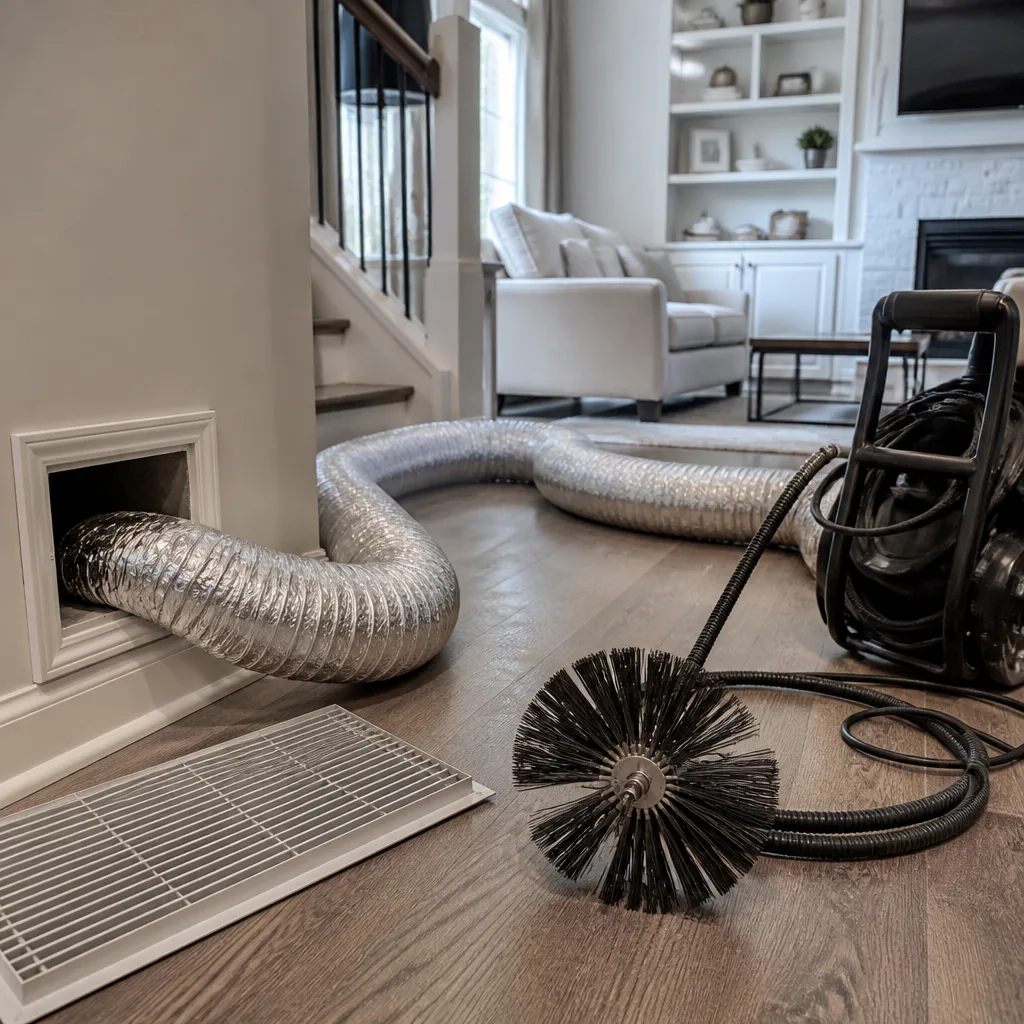 Whole-home duct cleaning
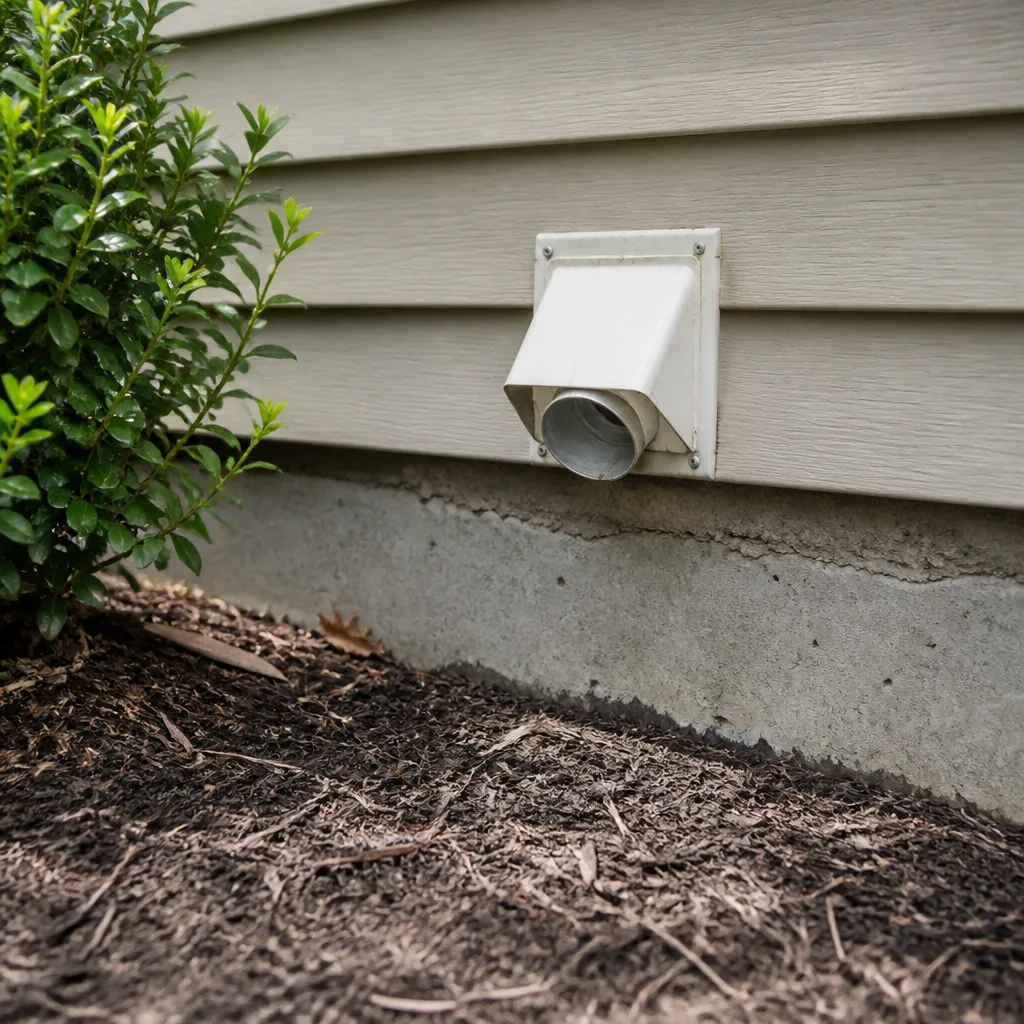 Dryer vent cleaning
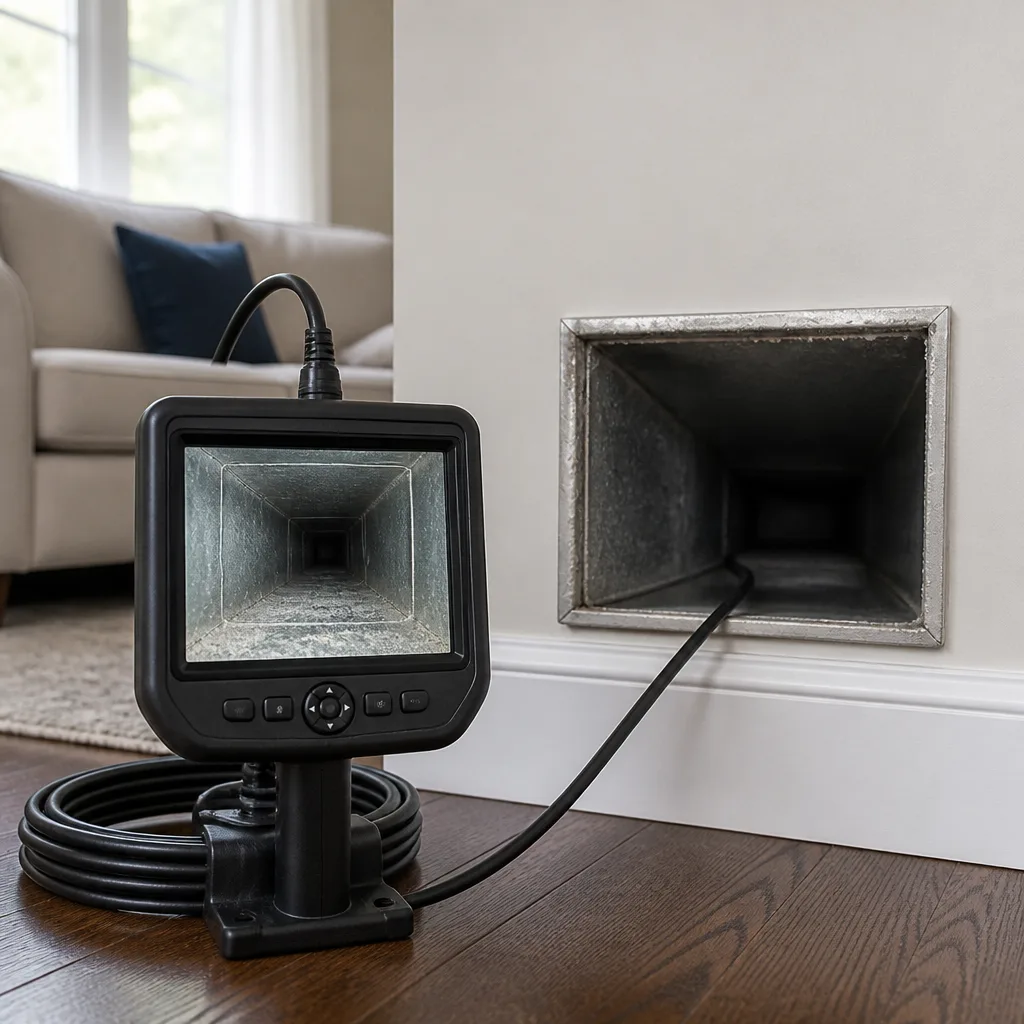 Camera inspection
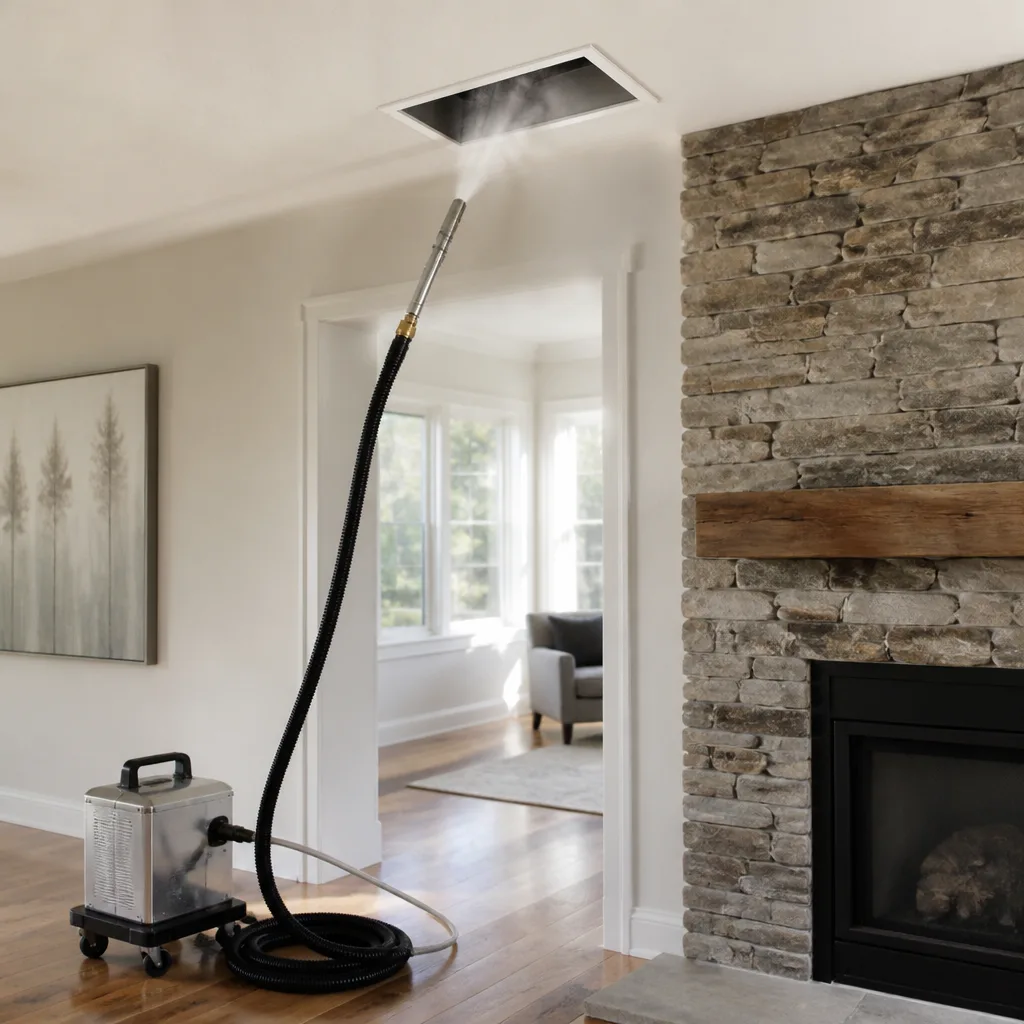 Sanitizing & deodorizing
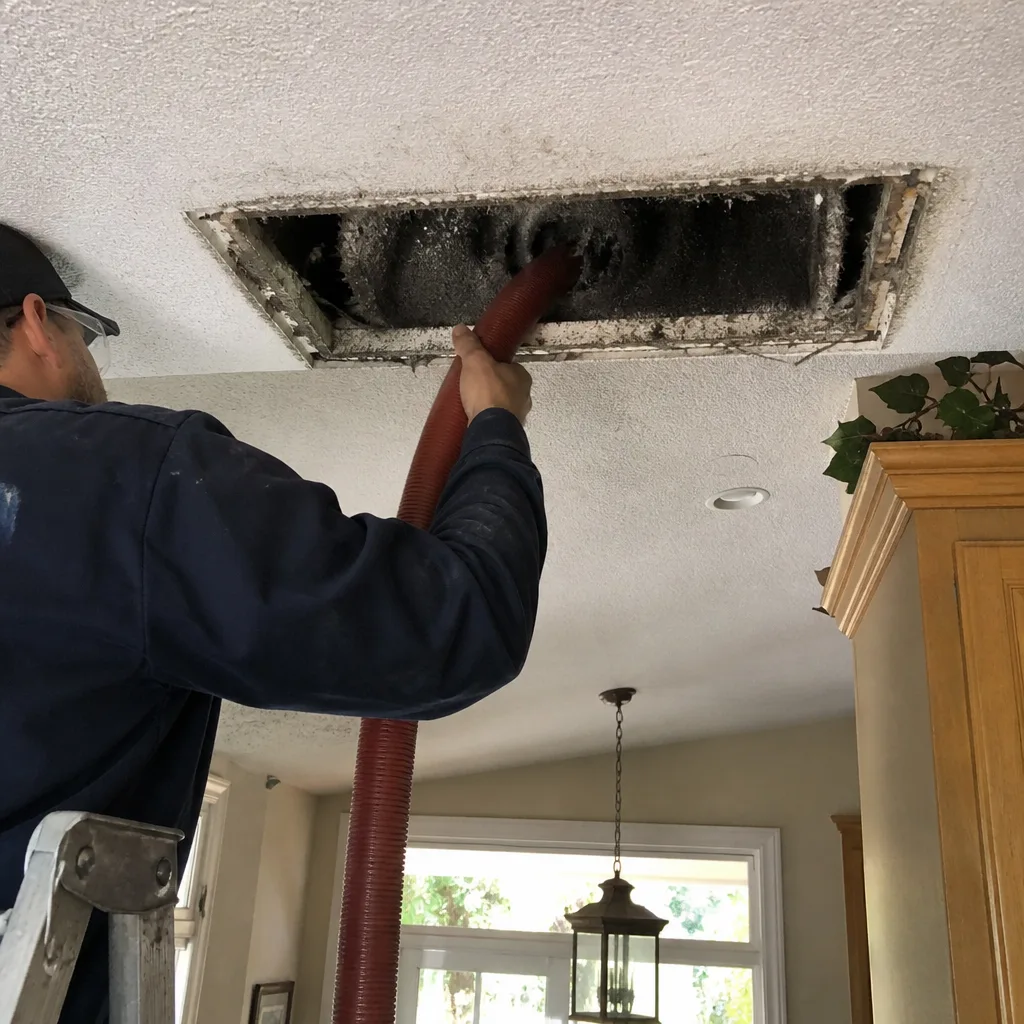
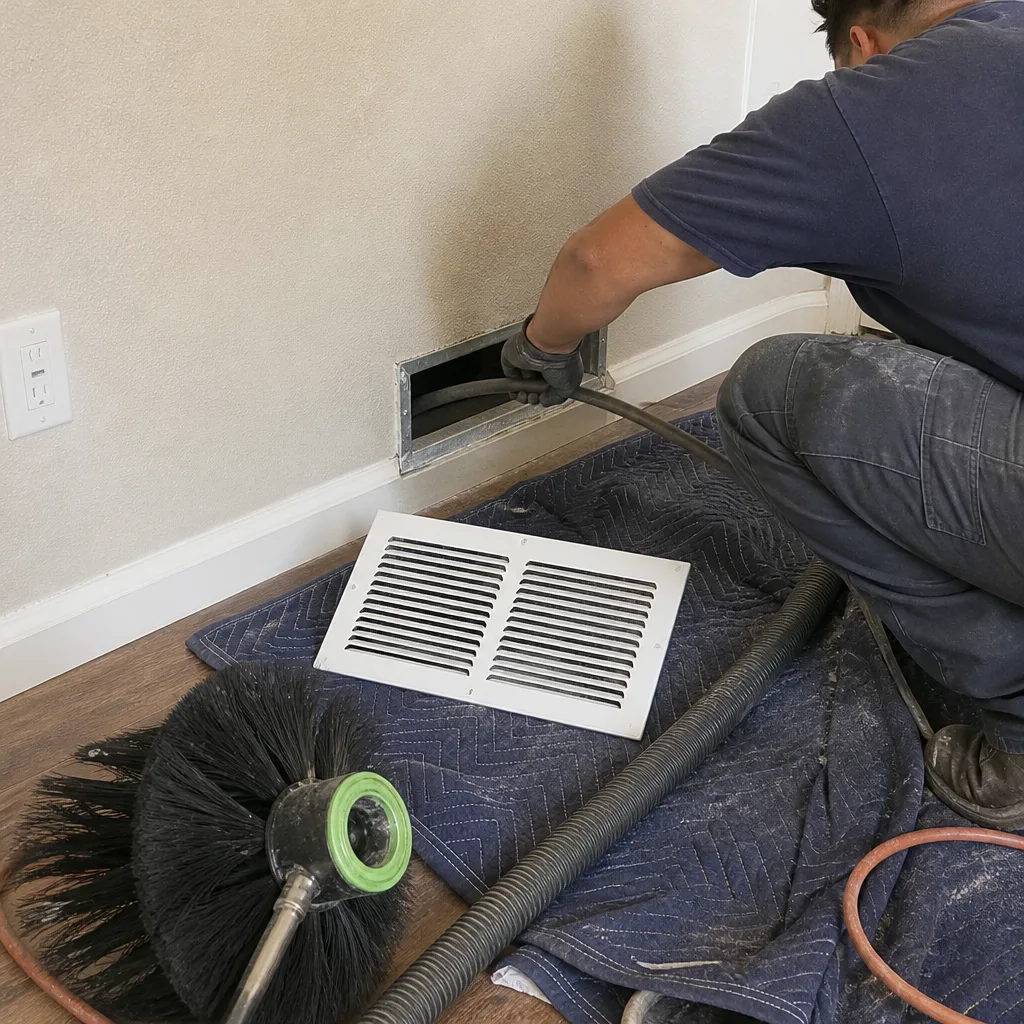
Whole-system duct and dryer vent check with before-and-after photos - you see exactly what came out of your vents
That "$99 whole-house special" is a bait ad - the real number appears once they are in your hallway, or the "clean" is a shop-vac at the register. We photograph the inside of your ducts before and after instead.
How to Hire an Air Duct Cleaning Contractor in Chula Vista: A Step-by-Step Guide
Duct cleaning is one of the few home services where the less reputable operators actively benefit from you not knowing what “done” looks like. A $99 special and a legitimate $450 job can look identical from your living room – same van, same hoses, same smiling technician. You can’t see inside your return plenum to verify the work. You can’t tell from a receipt whether the debris was actually removed or just loosened and left to re-settle. This guide exists because hiring well in Chula Vista requires knowing what questions make the bad operators uncomfortable and the good ones start nodding. By the time you finish reading, you’ll know exactly how to evaluate equipment, process, and proof of work before any money changes hands. We’ll walk through the standards that matter, the red flags specific to our market, and how to structure a quote comparison so the lowest bid stops looking like the smart choice.
Styles & brands we work with
- Whole-home duct cleaning
- Dryer vent cleaning
- Camera inspection
- Sanitizing & deodorizing
Quick Answer
Hiring a duct cleaning contractor in Chula Vista starts with demanding three specifics: negative-air equipment rated at 2,000 CFM or higher, a written scope following NADCA’s ACR standard, and before/after photo documentation of every access point. Get itemized quotes from at least two contractors, reject any bid priced per vent or under $250 for a whole house, and confirm the company carries liability insurance before scheduling. The right contractor will walk you through their contamination-control process without hesitation; the wrong one will change the subject to discounts.
Table of Contents
- Why Hiring a Duct Cleaner Is Different From Hiring Any Other Contractor
- Step 1: The Three Equipment Questions That Separate Professionals From Shop-Vac Operators
- Step 2: Understanding NADCA Standards and How to Ask About Them
- Step 3: Red Flags Specific to the Chula Vista Market
- Step 4: How to Structure a Quote Comparison
- Step 5: Documentation to Demand After the Job
- Step 6: Questions to Ask Before You Schedule
- Common Mistakes to Avoid
- When to Call a Professional
- Frequently Asked Questions
- The Bottom Line
Why Hiring a Duct Cleaner Is Different From Hiring Any Other Contractor
Paint dries. Tile grout sets. Trim gets caulked and you can run a finger over it. Air duct cleaning is the outlier in home services because the work product lives inside walls, above ceilings, and under floors – spaces you will never see after the job is done. That asymmetry of information is the entire game in this industry. Companies that do poor work in Chula Vista don’t fail because customers complain; they fail quietly, eventually, after enough repeat customers compare notes. But by then hundreds of homes have paid for a service that made no measurable difference to their air quality or system performance.
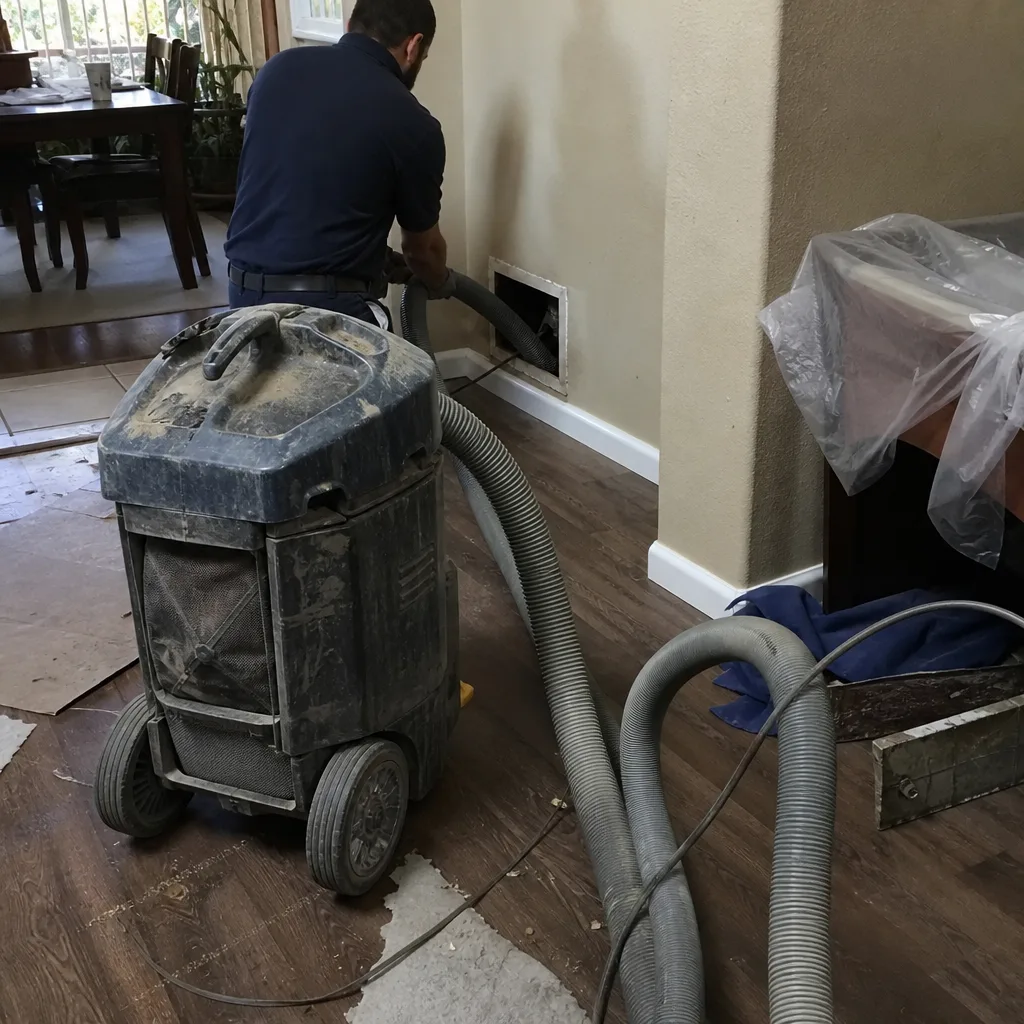
The counterintuitive part: spending more doesn’t automatically protect you. Premium pricing without documentation is just expensive mediocrity. The protection comes from verifiable process – equipment you can name, standards you can ask about, documentation you can hold. A contractor who runs a Rotobrush rotary-brush system through your supply ducts while maintaining negative pressure with a Nikro HEPA-filtered vacuum is doing something specific. A contractor who pushes a spinning brush on a drill and calls it “agitation” is doing something else entirely, and it shows up in what stays on the duct walls.
In Chula Vista specifically, our climate adds a factor. We get marine-layer humidity from the bay, weeks of dry Santa Ana wind, and a long cooling season. What accumulates in our ducts is a layered mixture: fine coastal dust, sand from inland construction, pet dander from indoor living, and the occasional moisture-related biological growth where condensation collects. A thorough cleaning has to address that combination. A suction-only pass removes loose debris and leaves the caked layer intact. That’s the difference between a service that changes your indoor environment and one that changes your invoice total.
Step 1: The Three Equipment Questions That Separate Professionals From Shop-Vac Operators
You can tell more about a duct cleaning company from a three-minute phone call than from a hundred online reviews. The questions below are the ones we recommend asking before you schedule anything. Good companies answer them in their sleep. Bad companies deflect, go vague, or start talking about special pricing.
Here’s the checklist. Write these down before you call:
- What is the CFM rating of your vacuum system? CFM stands for cubic feet per minute – the volume of air the vacuum moves. For a whole-house duct cleaning, the number needs to be 2,000 CFM or higher. Anything less and you’re paying for a glorified shop vac that can’t overcome the static pressure of a full residential system. Truck-mounted units typically pull 8,000 to 15,000 CFM. Portable professional units from brands like Nikro sit in the 2,000 to 5,000 range. If the answer is a unit small enough to carry in one hand, keep looking.
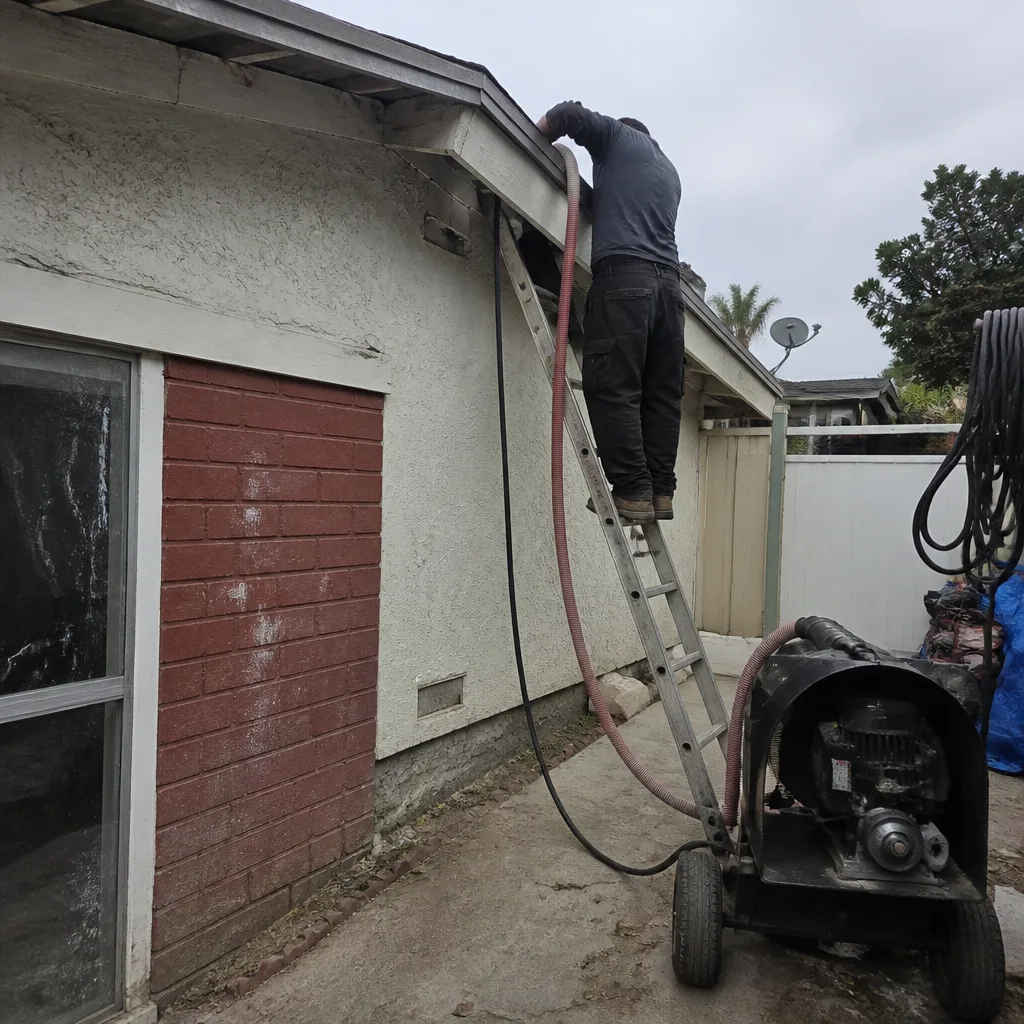
- Is your system truck-mount or portable? Truck-mounted systems have more raw power but require driveway access and hose runs through a window or door. Portable systems get close to the ductwork but depend entirely on proper setup to create the negative pressure needed for real debris capture. Neither is inherently better. What matters is that the contractor can explain why they use what they use and how they’ll maintain negative pressure throughout the job. The wrong answer is “we don’t need much power for that.”
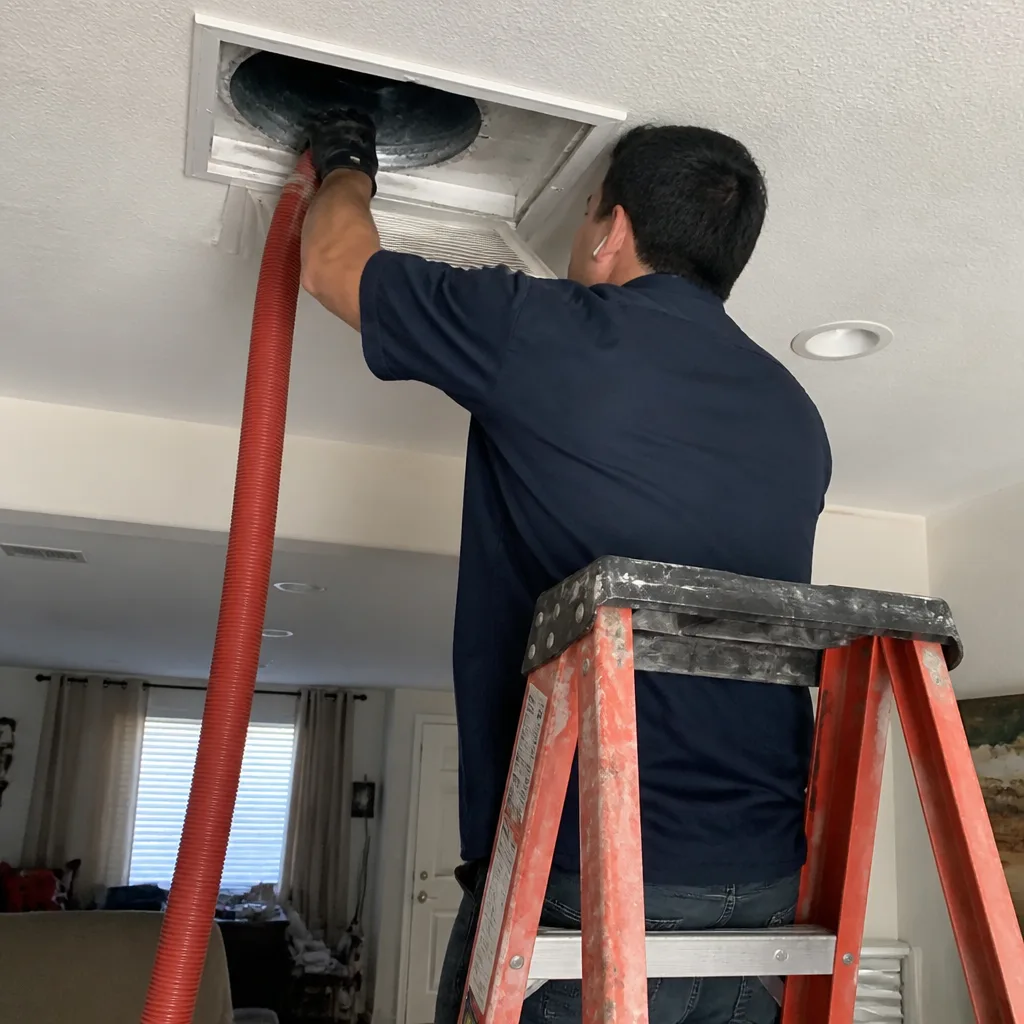
- How do you maintain negative pressure during cleaning? This is the question that separates the professionals. Negative pressure means the duct system is under constant vacuum while agitation happens. Without it, the loosened debris blows into your living room or stays suspended in the ducts and re-settles within weeks. The contractor should describe sealing registers, creating access points at the plenum, and running the vacuum continuously while the agitation tool does its work. If they can’t describe negative pressure in one sentence, they don’t do it.
The equipment brand matters because the capability is baked in. Rotobrush systems, for example, are built around this exact principle: mechanical agitation paired with continuous vacuum capture. Nikro equipment is the standard in professional mold remediation and restoration work, where containment is non-negotiable. When a contractor names their equipment by brand and model, it’s a signal they bought professional tools for a professional job – not whatever was on sale at the hardware store.
Step 2: Understanding NADCA Standards and How to Ask About Them
NADCA – the National Air Duct Cleaners Association – publishes the ACR standard, which is the closest thing this industry has to a professional code. It defines what “cleaning” actually means: removing visible debris from all interior surfaces of the air conveyance system, including supply ducts, return ducts, coils, blower, drain pan, and plenums. ACR stands for Assessment, Cleaning, and Restoration, and the standard covers all three phases.
Here’s how to use this in a hiring conversation, without needing to read the standard yourself:
- Ask directly: “Does your process follow the NADCA ACR standard?” The answer should be an immediate yes, followed by a brief explanation of what that means on a job site.
- Ask for the walkthrough: “Can you walk me through which steps of the ACR standard your process covers?” A competent technician will describe assessing the system first, cleaning all surfaces with agitation and extraction, and then inspecting the result. They’ll mention the blower, the coils, and the return side – not just the supply registers you can see from the living room.
- Watch what happens when they can’t answer. A deer-in-headlights pause tells you everything. Companies that don’t follow a written standard are working from a script that prioritizes speed over completeness. The $99 special exists because the company needs to be in and out in under an hour to make money. You cannot clean a full residential system thoroughly in under an hour. The math doesn’t work.
In Chula Vista, where homes range from 1950s ranch-style builds in the western neighborhoods to larger 1990s and 2000s construction east of the 805, duct configurations vary widely. Older homes often have undersized returns and no access panels. Newer homes have more complex zoned systems. The right contractor approaches each differently, and the NADCA framework is what keeps the process consistent regardless of what’s behind the walls. Our experience in the city tells us that homes built before 1980 almost always have duct conditions that were never designed with service access in mind – and that changes what a proper cleaning actually requires.
Step 3: Red Flags Specific to the Chula Vista Market
Every market develops its own operator patterns, and Chula Vista is no exception. The proximity to San Diego, the density of rental properties, and the high number of first-time homeowners in Eastlake and Otay Ranch create fertile ground for volume operators. Here’s what to watch for, in order of how often we hear about it from customers who call us after a bad experience:
- Door-hangers advertising whole-house cleaning under $150. This is the classic bait. The crew shows up, does a partial clean in forty minutes, then generates a list of “problems” that need urgent attention. The final invoice lands somewhere between $600 and $1,200. A thorough whole-house cleaning in Chula Vista, done properly, cannot be delivered for $150. The labor alone doesn’t pencil out. For the six-plus duct runs common in a 1,500-square-foot home, the math is what it is.
- “Mold treatment” offered on first contact. Be precise here: legitimate duct cleaning removes the organic debris mold grows on, which is a real preventive benefit. But a company that raises mold before they’ve ever set foot in your home is selling fear, not facts. Mold testing and treatment are separate services with separate standards. If someone tells you over the phone that you “probably have mold in your ducts,” end the call.
- Technicians who can’t explain what they found. After the job, a professional should be able to tell you what came out of your ducts, where the worst buildup was, and whether they saw any signs of leakage, damage, or disconnected runs. The technician who packs up and hands you a receipt without a single observation about your actual system performed a motion, not a service. In our work, the inspection report is arguably more valuable than the cleaning itself – because it tells you what your system actually needs.
- Quotes that don’t reference your home’s specifics. A contractor who hasn’t asked about square footage, number of returns, age of the home, or whether you have pets is pricing a template, not a job. That template will be adjusted upward on-site. The estimate conversation should feel like an interview about your house.
- Pressure to sign today for a discount. Legitimate duct cleaning contractors in Chula Vista schedule a week or two out. A company that has a crew in your neighborhood “right now” and can do it “this afternoon if you commit” is running a sales operation, not a service operation. The urgency is manufactured to prevent you from calling someone else.
None of these red flags require expertise to spot. They require the patience to ask a follow-up question and the willingness to end a call that doesn’t feel right. That’s the entire defense mechanism.
Step 4: How to Structure a Quote Comparison
The quote comparison is where most Chula Vista homeowners get lost, because nobody taught us how to read these documents. The instinct is to compare final numbers. That’s the trap. A legitimate $425 quote and a bait-and-switch $129 quote are not comparable objects – one describes a service and one describes a foot in the door.
Here’s what should appear on any serious quote for air duct cleaning in Chula Vista:
- Scope of work, itemized. Supply ducts, return ducts, blower assembly, evaporator coil (if accessible), drain pan, and plenum. Each should be listed with a line item. If “whole system” is the entire scope description, ask for detail.
- Access point details. How many access points will be cut, where, and how they’ll be sealed afterward. A proper cleaning requires access at the plenum and often at other points in the system. If the contractor says they can do it all through the registers, they’re not cleaning the trunk line.
- Equipment specification. The quote should reference the vacuum system by brand or CFM rating and the agitation method. No equipment info on a quote is a quiet admission.
- Projected duration. A single-family home in Chula Vista typically takes between 3 and 6 hours for a thorough cleaning. A quote that anticipates under 2 hours is describing a partial service.
- Exclusions. What’s not covered. Some companies exclude the blower housing or coil from their base price. Others exclude returns. You can’t compare quotes without knowing where each contractor draws the line.
On “per vent” pricing: any contractor pricing per vent is telling you they plan to skip whatever is between the vents. The trunk line, the plenum, the return drops, the coil – none of that is a “vent.” Per-vent pricing works for the operator because it sounds granular and precise, but it actually describes a cleaning approach that skips the highest-debris areas of the system. We price per system because the system is what you’re cleaning.
On why the lowest bid is almost always incomplete: the economics of duct cleaning are not mysterious. Equipment amortization, labor hours, disposal costs, and insurance all have floors. In Chula Vista’s market, a legitimate whole-home cleaning for an average 1,800-square-foot house lands in the $350 to $600 range depending on system condition and accessibility. Bids below $250 are describing something else – a partial clean, a register blow-out, a coupon bait. When one bid is dramatically lower than the others, the question isn’t “why are these other guys so expensive?” It’s “what is this guy not doing?”
Step 5: Documentation to Demand After the Job
The work happens behind walls, but the documentation shouldn’t. A professional duct cleaning leaves a paper trail that would let another contractor verify what was done. Here’s the complete list of what to request before the crew leaves, and why each item matters:
- Before-and-after photos of every access point. This is non-negotiable. Any contractor running professional equipment can capture photos of the duct interior through the access hole – before cleaning and after. The after photo should show bare metal or duct board. If they “forgot” to take photos, that’s not an oversight. Request them on the quote so there’s no dispute later.
- Written scope of work, completed. The itemized quote should come back as an itemized invoice with each line marked complete. If the coil was on the quote and the technician couldn’t access it, that should be noted in writing with a reason. Silence is how incomplete work gets buried.
- Findings about duct condition. A real value of professional cleaning is the inspection it includes. The technician should note any sections with leakage, loose connections, damaged insulation, rust, or evidence of pests. This report is what turns a $400 cleaning into a $2,000 avoided repair. Duct repair is a service worth knowing about before a leak becomes a problem, and a thorough inspection surfaces it.
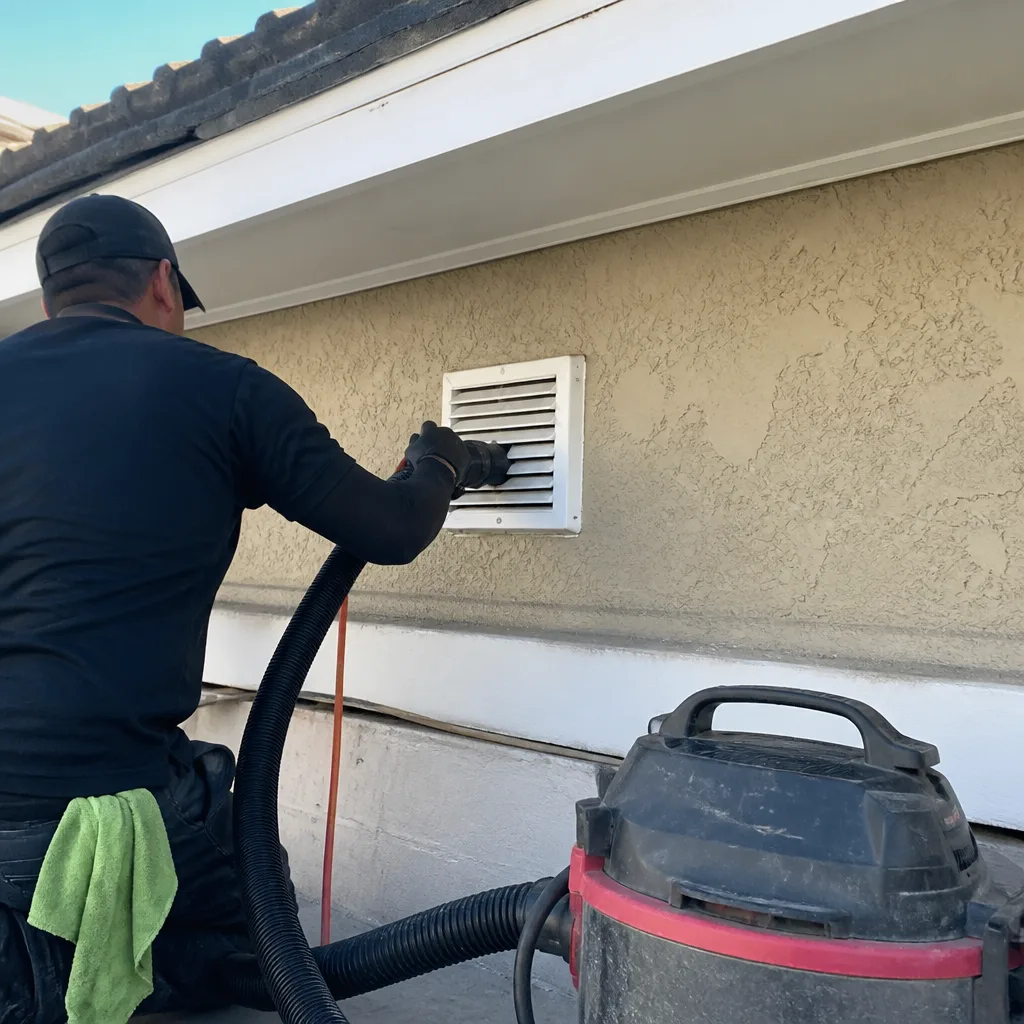
- Dryer vent verification. If your scope included dryer vent cleaning, ask for the before-and-after airflow reading. A blocked vent might pull 10 CFM before cleaning and 100+ after. Numbers are proof. If the contractor can’t produce them, you’ve learned something.
- Instructions for what to expect post-cleaning. The system should smell neutral, not chemical. There may be brief dust settling in the first 24 hours. The contractor should explain what’s normal and what would warrant a callback. A company that leaves without this conversation is treating you as a completed transaction, not a customer.
One more note on documentation: keep these records with your HVAC service history. The next time your system needs attention, the cleaning report tells the technician what was found, when, and in what condition. That continuity is worth real money over the life of the system.
Step 6: Questions to Ask Before You Schedule
You now know the red flags, the standards, and the documentation. Here’s the complete pre-hire questionnaire, consolidated into a single list you can work through over a phone call. We recommend calling at least two companies and comparing answers, not just prices:
- Are you licensed and insured for duct cleaning work in California? Liability insurance is the floor. Worker’s comp matters too, because a crew member injured in your home without coverage creates a liability for you. Ask for a certificate of insurance and verify it’s current.
- Which brand of equipment do you run, and what’s the CFM rating? You’re listening for specific brands with professional lineage – Rotobrush, Nikro, Abatement Technologies – and a CFM number above 2,000. “We have professional equipment” without a brand is not an answer.
- Does your process follow the NADCA ACR standard? Walk me through your steps. The detailed answer confirms the standard is actually implemented. The vague answer confirms it’s not.
- What’s included in your price for a home my size? Have your square footage and return count ready. The answer should be specific to your home, not a generic package description.
- How long will the job take? Under 2 hours for a full house is a warning sign. Real answers cluster in the 3 to 6 hour range depending on system complexity.
- Do you provide before-and-after photos from every access point? The answer must be yes. The only acceptable exception is if access constraints make photography impossible, and even then the technician should show you the access points before sealing them.
- Can you also assess and repair ducts if you find damage? Some companies only clean, which means damage discovered during cleaning becomes a separate service call with a separate company. There’s a real efficiency in working with a company that can handle air duct repair as part of the same engagement. It’s not required, but it’s worth weighing.
Common Mistakes to Avoid
- Choosing by price before reading scope. The $149 door-hanger is the most expensive duct cleaning in Chula Vista when measured by dollars-per-duct-actually-cleaned. Read the scope first. Compare scope to scope. Then compare price.
- Assuming all duct cleaning is the same. It’s not. The difference between a suction-only pass and mechanical agitation with negative pressure is the difference between cleaning and rearranging. Ask about equipment. Ask about the standard. The answers reveal the difference.
- Skipping the documentation request. Before-and-after photos are the single most effective anti-scam tool in this industry. Companies that won’t provide them are making an admission. Demand them on the quote, not after the fact.
- Ignoring the return side of the system. Homeowners fixate on supply registers because those are the vents they see. The return side typically carries more debris because it’s pulling unfiltered air from the living spaces. A quote that underplays the return side is skipping the dirtiest part of the system.
- Buying fear-based upsells on the spot. Mold treatments, UV light installations, “anti-bacterial fogging” – these are all real services with legitimate applications, but they should never be first-contact pitches. Any company pushing these before cleaning your system is selling a narrative, not a finding.
- Not asking about the dryer vent. In Chula Vista’s rental-heavy market, dryer vents are the red-headed stepchild of home maintenance. A blocked dryer vent is a fire hazard and a major inefficiency. If you’re already paying for a service visit, ask whether dryer vent cleaning is part of the scope or available as an add-on. The answer tells you whether the contractor sees the full air system or just the ducts.
- Trusting online reviews without a phone interview. Reviews have value but they cannot reveal equipment quality, process rigor, or documentation practices. Ten minutes on the phone answering the questions in this guide will tell you more than a hundred five-star ratings.
When to Call a Professional
You’ve now walked through the full hiring framework. The decision of when to hire is simpler: if you can’t remember the last time your ducts were cleaned, it’s time. If you’ve done renovation work that produced drywall dust or sawdust, it’s time. If anyone in the home has persistent allergy symptoms that improve when you’re away from the house, it’s time. If your dryer takes two cycles to get towels dry, it’s time – that’s a vent problem, not a dryer problem. And if you’ve never seen the inside of your return plenum, which is most of us, that’s the single best reason to schedule an inspection. Cornerstone Duct Cleaning home offers free estimates in Chula Vista – call (877) 824-2920 and we’ll walk you through the same evaluation process described in this guide, applied to your specific home and system.
Frequently Asked Questions
A legitimate whole-home air duct cleaning in Chula Vista typically costs between $350 and $600 for an average single-family home, depending on system size, accessibility, and condition. Homes with complex zoned systems or extensive pet hair and construction debris run higher. Bids under $250 are almost always either partial cleanings or bait-and-switch tactics. Get an itemized quote that lists supply ducts, return ducts, blower, and coil separately so you know what the number actually covers. Call (877) 824-2920 for a free estimate on your specific system.
Cheaper quotes almost always describe less work – typically a suction-only pass through the supply registers without cleaning the return side, blower housing, coils, or trunk line. The economics of thorough duct cleaning have a floor: equipment amortization, 3 to 6 hours of labor, insurance, and proper disposal all cost real money. When a Chula Vista contractor quotes under $250 for a whole house, the math means something is being skipped. Ask what’s included and compare scope before comparing price.
Request before-and-after photos from every access point before the crew seals them. The after photos should show bare metal or duct board at each point, not debris residue. A written scope of work marked complete by the technician and notes on anything unusual found during the cleaning are also part of the verification trail. Any contractor running professional equipment can document the work this way; a refusal to do so is a red flag. Call (877) 824-2920 if you’d like to understand what proper documentation looks like for your home.
Most homes in Chula Vista benefit from duct cleaning every 3 to 5 years, with the exact interval depending on pet occupancy, local construction activity, and whether the household includes allergy sufferers or smokers. Homes near active development in eastern Chula Vista or Otay Ranch may need more frequent cleaning due to construction dust. The best way to know is to have the system inspected and see what’s actually inside before deciding.
Truck-mounted systems generate higher raw vacuum power, typically 8,000 to 15,000 CFM, but require hose access through a window or door. Portable professional units, like those from Nikro, pull 2,000 to 5,000 CFM and work directly at the access point. Both can do the job properly when the contractor maintains negative pressure throughout the cleaning. The question to ask is how negative pressure is maintained during agitation – not where the vacuum happens to sit. The answer reveals whether the contractor understands containment.
Some do and some don’t. The best providers treat the entire air path – ducts, dryer vent, and system components – as one connected system. A company that cleans ducts but refuses to touch the dryer vent is like a mechanic who changes the oil but won’t check the brakes. When you call for a quote, ask whether dryer vent cleaning is included or available, and what the airflow verification looks like after the job. (877) 824-2920 is the number to call for an estimate on the full air system.
The Bottom Line
Hiring a duct cleaning contractor in Chula Vista comes down to three verifiable things: equipment that can actually do the job, a process that follows a written standard, and documentation that proves the work happened. Everything else – pricing, reviews, branding – is secondary to those three. Ask the CFM question. Ask about NADCA. Demand photos. Compare scope, not just price. The contractors who welcome these questions are the ones worth hiring. The ones who dodge them are telling you what you need to know. Remember that the goal isn’t finding the cheapest bid; it’s finding a contractor who treats your air system as what it is: the thing that determines whether every breath in your house helps or hurts. We’ve built our company around that understanding, with air duct repair capabilities that mean we don’t just clean around problems – we fix them. If you’re in Chula Vista and want a straight answer about your ducts, call us at (877) 824-2920. The estimate is free. The information is worth more.
Written by the team at Cornerstone Duct Cleaning, serving Chula Vista since 2013.
See the difference
 Before
 After
 Before
 After
 Before
 After