
Last updated November 2, 2026
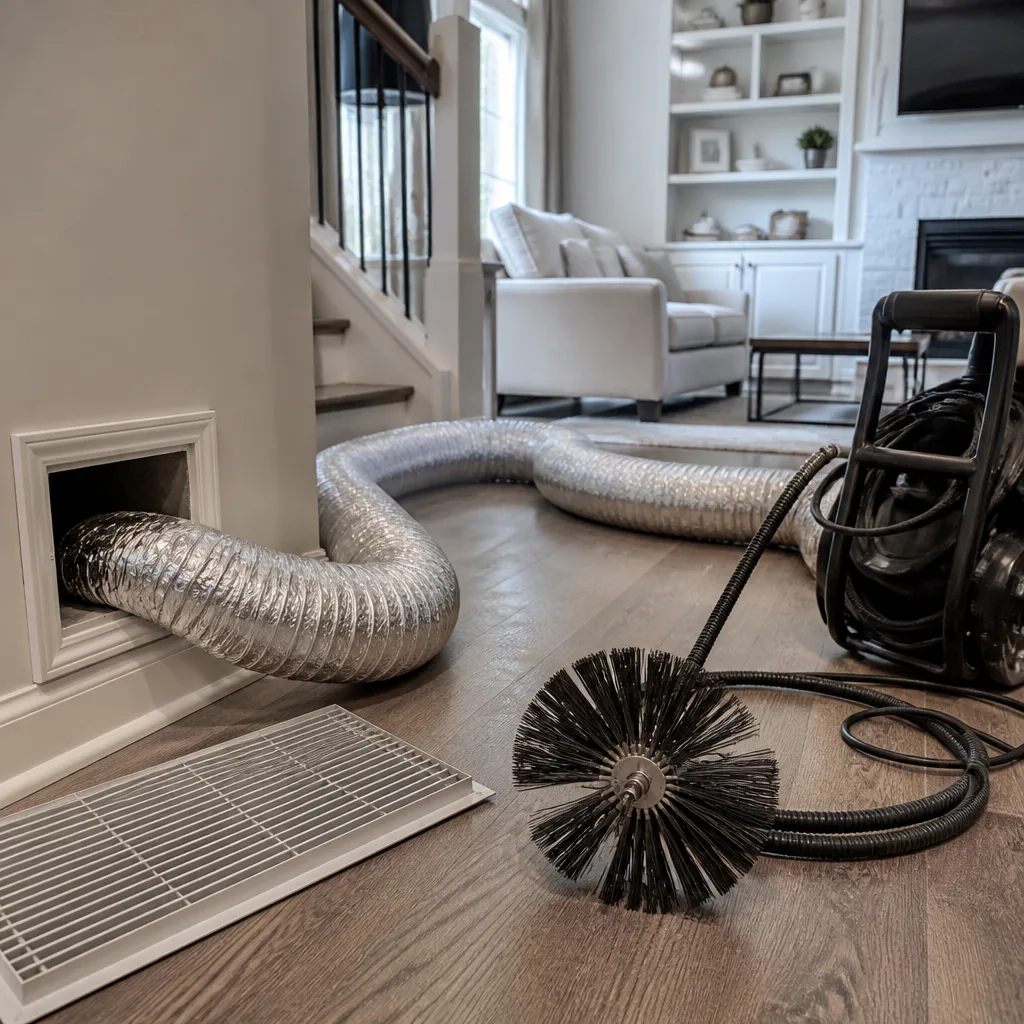 Whole-home duct cleaning
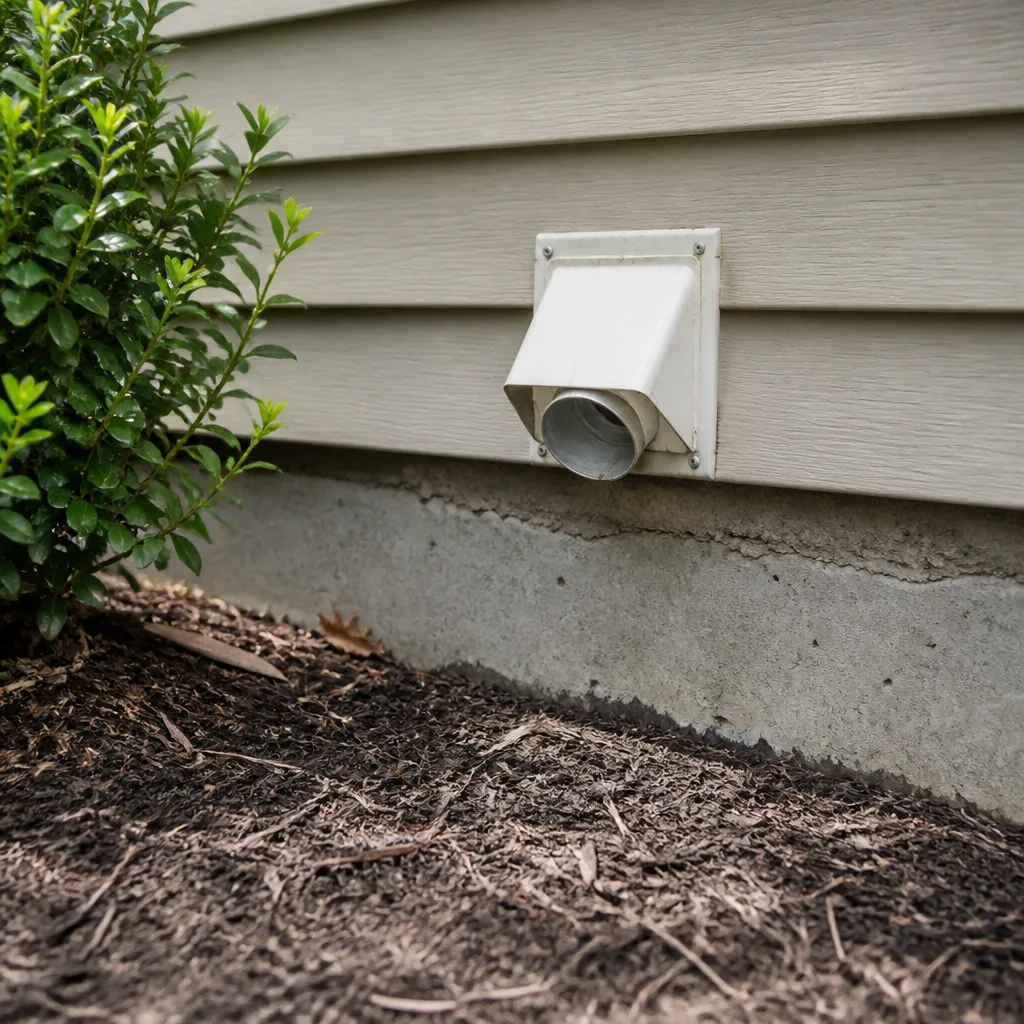 Dryer vent cleaning
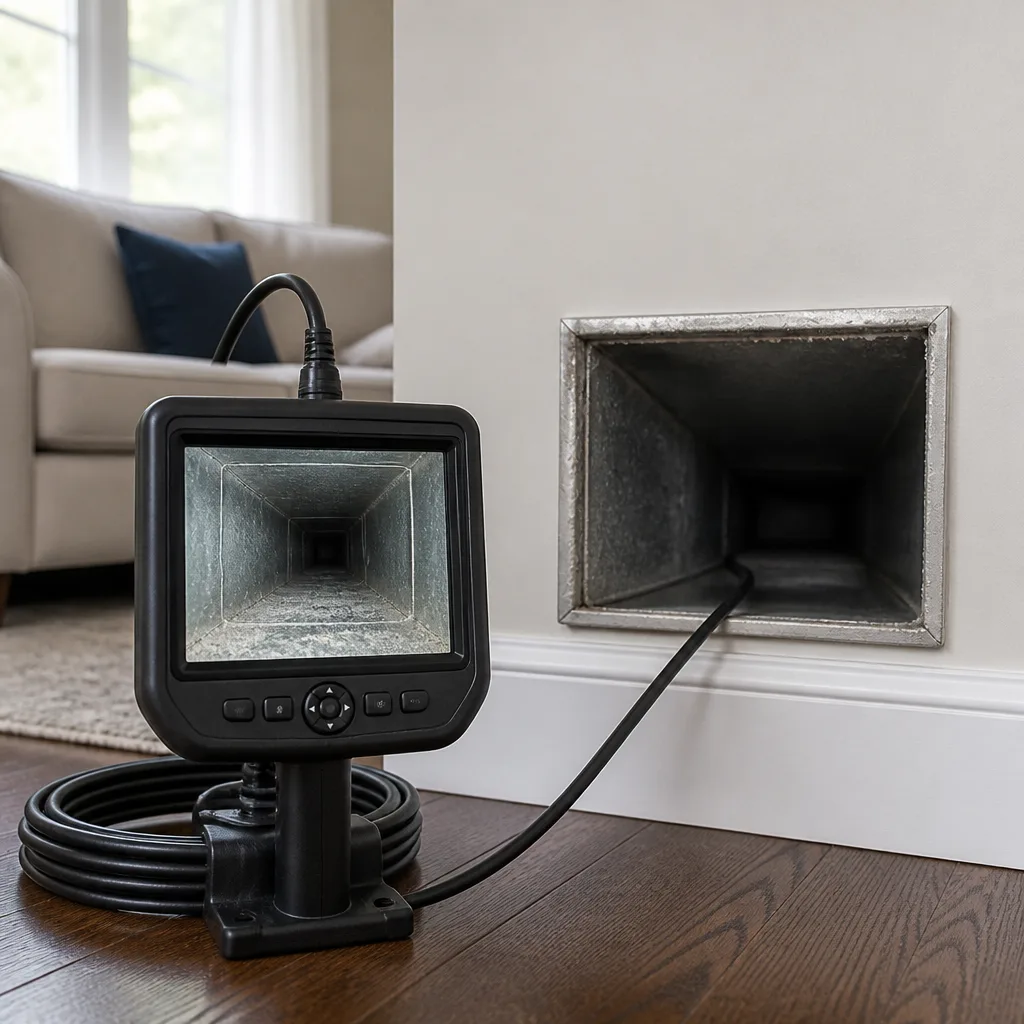 Camera inspection
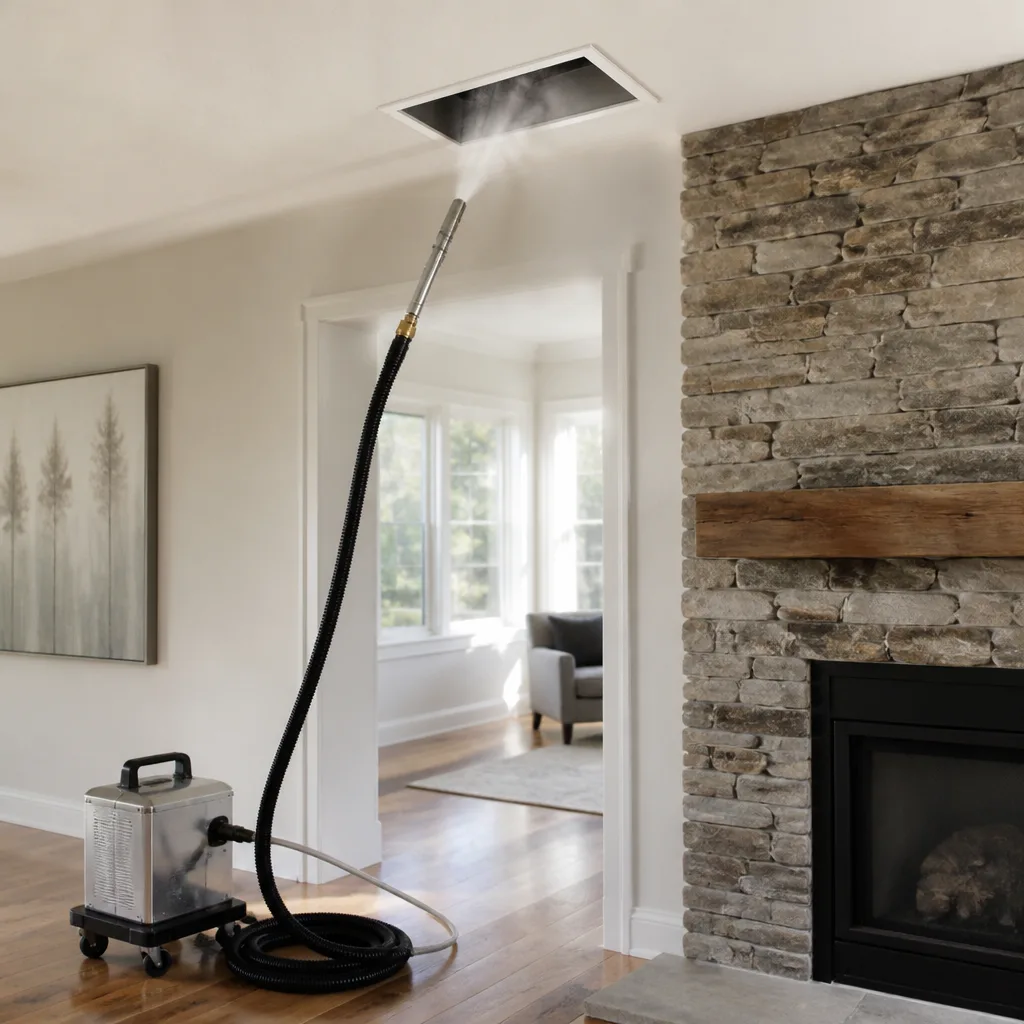 Sanitizing & deodorizing
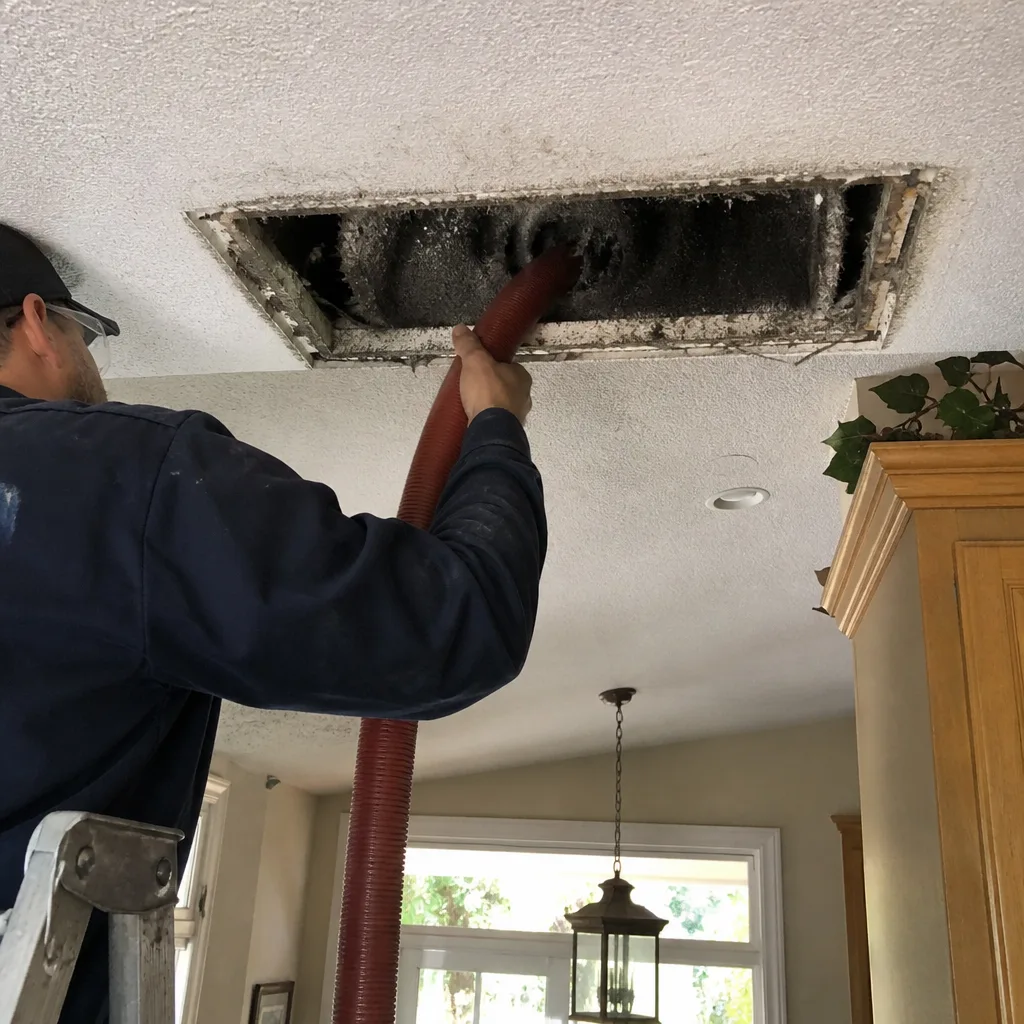
Whole-system duct and dryer vent check with before-and-after photos - you see exactly what came out of your vents
That "$99 whole-house special" is a bait ad - the real number appears once they are in your hallway, or the "clean" is a shop-vac at the register. We photograph the inside of your ducts before and after instead.
Seasonal Air Duct Cleaning Care for Chula Vista: Year-Round Homeowner’s Guide
Most seasonal duct cleaning guides are written for places with four real seasons and furnaces that run half the year. Chula Vista doesn’t work that way. Our air is shaped by the Pacific marine layer, the Santa Ana winds that barrel through the canyons each fall, and a cooling season that stretches from April through November. What lands inside your ductwork, when it lands, and what it does once it’s there follows a completely different calendar here. This guide replaces the generic “spring and fall” advice with a Chula Vista-specific schedule built around the four distinct stress periods your HVAC system actually experiences in San Diego’s South Bay. You’ll learn what each season deposits in your ducts, which months demand inspection, and when cleaning delivers the most value for the money. For more guides & resources on maintaining your home’s air quality, explore our blog.
Quick Answer
In Chula Vista, air ducts accumulate different contaminants on a predictable four-season cycle: marine layer moisture in early summer, heavy dust loading during peak cooling months, Santa Ana wind particulates from October through November, and a relative rest period in winter. The highest-value times to inspect and clean ductwork are April (before cooling demand spikes), early October (before Santa Ana season), and after any significant wildfire smoke event. Most Chula Vista homes without pets or major renovations need Air Duct Cleaning services every 3 to 5 years, though households with allergy sufferers, smokers, or recent construction should shorten that interval to every 2 to 3 years.
Styles & brands we work with
- Whole-home duct cleaning
- Dryer vent cleaning
- Camera inspection
- Sanitizing & deodorizing
Table of Contents
- The Four Chula Vista HVAC Seasons (Not the Ones You Learned in School)
- June Gloom and the Moisture Problem: What Marine Layer Humidity Does Inside Ducts
- Santa Ana Season: The Worst Contamination Event Most Homeowners Ignore
- Wildfire Smoke and Your Ductwork: What Gets Past the Filter
- Your Pre-Summer Inspection Checklist: Why April Is the Smartest Month in Chula Vista
- Utility Bills, Comfort Complaints, and Other Seasonal Diagnostic Signals
- How Often Should Chula Vista Homeowners Actually Clean Their Ducts?
- What a Seasonal Duct Cleaning Actually Involves (And What It Should Cost)
The Four Chula Vista HVAC Seasons (Not the Ones You Learned in School)
Chula Vista sits in a Mediterranean climate zone, but that label hides more than it reveals. What actually governs your indoor air quality is a repeating cycle of four distinct stress periods, each with its own contaminant profile. Understanding these periods, and what your ducts collect during each one, is the foundation of sensible seasonal maintenance.
From late May through early July, the marine layer settles over the South Bay and refuses to burn off until afternoon. This is the June Gloom period, and it’s not just an outdoor annoyance. Homes in western Chula Vista neighborhoods near the bay absorb this humidity through every open window, every door cycle, and every fresh-air intake. The problem isn’t the moisture you can see on your car windshield. It’s what happens when humid air meets the cool interior surfaces of your ductwork, especially the insulated flex duct that runs through most Chula Vista attics. We’ll cover that in depth below.
From July through September, Chula Vista’s cooling demand peaks. Your air handler runs for hours each day, pulling air through the return registers and pushing it through the supply ducts. Every hour of runtime pulls more household dust, pet dander, and skin cells through the filter. If the filter is undersized, clogged, or installed incorrectly, that debris bypasses it entirely and accumulates on the evaporator coil and duct walls. This is the period when duct systems in Chula Vista take on their heaviest loading of the year.
October and November bring the Santa Ana winds. These offshore gusts originate in the high desert and sweep down through the mountain passes, carrying fine dust, combustion particulates, and whatever’s burning in the backcountry. Homes in eastern Chula Vista, particularly in the Eastlake and Otay Ranch areas, sit directly in the path of this particulate surge. Air that enters your return registers during a Santa Ana event carries a load of fine material that most residential filters are not designed to handle. This is frequently the worst single contamination event of the year for Chula Vista ductwork.
December through April is the relative rest period. Cooling demand drops. Windows open more often. The system catches its breath. This is the window where professional cleaning and repair work makes the most sense, because you’re not interrupting cooling during peak demand, and because the system isn’t actively accumulating new debris while the work happens. If you’re going to schedule anything, schedule it here, or in the April pre-season window we’ll discuss below.
June Gloom and the Moisture Problem: What Marine Layer Humidity Does Inside Ducts
Chula Vista’s marine layer isn’t just fog. It’s a persistent humidity event that can push indoor relative humidity above 60% for weeks at a time, especially in homes without whole-house dehumidification. When that humid air enters your duct system, it encounters surfaces that are often cooler than the air itself, particularly when the air conditioner has been running. The result is condensation.
Condensation inside ductwork creates exactly the conditions biological growth needs: moisture, darkness, and a food source (the dust and organic debris already stuck to duct walls). This is the counterintuitive reality of coastal climates: a mild, “non-extreme” environment like Chula Vista can actually produce more biological contamination inside ducts than a hot, dry desert climate would, because the desert lacks the moisture component. In our experience working on homes across Chula Vista, the June Gloom period is when homeowners first notice musty odors coming from their registers, often in the morning before the system has run long enough to dry things out.
The homes most vulnerable to this problem share a few characteristics. Single-story homes with ductwork in the attic are the most exposed, because the attic space itself traps humid air and the ducts sit in that environment all day. Homes with poorly sealed return plenums draw unconditioned attic air directly into the system, bringing the humidity with it. And homes where the air conditioner is oversized for the square footage tend to short-cycle, meaning the system cools the air quickly but never runs long enough to remove meaningful moisture. The supply side stays cold, the air stays damp, and the inside of the ductwork stays wet.
What should you do about this? During June and early July, pay attention to odors coming from your registers. If you smell something musty when the system first starts up, that’s often condensation-fed biological growth in the duct lining or on the coil. A seasonal inspection during this window can identify whether the problem is surface-level condensation or something that requires professional remediation. Not every moisture issue requires full duct replacement, but every moisture issue requires an answer. If condensate is pooling rather than draining, if duct insulation is saturated, or if the musty odor persists after the system has run for 30 minutes, those are signals that the problem has moved beyond what a filter change will fix.
For homeowners who want a deeper look at how Chula Vista’s climate affects the full air pathway, the Air Duct Cleaning in Chula Vista page covers the mechanical side of what accumulates and how we remove it.
Santa Ana Season: The Worst Contamination Event Most Homeowners Ignore
The generic seasonal duct guide tells you to clean in spring and fall. In Chula Vista, that advice misses the single most damaging period of the year: October through November, when the Santa Ana winds push fine particulates from the eastern foothills directly into return air systems. These winds are dry, gusty, and loaded with material you don’t want inside your ductwork.
Here’s what’s actually in Santa Ana air. The winds originate over the high desert, where they pick up fine mineral dust, sand, and pollen from desert vegetation. As they accelerate through the passes and canyons east of Chula Vista, they gather additional material from exposed soil and construction sites. During wildfire events, which peak in the same October-November window, they carry smoke particulates and combustion byproducts. The result is an air mass with particulate concentrations that can be ten to twenty times higher than the coastal background Chula Vista experiences the rest of the year.
Your HVAC system’s filters are the first line of defense, and during Santa Ana events they’re simply overwhelmed. A standard 1-inch fiberglass filter, the kind still installed in many Chula Vista homes, captures perhaps 15-20% of particles in the 2.5-10 micron range and essentially nothing below that. A MERV-8 pleated filter does better, but even a good filter only protects the system if it remains in place and seals correctly. When the filter loads up during a multi-day Santa Ana event and the homeowner doesn’t change it, two things happen: airflow drops, and the pressure differential across the filter increases. Once the filter becomes restrictive enough, air finds another path. It bypasses the filter at the edges of the filter slot, around the filter frame, or through gaps in the filter rack. That unfiltered air carries Santa Ana dust straight onto the evaporator coil and into the supply ductwork.
How do you know if a Santa Ana season has left a deposit in your system? Pull the filter during or right after a Santa Ana event and look at it. If it’s loaded with reddish-brown fine dust, that’s the high-desert signature. If you see that same dust accumulating around register openings inside your home, particularly on the supply side, it’s a good bet the same material is coating the inside of your ducts. We’ve seen return plenums in Chula Vista homes after a particularly active Santa Ana season that looked like they’d been dusted with flour. That material doesn’t leave on its own. It sits in the system, getting re-entrained into the air stream every time the blower runs, until someone removes it.
The practical takeaway: if you live in Chula Vista and you haven’t had your ducts inspected in the last few years, early October is the time to do it. For help preparing your system before these events strike, review our Air Duct Cleaning Emergency Preparedness Guide for Chula Vista Homes. Get a baseline before the winds arrive so you know what a clean system looks like, then assess after the season has passed. For homes that draw in heavy Santa Ana dust, an end-of-November or December cleaning resets the system before the cooler months. Prevention also helps: upgrading to a MERV-11 or MERV-13 filter (provided your system can handle the pressure drop), sealing the filter rack, and running the fan in “on” mode during high-wind events all reduce what gets through.
Wildfire Smoke and Your Ductwork: What Gets Past the Filter
Wildfire smoke is a different contaminant than the everyday dust your system handles. It’s finer, stickier, and more persistent. When fires burn in San Diego County’s backcountry, or when smoke drifts south from fires in Riverside or Los Angeles counties, Chula Vista homes take on smoke particulates that behave differently from normal household dust.
The particles that make up wildfire smoke are predominantly in the sub-micron range, meaning they pass through most residential filters without being captured. A MERV-13 filter will catch a meaningful percentage. A MERV-8 filter catches only the largest smoke particles. A standard fiberglass filter catches almost nothing. What gets through travels through the return ductwork, past the blower, and either deposits on the evaporator coil (where the moist surface makes particles stick) or continues into the supply ducts. The coil is the big problem. Smoke deposition on a coil reduces heat transfer efficiency and creates a sticky surface that then captures more dust than it otherwise would, accelerating the accumulation cycle.
Post-wildfire smoke season inspection should look for specific signatures. Smoke residue on duct interiors appears as a fine, dark, sometimes oily film rather than a dry gray dust. You may find it concentrated around the return registers first, because that’s where smoky air enters the system. Inside the blower compartment, smoke residue often appears as a darkening of the blower wheel blades. On the coil, it looks like a gray or brown coating that won’t rinse away with water alone. If you’re seeing dark streaking around supply registers inside the home after a smoke event, that’s a sign smoke particles have moved through the entire system and are being blown into living spaces.
One key decision point after a wildfire smoke event: should you clean the ducts, or just change the filter and wait? The honest answer is that it depends on smoke intensity and duration. A single day of hazy conditions from a distant fire is unlikely to require professional duct cleaning. Multiple days of visible smoke, especially if you could smell smoke inside the home for an extended period, is a different story. When smoke infiltrates a Chula Vista home at that level, the odor compounds absorb into duct linings, insulation, and even the wall cavities around the registers. A filter change alone won’t address what’s already deposited. Professional duct cleaning, combined with coil cleaning, is the realistic path back to a system that isn’t re-emitting smoke odor every time the fan runs.
For homes in Chula Vista’s eastern neighborhoods that experience smoke exposure every fall, integrating a post-smoke-season assessment into your annual routine is a sensible move. The equipment used by professional contractors in these situations matters. We run Nikro and Abatement Technologies filtration gear on jobs like this because they provide the HEPA-level particulate containment that basic consumer equipment can’t match. That’s a real distinction and one that matters when you’re trying to remove sub-micron smoke particles rather than just visible dust.
Your Pre-Summer Inspection Checklist: Why April Is the Smartest Month in Chula Vista
April is the sweet spot in Chula Vista’s HVAC calendar. Cooling demand is still moderate. The marine layer hasn’t fully settled in yet. The Santa Ana winds are months away. And the system is about to work its hardest for the next six to seven months. Checking your ductwork in April catches problems at the lowest cost point, before peak-season emergency calls and before the seasonal contaminant loading begins. Here’s what to look for.
- Inspect the filter condition and fit. A filter that’s already loaded in April means the system has been running with restricted airflow. A filter that doesn’t seal properly in its slot means air has been bypassing it. Both are cheap to fix in April, expensive to ignore by August.
- Check register grilles for dust accumulation patterns. Look at your supply registers. If you see dust streaking on the wall or ceiling around the register openings, that’s a sign of filter bypass or duct leakage. Dust doesn’t travel through a register and deposit around it unless air is escaping through gaps.
- Listen for duct leakage signs. A whistling sound from registers when the fan runs, a rush of air from unexpected places in the attic, or supply air that’s noticeably weaker from one register than others all point to duct leaks. Leaks pull contaminated air into the system and push conditioned air out. In Chula Vista’s humid early summer, leaky return ducts pull attic air, and with it, whatever’s in the attic, directly into the air stream.
- Assess cooling performance from the previous season. Did the system struggle to maintain temperature last August? Did it short-cycle? Did you notice uneven cooling between rooms? These are diagnostic signals, not just comfort complaints. They often trace back to airflow restrictions caused by dirty coils, clogged ducts, or undersized returns.
- Check for visible biological growth. Remove a supply register and look inside the duct opening with a flashlight. What you can see is only the first few inches, but dark staining, visible mold-like spots, or a persistent musty odor in that first section is a reason to schedule professional inspection before cooling season begins.
- Evaluate the blower and coil if accessible. If you’re comfortable removing the coil access panel (and only if you’re comfortable doing so safely with the system powered down), look at the coil. Gray or brown coating, mats of dust, or oily residue all indicate the coil is restricting airflow and carrying contamination. If you’re not comfortable with this step, this is where a professional assessment earns its cost.
Running through this list takes about 30 minutes for most homeowners. It won’t replace a professional cleaning, but it tells you whether you need one before the August heat arrives and the service calendar fills up.
Utility Bills, Comfort Complaints, and Other Seasonal Diagnostic Signals
Your ductwork talks to you. Not literally, but through a set of signals that show up in your monthly SDG&E bill and in how the house feels. Learning to read these signals can tell you when a duct problem is developing, sometimes months before any visible symptom appears.
The utility bill is the most underrated diagnostic tool available to Chula Vista homeowners. When a duct system becomes restricted by accumulated debris, the blower works harder to move air against the increased resistance. That work shows up as higher energy consumption for the same level of comfort. If your August cooling bill trended up year over year with no change in usage habits, no change in thermostat settings, and no change in the home’s occupants, restricted airflow is one of the first things to investigate. A restricted coil or clogged duct can add 10-15% to cooling costs in some Chula Vista homes, simply because the system has to run longer to move the same volume of air.
Comfort complaints are diagnostic data and they map to specific system problems with surprising reliability. Here’s what we’ve seen in Chula Vista homes across every season. If some rooms are consistently warmer than others in cooling mode, you’re looking at either a duct leakage problem (supply air escaping into the attic before it reaches the farthest register) or an airflow balancing issue caused by uneven duct loading. If the system runs constantly but the house never quite feels comfortable, the coil may be so restricted that it can’t transfer heat effectively. If you notice a puff of dust when the system first starts up, that’s accumulated debris in the supply ducts being pushed out by initial airflow. If the home feels stuffy even with the AC running, the return side may be restricted or undersized, which is a duct design problem that cleaning alone won’t fix but that professional evaluation can identify.
Timing matters here too. The specific complaint matters differently at different points in the Chula Vista seasonal cycle. A musty odor in June points toward the moisture issues we discussed earlier. A dust storm inside the home in October points toward Santa Ana infiltration. Weak airflow in August points toward peak-season loading. Using these signals seasonally, rather than waiting until a problem is severe enough to interrupt cooling on the hottest day of the year, means addressing duct issues while they’re still addressable at a reasonable cost.
How Often Should Chula Vista Homeowners Actually Clean Their Ducts?
The most honest answer to “how often” is that it depends on the home, the occupants, and the lifestyle. But Chula Vista homeowners can use a framework that accounts for local conditions to get a more useful answer than the industry-standard “every 3 to 5 years” line.
For a typical Chula Vista single-family home with a MERV-8 or better filter that’s changed regularly, no smokers, no pets (or only short-haired pets), and no major construction history, professional duct cleaning every 3 to 5 years is a reasonable interval. The dominant loading forces in this scenario are household dust and skin cells, and the system handles them competently with a decent filter.
For homes in any of the following categories, shorten that interval to every 2 to 3 years:
- Homes with long-haired pets (dogs or cats that shed heavily) or multiple pets
- Homes with smokers or regular indoor vaping
- Homes where a renovation or remodel has occurred since the last cleaning (drywall dust is exceptionally fine and sticky, and it doesn’t filter out easily)
- Homes in eastern Chula Vista neighborhoods that get heavy Santa Ana dust exposure every fall
- Homes where the occupants include allergy sufferers, young children, or aging adults with respiratory sensitivities
- Homes that have undergone wildfire smoke exposure for more than a day or two in a given season
- Homes with known filter bypass issues (you noticed dust around the filter frame or dust accumulating around registers)
The interval question is really a loading question. The more material entering the system, the faster it accumulates needed cleaning. A Chula Vista home with two golden retrievers, a smoker, and an undersized filter in Eastlake might need cleaning every 18 months. A single-occupant home on the west side with a MERV-13 filter and a well-sealed system might go 5 years or more. The April checklist we outlined earlier is the tool that tells you which category you’re in, season after season.
One related point: Dryer Vent Cleaning in Chula Vista follows a different schedule than air duct cleaning, and Chula Vista’s Santa Ana season is a relevant factor there too. Lint-loaded dryer vents become a fire risk, and the dry Santa Ana winds don’t cause the lint but they do create the conditions where a spark has an easier path to ignition. We recommend homeowners check their dryer vent airflow at least twice a year, regardless of the duct cleaning schedule.
What a Seasonal Duct Cleaning Actually Involves (And What It Should Cost)
If you’re going to invest in professional duct cleaning, you should know what a legitimate job looks like and what it should cost, because the spread between discount operators and contractor-grade work in Chula Vista is wide. For a detailed look at pricing, see our Air Duct Cleaning Cost Breakdown: The Chula Vista Homeowner’s Reference for 2026. Here’s what an honest seasonal cleaning involves.
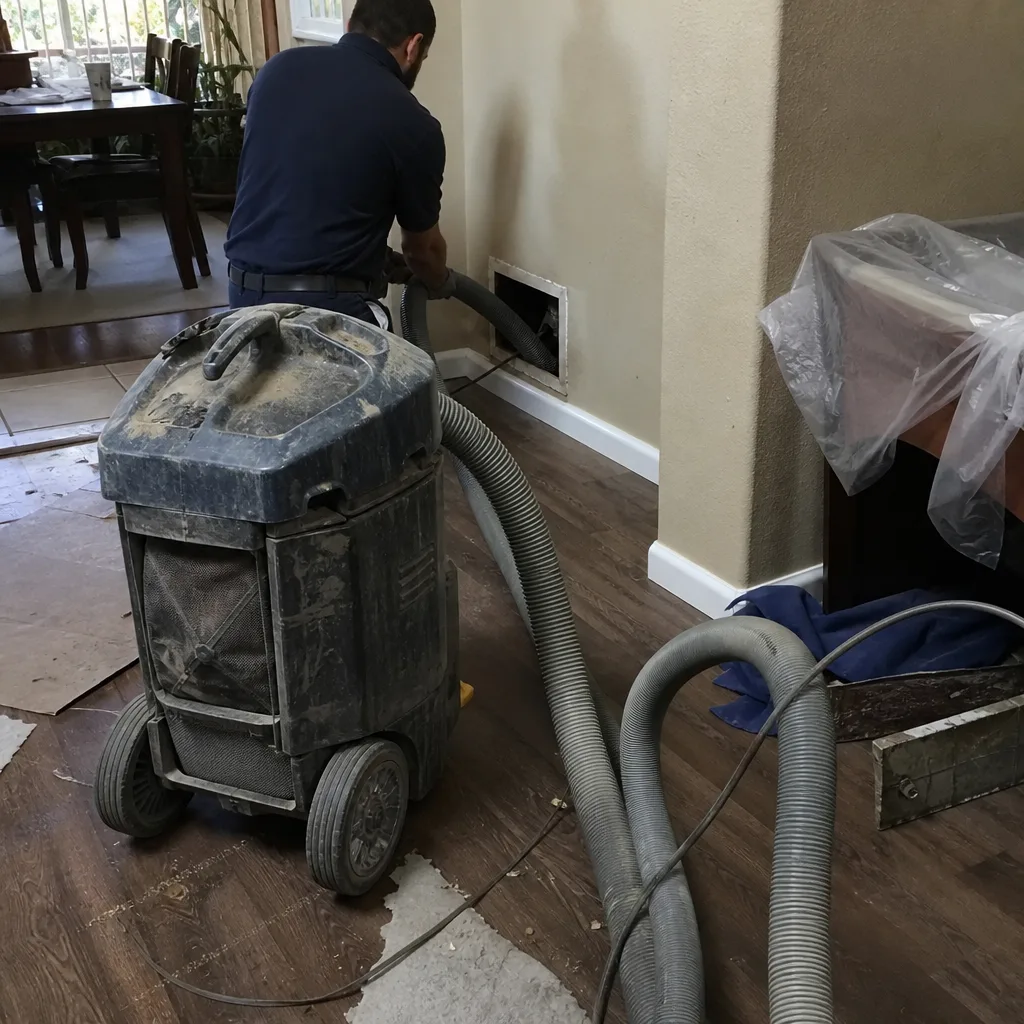
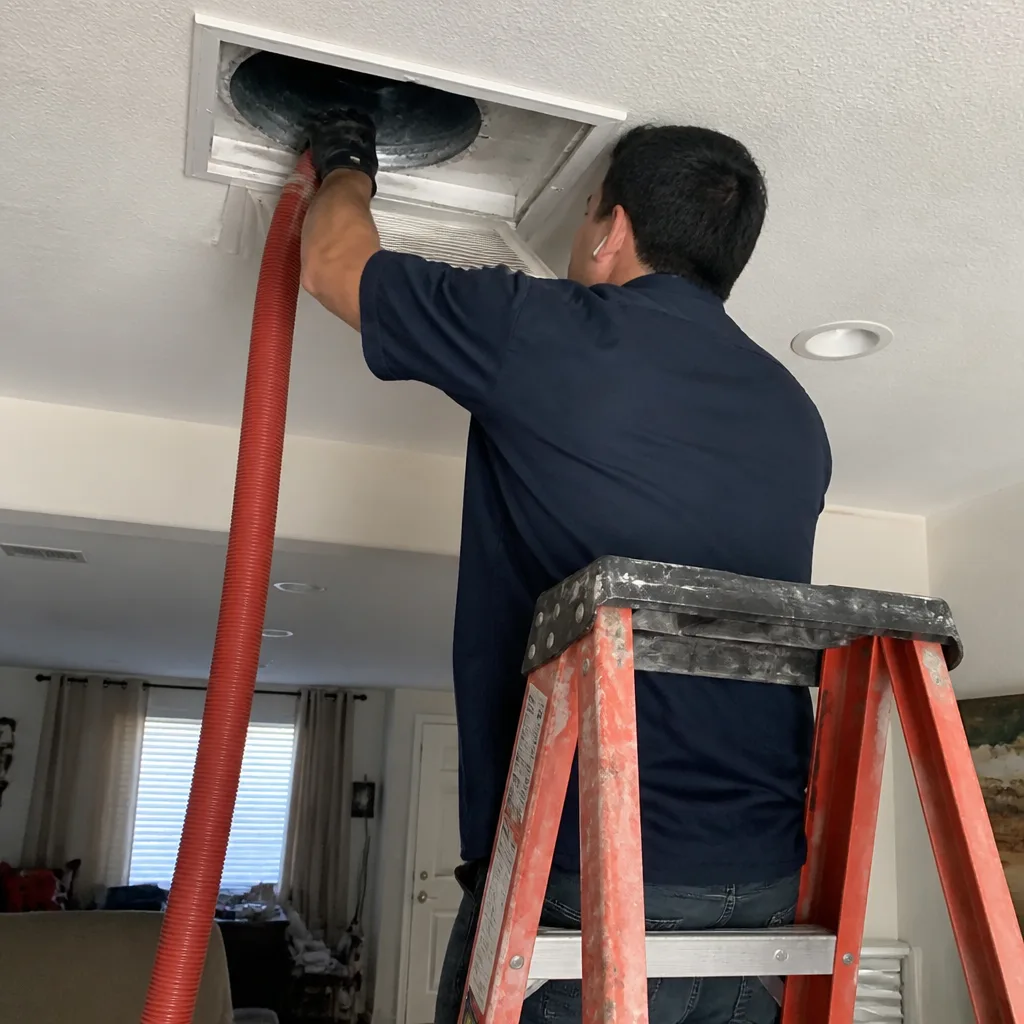
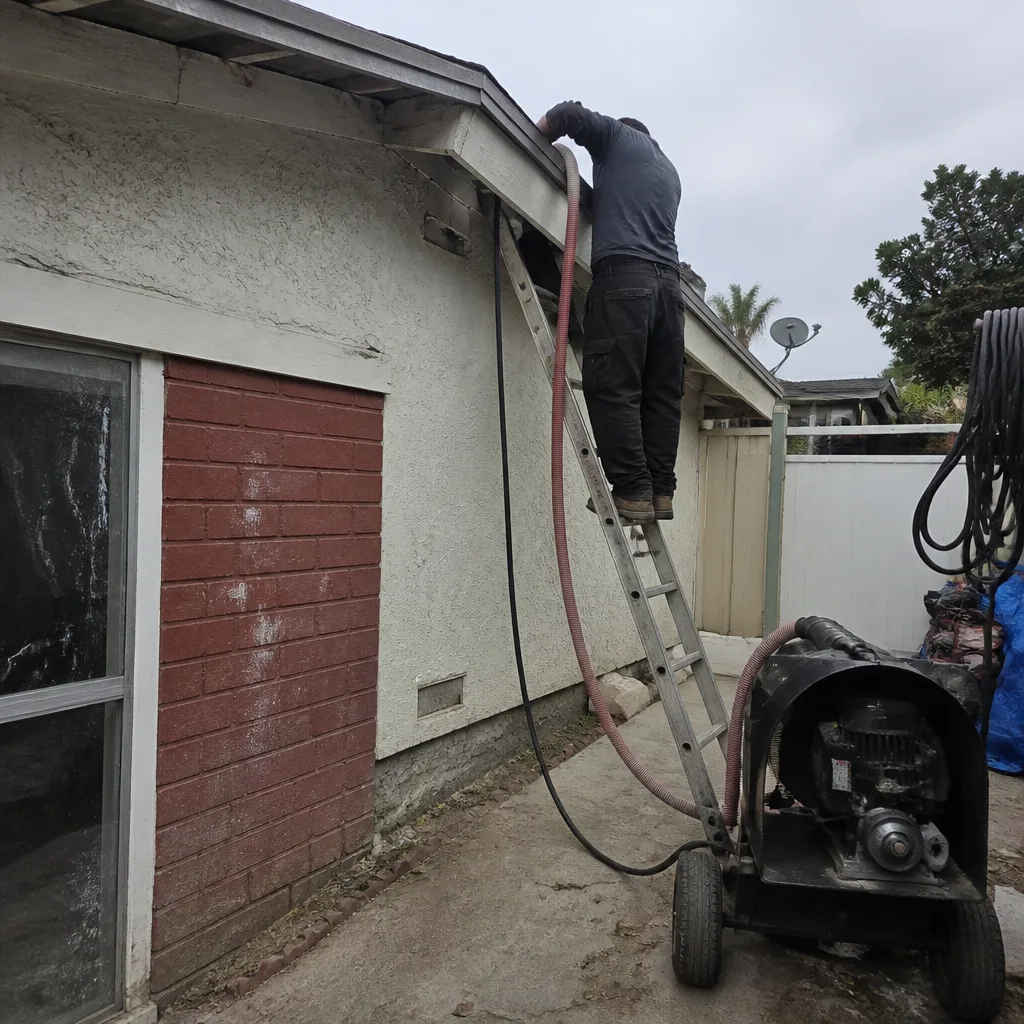
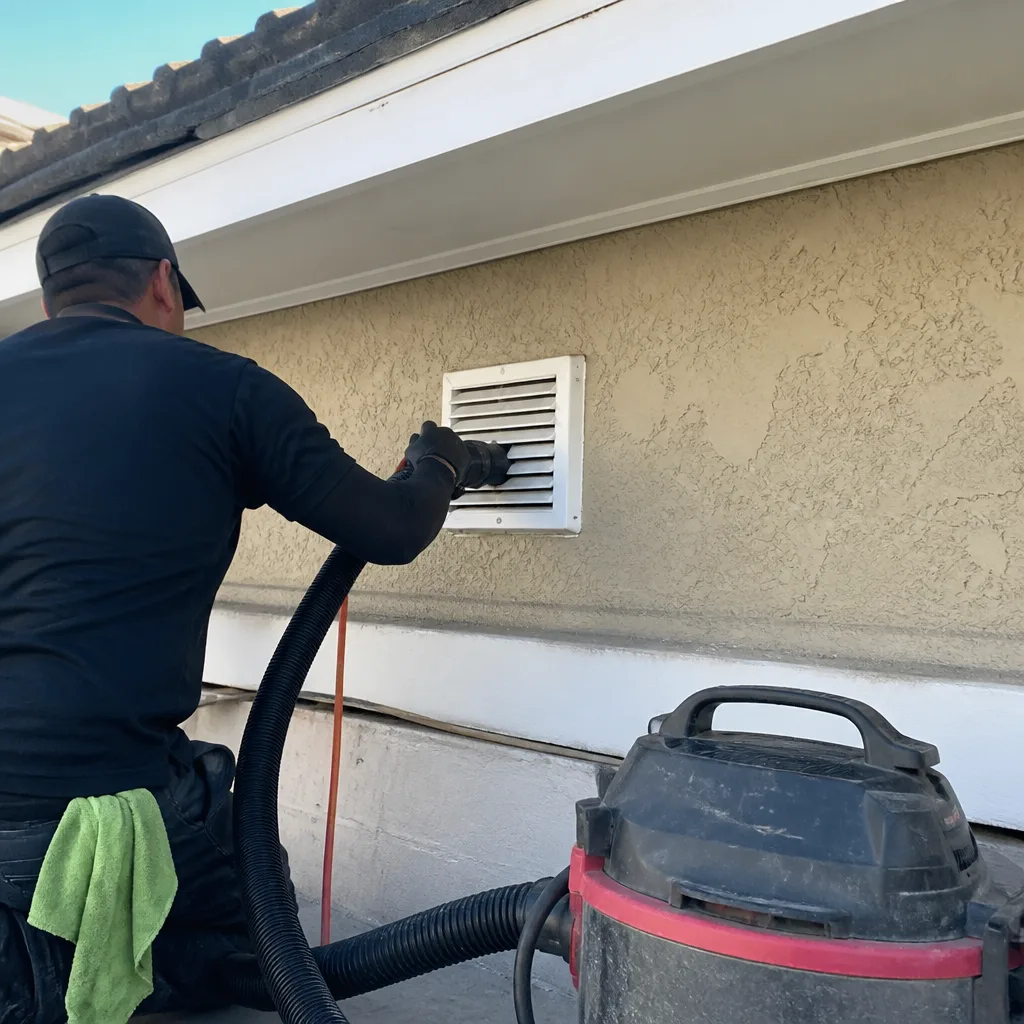
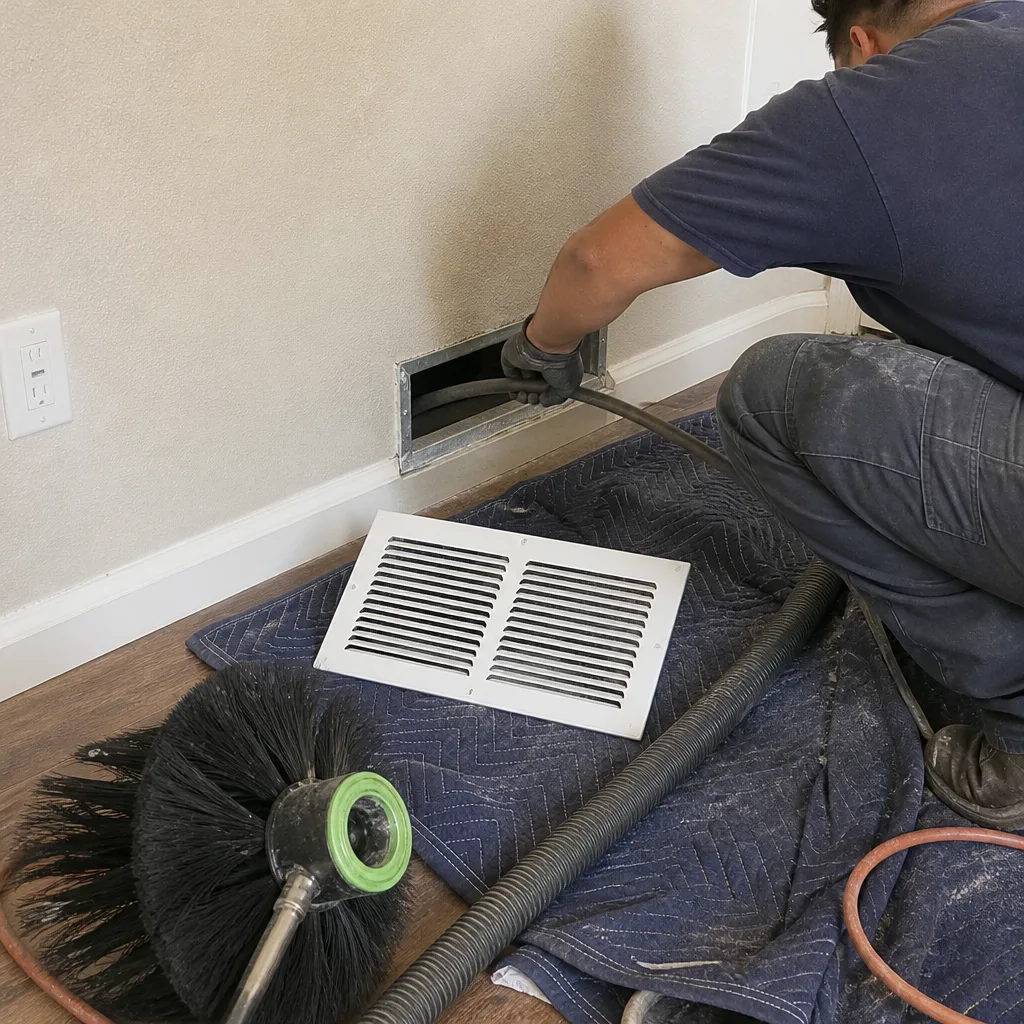
A legitimate duct cleaning starts with containment. The cleaning contractor sets up negative pressure on the duct system, typically by connecting a HEPA-filtered collection unit to the supply side or at the air handler. This prevents the dust being dislodged during cleaning from blowing into the living space. The mechanical agitation is then done with a rotary brush system, the kind used by professional HVAC contractors. Rotobrush’s rotary-brush systems are the industry standard in this category, spinning a brush head through the duct interior to physically scrub debris from the walls while the vacuum removes it. Suction-only cleaning, the kind a discount operator does with a truck-mounted vacuum and no mechanical agitation, leaves a meaningful amount of debris on the duct walls because it can’t generate enough force to dislodge what’s adhered over years of accumulation.
The cleaning should include more than just the ducts themselves. A complete job addresses the return side, the supply side, the registers, the blower, and ideally the evaporator coil. If a Chula Vista contractor quotes you a price to “clean the ducts” and the price is suspiciously low, ask what’s included. The $99 whole-house special is almost always a suction-only job on a portion of the system, and it’s the classic bait-and-switch opening that this industry is unfortunately known for. Duct cleaning pricing in Chula Vista is a per-system proposition, not a per-vent proposition. We agree on one flat price per system before work begins, and that’s what the invoice shows. No upsell at the door, no surprise line items after the van arrives.
After the cleaning, legitimate contractors provide before-and-after photography of the duct interiors. This isn’t a sales gimmick. It’s verification that the work was actually done and that the debris was actually removed. If a contractor can’t or won’t provide visual documentation, especially before-and-after photos of their own work, that’s a red flag. You should be able to see what your ducts looked like before and what they look like after.
On the equipment side, there’s a meaningful difference between consumer-grade and professional-grade tools, and it’s worth understanding. Abatement Technologies filtration gear is the standard in professional remediation work, designed for controlled contaminant removal with HEPA-level containment. Nikro equipment serves the same professional market, the same brand used in industrial air-quality and mold remediation applications. When you’re hiring a Chula Vista duct cleaning company, asking what equipment they run is a legitimate question. The answer tells you a lot about what level of work you’re actually paying for. “Contractor-grade equipment, residential pricing” is achievable, but it’s not universal, and the spread between the two ends of the market matters in this industry more than most.
For a more detailed look at what goes into a professional cleaning, including the equipment and approach we use on Chula Vista jobs, the Cornerstone Duct Cleaning home page walks through the full scope.
Common Mistakes to Avoid
- Following a “spring and fall” schedule from a generic HVAC guide. Chula Vista’s contaminant calendar doesn’t match the rest of the country. Your highest-risk window is October through November (Santa Ana season), not April. Schedule around your actual conditions, not a generic template.
- Changing the filter while ignoring the filter rack. A new filter in a poorly sealed rack still lets air bypass. The filter only protects the system if it seals correctly, and most Chula Vista homes we’ve assessed have at least minor rack issues. A $10 filter in a leaking rack is a $10 decoration.
- Waiting until peak cooling season to schedule cleaning. By August, the combination of high demand, long lead times, and an actively loading system makes professional work harder to schedule and more disruptive to the household. April gives you the same cleanup before the loading season begins.
- Ignoring musty odors in June and July. That morning mustiness is Southern California’s version of a duct cleaning warning light. The marine layer creates real moisture conditions, and ignoring them lets biological growth continue through the summer. It won’t dry out and fix itself in most attic-ducted Chula Vista homes.
- Assuming a Santa Ana season left no trace because the inside of the house looks clean. The dust that blows through Chula Vista in October doesn’t all land on your shelves. A significant amount enters through return registers and stays in the ducts. If your filter was loaded after a Santa Ana week, your ducts took on some of what the filter caught and some of what bypassed it.
- Treating duct cleaning as a one-time event rather than a recurring maintenance item. Ducts in Chula Vista re-load on a seasonal cycle. The job you did in 2019 isn’t protecting you from what accumulated in 2023. Track your interval, use the April checklist, and schedule accordingly.
- Buying on the low bid without asking what’s included. The difference between the $99 special and a legitimate cleaning is often the difference between suction-only on a portion of the system versus rotary-brush agitation with negative-pressure containment on the full air pathway. In this industry, the price usually reflects the scope, and the low bid is often a loss-leader for an upsell.
See the difference
 Before
 After
 Before
 After
 Before
 After
When to Call a Professional
Some seasonal duct issues are visible and diagnosable with the checklist we outlined. Others require professional assessment and equipment to resolve properly. Call a professional when you see visible biological growth inside duct openings; when a musty odor persists through the June Gloom season despite filter changes; when a Santa Ana season or wildfire smoke event has visibly loaded your filter with fine dust; when your utility bill shows persistent year-over-year cooling cost increases without an obvious cause; when uneven room temperatures or weak airflow persist after you’ve checked registers and vents; or when you’re preparing a Chula Vista home for a new occupant, sale, or lease and need documented evidence of the duct system’s condition. In any of these cases, a professional inspection gives you a baseline and a scope. Cornerstone Duct Cleaning offers free estimates in Chula Vista. Call (877) 824-2920 to schedule one.
Frequently Asked Questions
For a typical Chula Vista single-family home, a complete air duct cleaning using rotary-brush agitation with negative-pressure containment, including the return side, supply side, registers, and blower, typically runs from $450 to $900 depending on the home’s size, the number of systems, and the degree of contamination. Homes with multiple HVAC systems, extensive Santa Ana dust loading, or smoke residue will land at the higher end or above. The key variable is scope: a legitimate whole-system cleaning costs more than a suction-only partial job, and the pricing difference reflects real work performed, not just a premium brand name. One flat price per system, agreed before work starts, is the structure to look for. Call (877) 824-2920 for an exact quote on your Chula Vista home, and estimates are free.
The cheaper quotes come from operators using suction-only methods on a portion of the system, typically the supply ducts visible from the registers, without mechanical agitation, without containment, and without touching the return side, blower, or coil. A truck-mounted vacuum alone cannot remove debris that has adhered to duct walls over years of operation, and it cannot access the full air pathway. The low price is often a loss leader for an upsell once the technician is in the home. Contractor-grade work using rotary-brush systems, negative-pressure containment, and HEPA-level filtration costs more because it does more, and in Chula Vista’s seasonal loading conditions, the difference in result is visible in before-and-after photos. Ask what methods, what equipment, and what portions of the system are included before comparing prices.
The single most reliable verification method is before-and-after photography of the duct interiors, which any credible Chula Vista duct cleaning company should provide. You should see visual evidence of the debris that was removed and the condition of the duct walls after cleaning. A secondary verification is the volume and character of what was collected: a legitimate cleaning on a home that hasn’t been serviced in years will fill a substantial portion of the collection container. If the contractor can’t produce photos, or shows you a before photo you could have taken yourself and no after shot, the work may not have been completed to the scope quoted.
For an average Chula Vista home with regular filter changes, no smokers or heavy-shedding pets, and no recent construction, a professional cleaning every 3 to 5 years is a reasonable interval. Homes with pets, smokers, recent renovation work, eastern Chula Vista Santa Ana exposure, wildfire smoke history, or respiratory-sensitive occupants should shorten the interval to every 2 to 3 years. The April pre-season checklist in this guide is the best tool for determining which interval applies to your specific home, season after season.
Yes. The marine layer that settles over Chula Vista from late spring through early summer brings weeks of persistent elevated humidity, often pushing indoor relative humidity above 60%. When humid air meets the cooler interior surfaces of ductwork, especially insulated flex duct in unconditioned attics, condensation forms. That moisture, combined with the organic dust already on duct walls, creates conditions for biological growth even in a mild coastal climate. Homes with oversized air conditioners, which short-cycle without adequately dehumidifying, are the most vulnerable. Persistent musty odors from registers during June and July are the canary in the coal mine.
No. The portion of the duct system you can reach from a register opening is a small fraction of the total ductwork, and the tools available to homeowners can’t generate the mechanical agitation or negative-pressure containment needed to remove adhered debris from the full air pathway. Attempting DIY duct cleaning with a shop vac and brushes can actually make things worse by dislodging material that then redistributes through the system, or by damaging flex duct. The interior sections of ductwork, the return side, the plenums, and the coil are simply not accessible without professional equipment and knowledge. This is a job where the equipment gap between consumer and professional is not marginal.
The Bottom Line
Chula Vista’s ductwork has its own calendar. The marine layer loads moisture into the system in early summer, peak cooling season loads dust and debris through the summer, Santa Ana winds deliver the worst particulate event of the year each fall, and winter offers the rest period where professional work makes the most sense. Using the April pre-season checklist, paying attention to seasonal diagnostic signals like utility bills and comfort complaints, and scheduling professional cleaning at the right point in the cycle, not just on a generic schedule, keeps the full air pathway working the way it should. Contractor-grade equipment and one flat price per system, agreed before work starts, is the standard to look for. For a free estimate on your Chula Vista home, call (877) 824-2920.
Written by the team at Cornerstone Duct Cleaning, serving Chula Vista since 2013.