
Last updated November 2, 2026
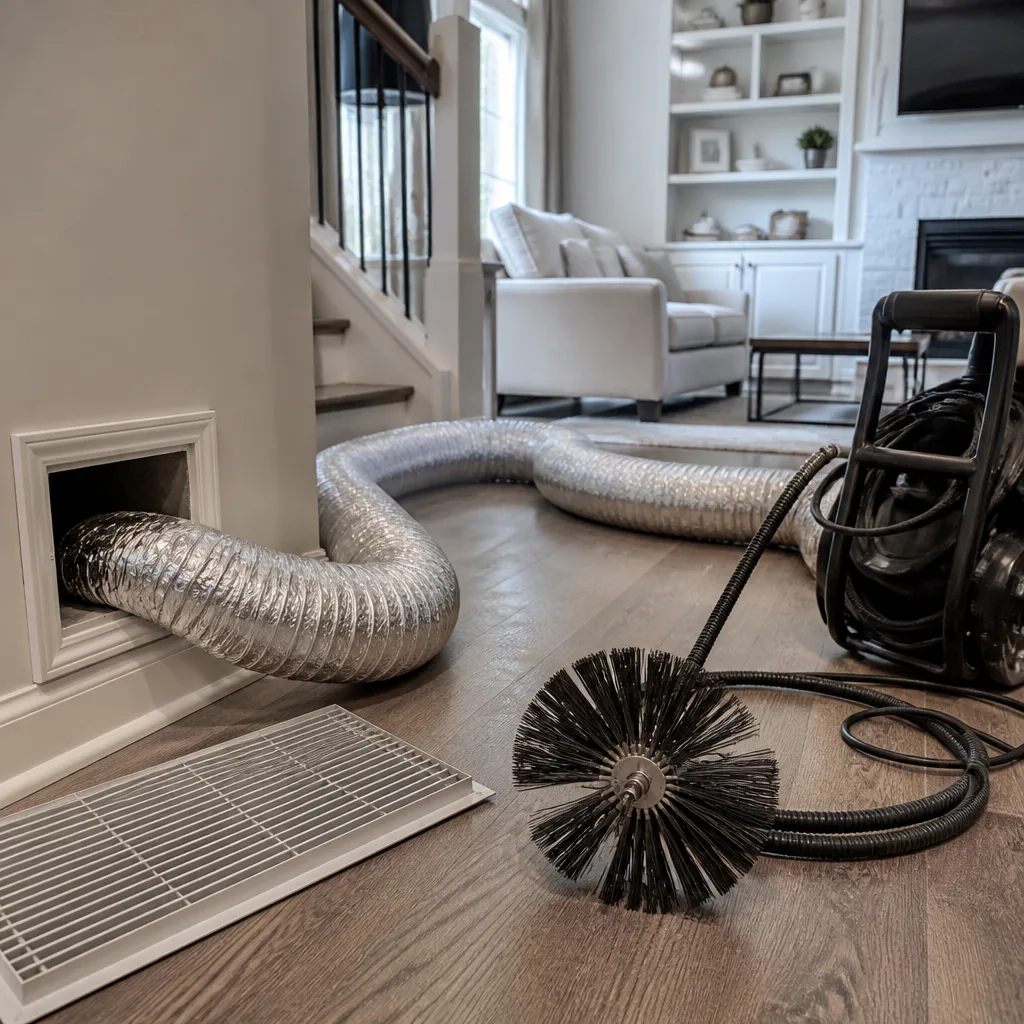 Whole-home duct cleaning
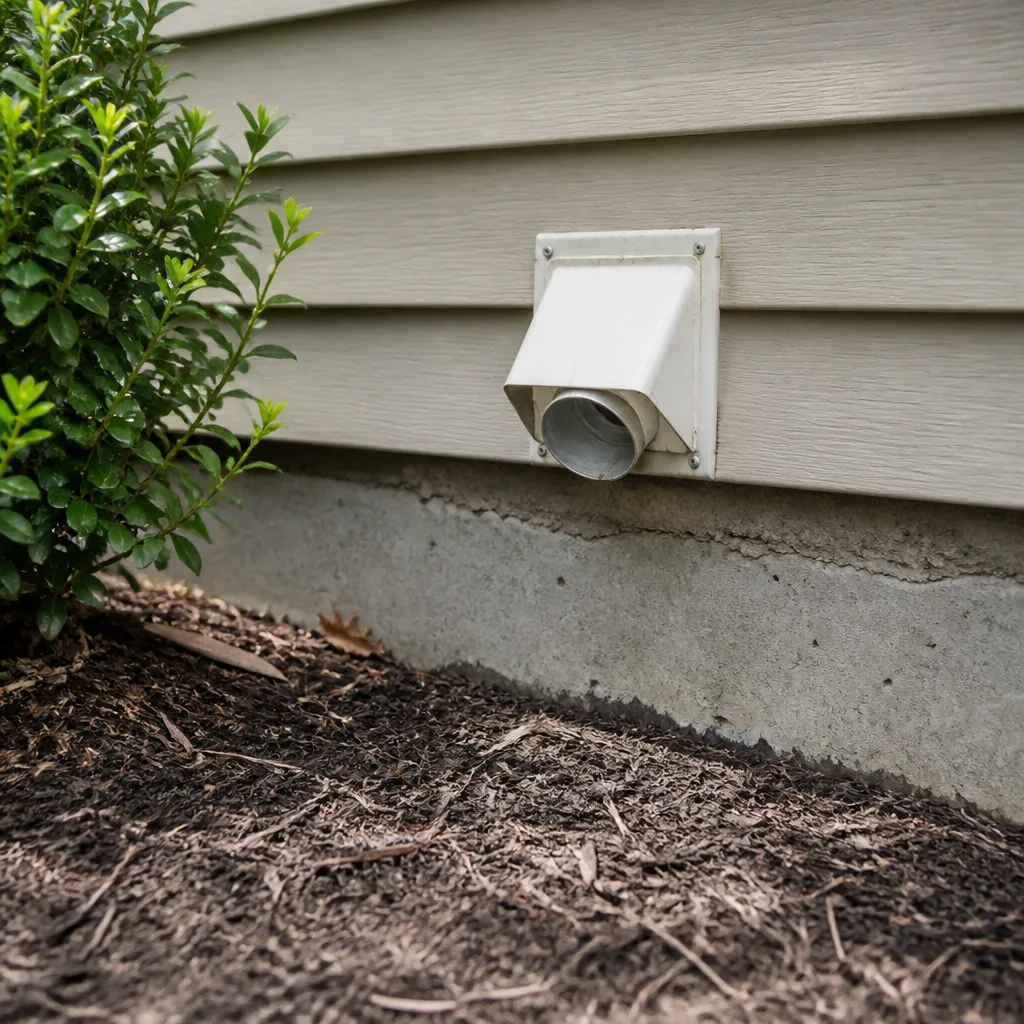 Dryer vent cleaning
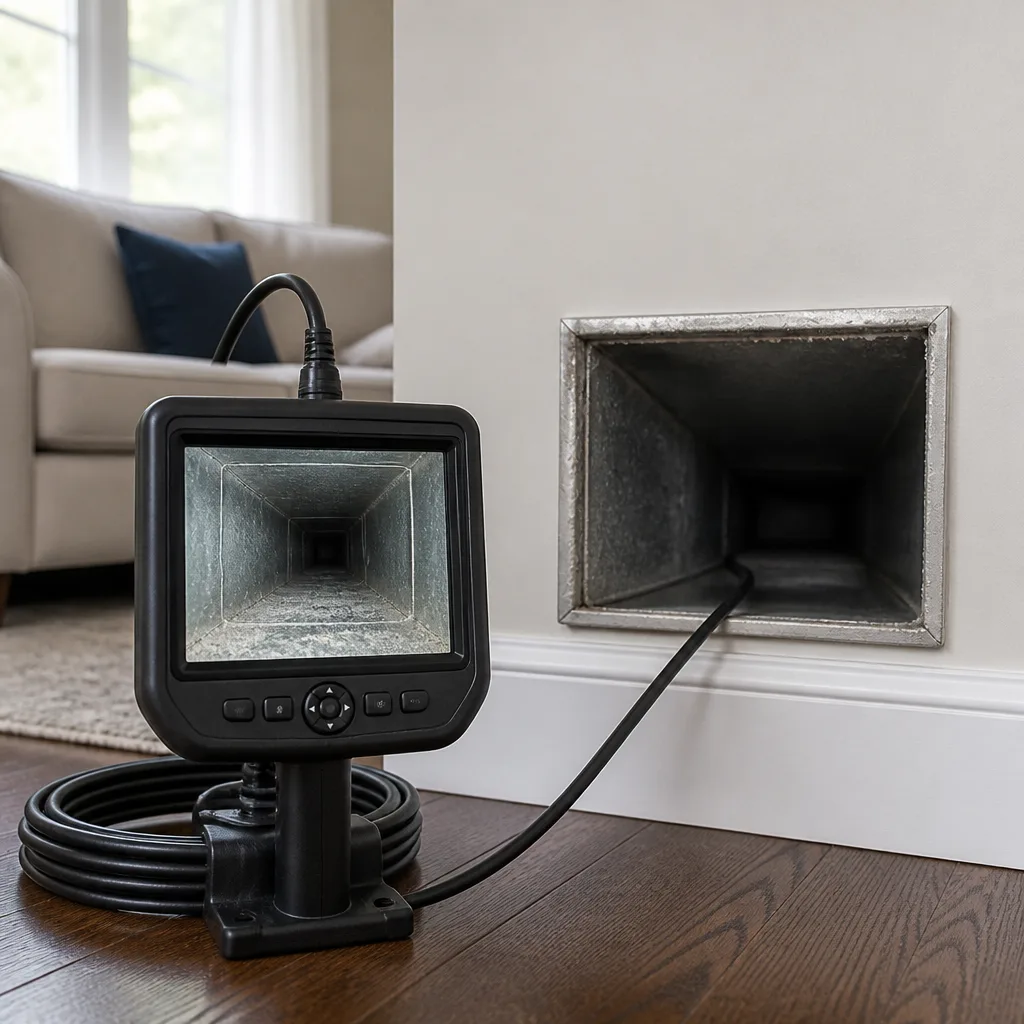 Camera inspection
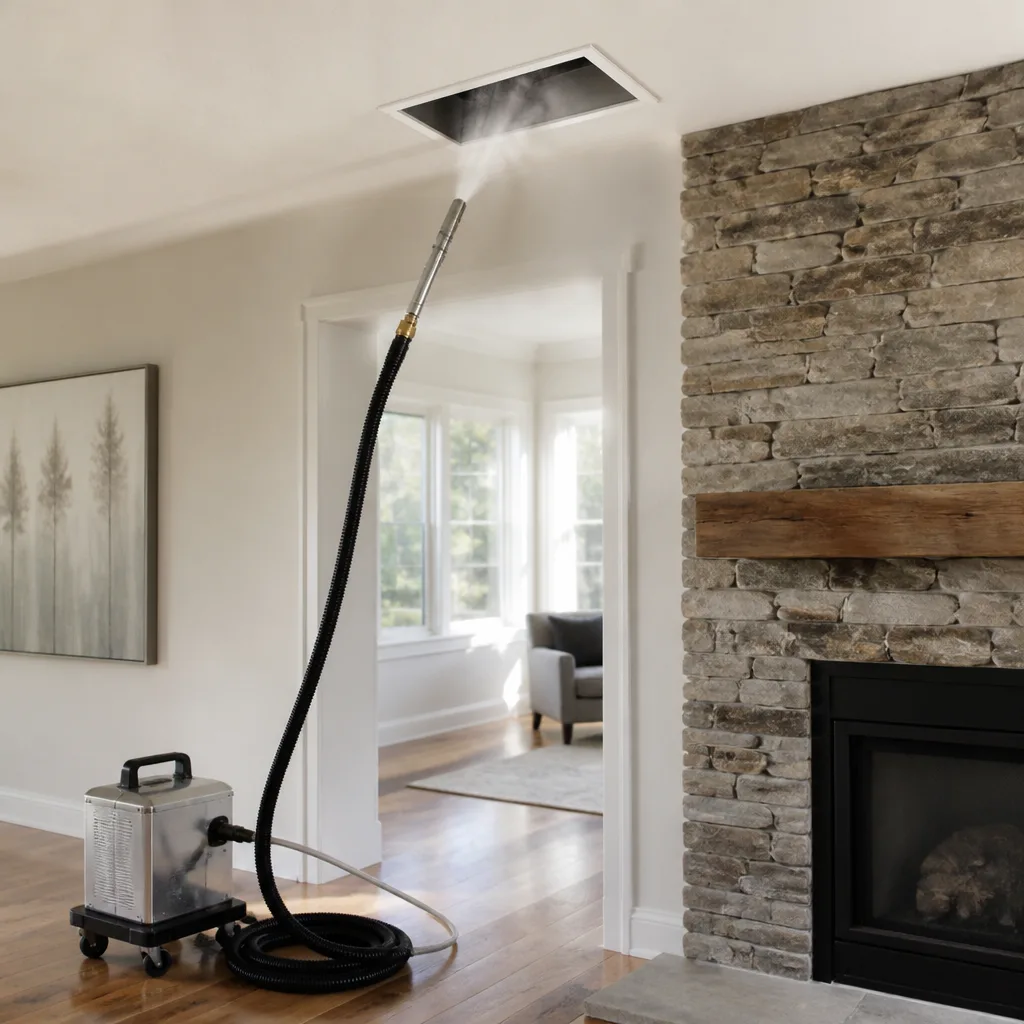 Sanitizing & deodorizing
Whole-system duct and dryer vent check with before-and-after photos - you see exactly what came out of your vents
That "$99 whole-house special" is a bait ad - the real number appears once they are in your hallway, or the "clean" is a shop-vac at the register. We photograph the inside of your ducts before and after instead.
DIY vs Professional Air Duct Cleaning: The Chula Vista Homeowner’s Decision Guide
You can absolutely stick a brush into your supply register and knock debris loose. The problem is that without a negative pressure source at the air handler, that debris has nowhere to go except deeper into your duct system or back into your living space. This guide explains the mechanical reality of Air Duct Cleaning so you can make an honest decision about what’s worth doing yourself and what genuinely requires professional equipment. If you own a home in Chula Vista, you’ve probably wondered whether the quotes you’ve seen are justified or whether a Saturday with a shop vac could accomplish the same thing. By the end of this page, you’ll know exactly what’s happening inside your ducts and what it takes to actually remove contamination rather than move it around.
Styles & brands we work with
- Whole-home duct cleaning
- Dryer vent cleaning
- Camera inspection
- Sanitizing & deodorizing
Quick Answer
Professional air duct cleaning works because it combines mechanical agitation with high-CFM negative pressure that pulls dislodged debris out of the entire duct run. DIY methods using consumer vacuums or brushes lack that negative pressure, so they typically knock debris loose but can’t convey it out of the system. For most Chula Vista homes, the honest answer is this: you can handle grille cleaning, filter replacement, and visual inspection yourself, but the actual duct-run cleaning requires equipment most homeowners don’t own and can’t rent for less than a professional service costs.
Table of Contents
- The Airflow Physics of Duct Cleaning
- What Homeowners Can Legitimately Do Themselves
- What DIY Cannot Do: The Equipment Gap
- When DIY Attempts Cause Measurable Harm
- How to Evaluate Whether Your System Actually Needs Cleaning
- Chula Vista-Specific Factors That Affect Your Ducts
- What Professional Cleaning Provides Beyond the Clean
- Common Mistakes to Avoid
- When to Call a Professional
- Frequently Asked Questions
- The Bottom Line
The Airflow Physics of Duct Cleaning
Here’s the technical reality that most DIY duct cleaning articles skip: cleaning a duct is not about scrubbing. It’s about conveying. The debris inside your ductwork is loose particulate – dust, skin cells, pet dander, construction debris, textile fibers. To remove it from the system, you need to do two things at once: dislodge it from the duct wall and move it through the entire duct run to a collection point. That second part requires airflow.
A typical residential duct run in Chula Vista is 6-inch flexible duct, often stretching 15 to 30 feet from the register to the trunk line. To convey particulate through that length, professional equipment operates at 2,500 to 4,500 CFM (cubic feet per minute) at the collection point. Compare that to the average consumer shop vacuum, which produces somewhere between 100 and 200 CFM at the nozzle – and that number drops significantly through a standard 1.5-inch or 2.5-inch hose over distance.
Think of it this way: if you’re trying to move a marble through a garden hose with a drinking straw’s worth of suction, you’ll fail. The marble stays put, or it rolls a few inches and settles. Same physics applies to the dust coating the inside of your flex duct. A brush can knock it off the wall, but without professional-grade airflow behind it, that dust resettles deeper in the run or gets pushed toward the air handler. That’s why many homeowners who attempt DIY duct cleaning report that their registers look clean while their air quality doesn’t improve – or worse, they notice dust blowing from vents that weren’t dusty before.
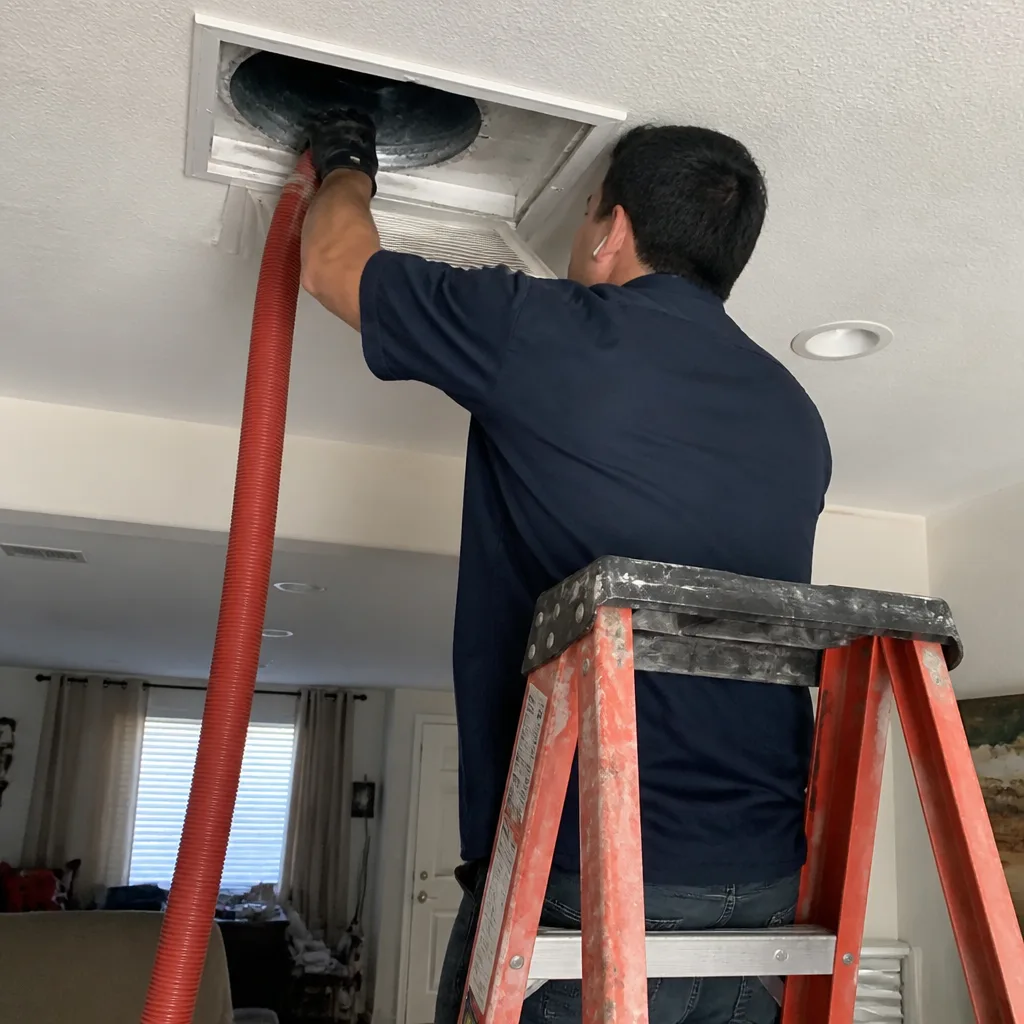
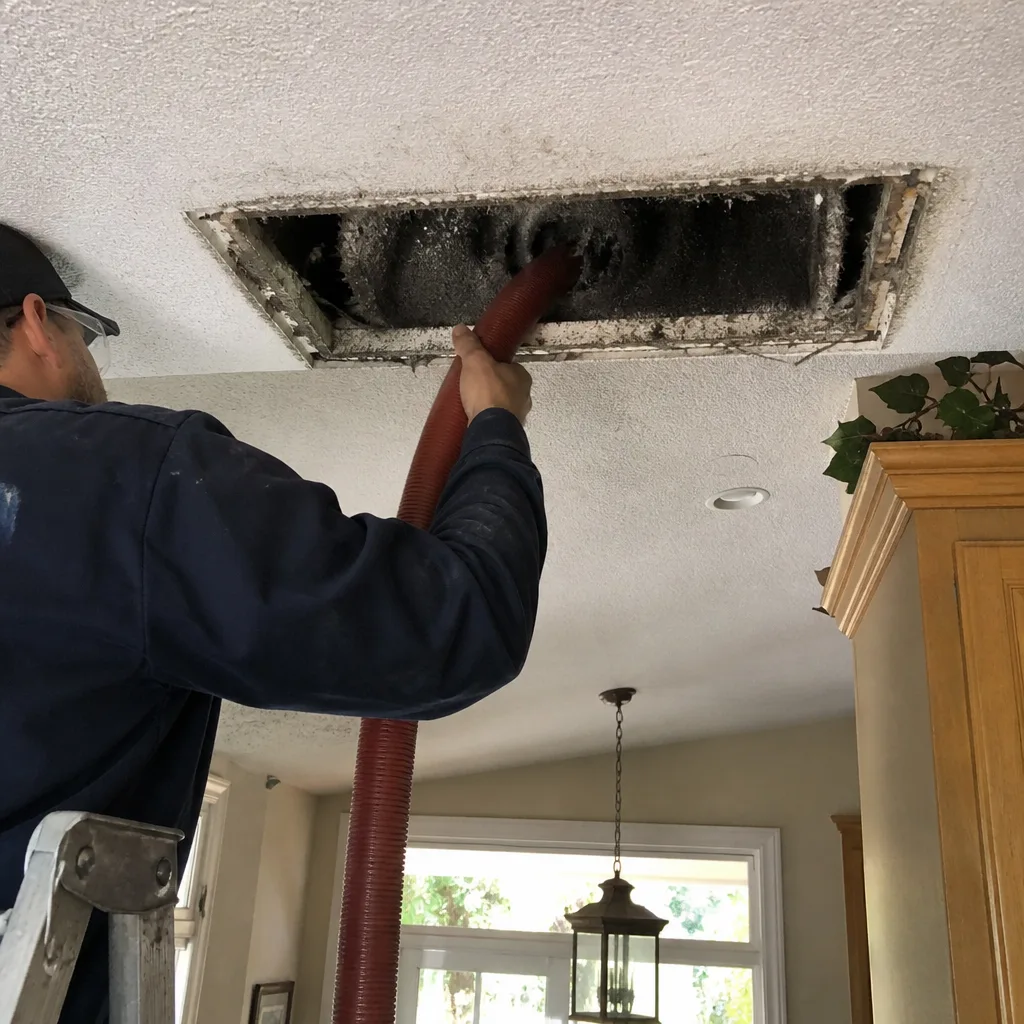
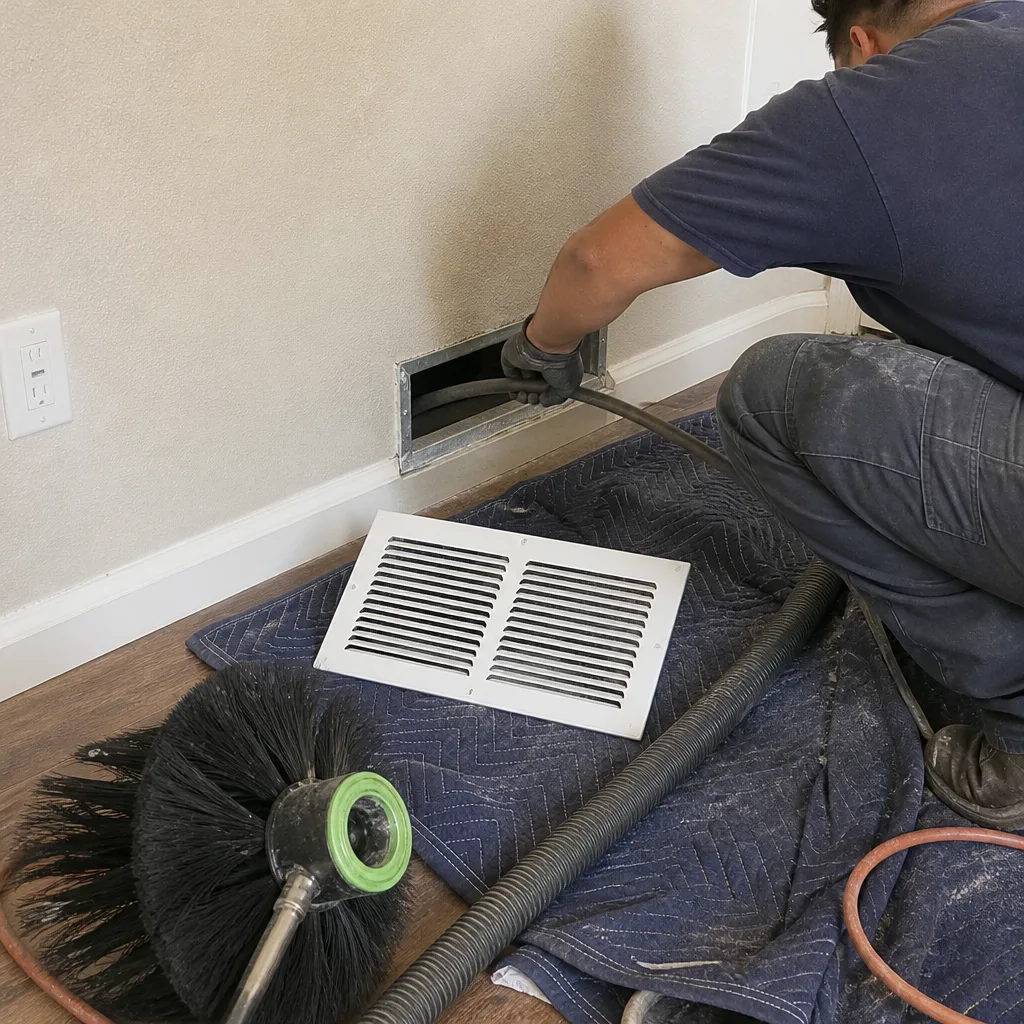
This is the mechanic at the core of professional methods. At Cornerstone Duct Cleaning home, we use Rotobrush rotary-brush systems that mechanically agitate the duct wall while a negative-pressure vacuum at the air handler continuously conveys dislodged material out. The agitation breaks the bond between debris and duct surface; the airflow does the actual removal. Without both components working in sequence, you’re doing half the job.
One more physics note: duct debris doesn’t exist in only one direction. Your return side pulls air toward the air handler, your supply side pushes conditioned air out. Debris accumulates differently in each. A comprehensive cleaning has to account for both pathways – something a homeowner working register-by-register with a small vacuum is unlikely to accomplish systematically.
What Homeowners Can Legitimately Do Themselves
We’re not here to tell you to call a contractor for every little thing. There are several duct-related maintenance tasks that a Chula Vista homeowner can and should handle without professional help. These don’t require special equipment, they take less than an hour, and they make a real difference in system performance.
- Remove and wash your grilles and registers. This is the easiest win available. Turn off your system, unscrew the grille plates (most use two to four screws), and wash them in warm soapy water. Let them dry completely before reattaching. In Chula Vista’s dusty summer months, grilles collect a surprising amount of film. Clean grilles mean better airflow distribution and less surface area for dust to cling to.
- Replace your air filter on schedule. If you run your AC hard through a Chula Vista summer, check your filter every 30 days and replace it when it’s visibly loaded. A clogged filter forces your blower to work harder, pulls air through any gap it can find, and allows unfiltered air to bypass the media entirely. This is the single highest-leverage DIY task for indoor air quality.
- Do a visual inspection with your phone camera. Pop off the register, turn on your phone’s flashlight, and snap photos of what you can see down the duct. Flex duct with visible tears, gaps at connections, or heavy debris accumulation is worth documenting. This information helps you have an informed conversation with a professional later – or it confirms your system is in decent shape.
- Clean your dryer lint trap before every load, and check the exterior vent. Chula Vista homes with second-floor laundry rooms often have long vertical dryer vent runs, which trap lint further from the appliance. You can reach the first few feet from inside, but the exterior run requires more than a homeowner can realistically access. More on dryer vents from our Dryer Vent Cleaning in Chula Vista service page.
- Vacuum around the air handler cabinet. Dust, pet hair, and garage debris accumulate around the HVAC cabinet in many Chula Vista homes – especially in attached garages. Keeping this area clean reduces what gets pulled into the system.
None of these tasks require accessing the full duct run, and none risk damaging duct connections or disturbing embedded contamination. They’re maintenance, not cleaning.
What DIY Cannot Do: The Equipment Gap
Once you understand the airflow requirements, the DIY equipment gap becomes obvious. It’s not a matter of skill or effort. It’s a matter of what tools exist and what they cost.
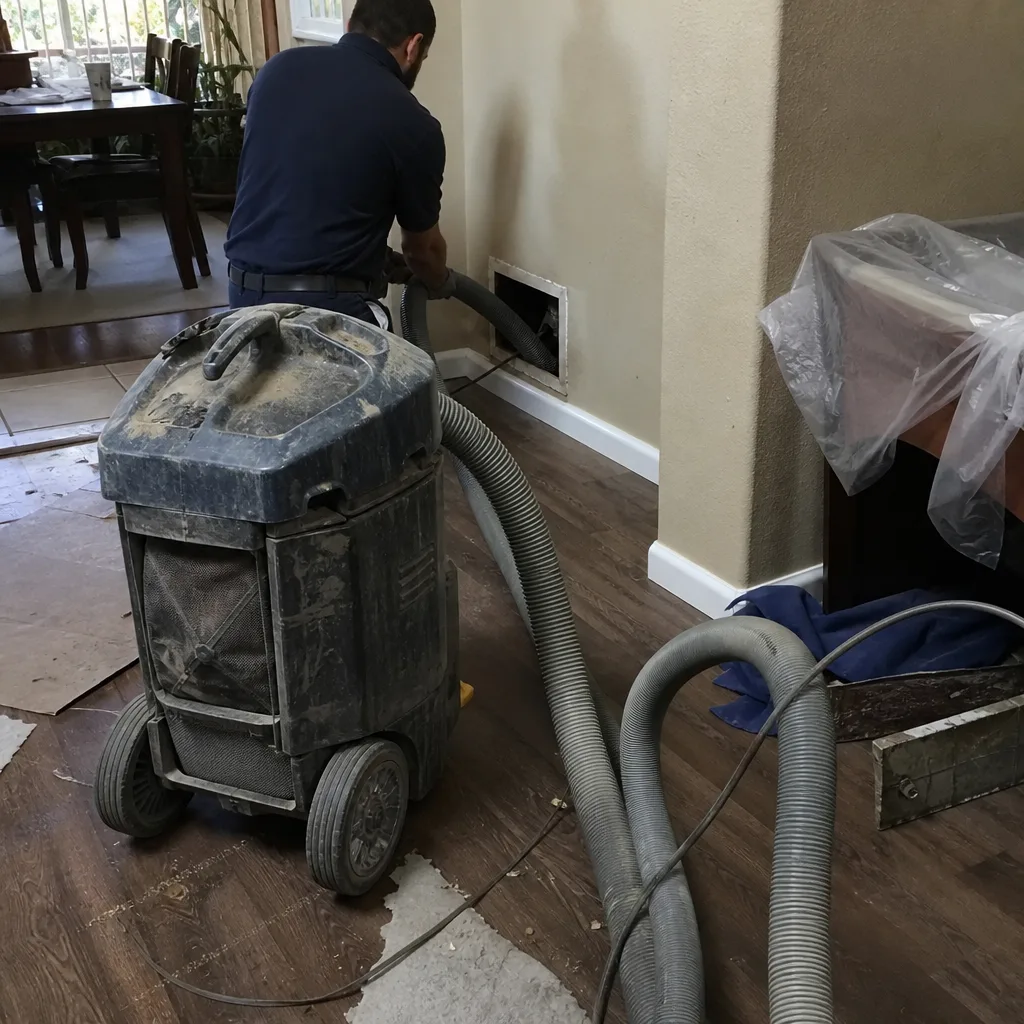
Professional duct cleaning in Chula Vista homes typically uses one of two agitation methods: rotary brush or high-pressure air. The rotary-brush systems – Rotobrush is the brand most recognized across the HVAC and duct-cleaning industries – feed a spinning brush head through the duct run while a vacuum at the air handler maintains continuous negative pressure. The brush scrubs the duct walls mechanically. The vacuum, which can be a truck-mounted or portable unit producing 2,500-plus CFM, conveys the dislodged debris out of the run.
No consumer tool replicates this. A shop vac with a long hose attachment can’t generate the airflow needed to convey debris through a 20-foot flex run. Drain snakes don’t fit around duct bends properly. Brushes on poles knock debris loose but leave it suspended in the air stream until it resettles. Even if you rented a professional-grade negative air machine, you’d need the training to seal off registers properly, protect the air handler, and ensure the system is balanced during cleaning. At that point, the math doesn’t work in your favor.
There’s also the containment side. Professional cleaning involves sealing the system, protecting the blower and coil, and using HEPA-rated filtration on the output side so the vacuum isn’t just recirculating fine particulate into your living space. Our equipment includes Nikro and Abatement Technologies gear – brands specified in industrial air-quality and remediation work. The difference is measurable. Consumer vacuum filters pass fine particles right through, which means DIY duct cleaning can aerosolize the very contaminants you’re trying to remove.
If you want to understand what full-system cleaning involves, see our Air Duct Cleaning in Chula Vista page for a walkthrough of the process.
When DIY Attempts Cause Measurable Harm
Most DIY duct cleaning attempts fail to improve anything. Some, however, actively make things worse. These are the scenarios we see repeatedly in Chula Vista homes where a well-intentioned homeowner tried to clean their own ducts first.
- Disturbing mold colonies without containment. If your ducts have moisture-related microbial growth – common in Chula Vista’s east county and canyon areas where marine layer humidity meets warmer inland air – brushing or vacuuming with a consumer tool disperses spores throughout the system and the living space. Without HEPA containment on the vacuum output, you’ve converted a contained problem into an airborne one. Mold remediation in ductwork requires controlled negative pressure and HEPA filtration.
- Dislodging flex duct connections. Chula Vista homes built during the 1990s and 2000s construction boom often have flex duct that was installed quickly. The connections at the trunk line and at the register boot can be loose. Poking a brush or rigid rod down the register can separate those connections completely. A disconnected duct means conditioned air is being dumped into your attic or crawlspace instead of your living room, and your system is pulling unconditioned air into the return side.
- Bypassing or damaging the filter media. If you remove the filter to get better access and forget to replace it before running the system, you’ve just invited loose dust from the return side directly into the blower and coil. Blower motor failures and coil fouling are expensive repairs. The filter is there for a reason, and the reason is not optional.
- Puncturing flex duct lining with improvised tools. DIYers sometimes use drain snakes, coat hangers with rags, or other improvised implements. Flex duct interior lining is thin plastic over insulation. Once punctured, that duct leaks conditioned air and pulls in whatever’s in your attic. The repair can cost more than the cleaning would have.
If you encounter evidence of mold, disconnected ducts, or noticeable airflow changes after a DIY attempt, that’s an Air Duct Repair in Chula Vista situation, not a cleaning follow-up.
How to Evaluate Whether Your System Actually Needs Cleaning
Here’s the part most duct cleaning articles skip: not every home needs duct cleaning. Before you decide between DIY and professional, you should determine whether the job needs doing at all. A good filter upgrade and grille cleaning will address some homeowners’ concerns without touching the ducts.
Start with what you can see. Remove a few supply registers and look down the duct with a flashlight or phone camera. If the ducts look relatively clean and you’re not experiencing specific symptoms, your issue may be filtration, not accumulation. But if you see any of the following, professional cleaning is justified:
- Visible debris accumulation. Dust, pet hair, or construction debris caked on the visible portion of the duct wall. If you can see it in the first few feet, it extends further in.
- Visible mold growth. Any discoloration that appears organic rather than dusty – especially on fiberglass lining or at connections. This requires professional attention for safety reasons.
- Evidence of vermin. Rodent droppings, nesting material, or other signs of pest activity inside the duct. Chula Vista’s canyons and open spaces mean rodents are a frequent reality, and their presence in ducts is both an air quality issue and a sanitation issue.
- Disconnected or crushed duct sections. Flex duct that has separated at a connection or been crushed by attic traffic or storage means air is leaving the system before it reaches your rooms.
- Post-renovation debris. Drywall dust, sawdust, paint chips, and other construction debris in the registers or visible duct openings after any remodeling work.
- Persistent dust on surfaces. If you dust and vacuum weekly but surfaces stay coated, the system may be recirculating dust from the supply side.
Conversely, if you have none of these symptoms but want to improve air quality, start with a high-efficiency filter upgrade. If your system can handle the pressure drop, a MERV 11 or MERV 13 filter makes a measurable difference in particulate. Honeywell and Aprilaire both make well-regarded residential filtration products, and if your system uses either brand, a filter upgrade may be the smarter first move than duct cleaning. A duct cleaning professional should be able to advise on this honestly rather than selling you a cleaning you don’t need.
Chula Vista-Specific Factors That Affect Your Ducts
Chula Vista’s geography and climate create specific conditions that shape how ducts accumulate debris and how often they need attention. This isn’t generic advice – it’s what we observe working in homes from the east side to Rancho del Rey to Eastlake and Otay Ranch.
First, the marine layer. Chula Vista sits close enough to the Pacific that morning fog and elevated humidity are common in the western neighborhoods, especially from May through July. That moisture finds its way into duct systems through the return side, and when it combines with accumulated dust, it creates exactly the conditions where microbial growth can start. Ducts in west-side homes near the bay – think areas along Broadway and Third Avenue – tend to hold slightly more moisture than inland homes.
Second, the Santa Ana season. When the winds reverse and dry, dusty air blows in from the east, Chula Vista homes pull that particulate directly into their HVAC systems through open windows and fresh-air intakes. East Chula Vista neighborhoods including Eastlake, Otay Ranch, and Rolling Hills Ranch sit closer to open terrain, which means more dust loading during wind events. Homes in these areas often show faster filter loading and more visible accumulation in returns.
Third, construction activity. Chula Vista has been one of the fastest-growing cities in San Diego County for two decades. Millenia, Otay Ranch, and the developments along Olympic Parkway mean ongoing construction dust in the air. If you bought a new-construction home in Chula Vista, your ducts almost certainly contain drywall dust and construction debris from the build. Builders don’t clean ducts before handover. A new-home cleaning is not a luxury – it’s removing what never should have been there.
Fourth, canyon adjacency. Homes in the Rolling Hills and San Miguel Ranch areas or near the Chula Vista Municipal Golf Course sit closer to open canyons where rodents are active. Pest intrusion into ductwork is more common in these areas, and the debris left behind is both an air quality and sanitation concern.
None of this means every Chula Vista home needs cleaning every year. But it does mean your local conditions are different from a homeowner in, say, Phoenix or Seattle. The right maintenance interval depends on your specific neighborhood, your household composition, and whether you’ve had recent work done.
What Professional Cleaning Provides Beyond the Clean
If you’ve decided your system needs cleaning, the question shifts from “can I do this myself?” to “what am I actually paying for?” For guidance on vetting providers, see our How to Hire an Air Duct Cleaning Contractor in Chula Vista: A Step-by-Step Guide. Here’s an honest accounting of what professional duct cleaning delivers beyond the removal of debris.
Before and after documentation. A professional cleaning should include photos or video of your duct interiors before work begins and after it’s complete. This is the proof that the work was actually done – and it’s something you simply cannot produce yourself. In our experience, this documentation is the single most valuable thing a professional provides. You’re not taking anyone’s word for it. You can see the difference in your own ducts.
System condition findings. When a technician runs a rotary brush and camera through your full duct system, they see what’s there: disconnected flex connections, crushed sections, gaps at the boot, evidence of past water intrusion. These findings are often more valuable than the cleaning itself, because they identify problems you’d never find from the register opening. One disconnected duct joint in a Chula Vista attic can waste more energy and cause more air quality issues than years of accumulated dust.
Complete air pathway cleaning. A professional cleaning addresses the return side, the supply side, the trunk lines, and the branch runs. A homeowner working register-by-register can only reach whatever is visible from each opening. The trunk line – where the most debris tends to accumulate – stays untouched.
Equipment that matches the job. Rotobrush rotary-brush systems provide the mechanical agitation needed to break the debris bond on duct walls. Nikro and Abatement Technologies filtration equipment provides the HEPA-level containment that keeps dislodged particulate from re-entering your living space. These brands are specified in professional air-quality and remediation work for a reason. They’re not available at the home improvement store rental counter.
Filtration system familiarity. If your home uses a Honeywell or Aprilaire filtration system, a professional who knows these brands can verify that the filter housing is sealing properly, that the media is the correct spec, and that the system is functioning as designed. That’s part of the full air pathway approach – cleaning the ducts only matters if the air moving through them is being filtered correctly.
Common Mistakes to Avoid
- Using a leaf blower pointed into a register. This is on some YouTube channels as a DIY duct cleaning hack. It pressurizes the system and blows dislodged debris into every room in the house, out through every register, and into sensitive equipment. It also risks blowing apart loose flex connections in the attic. If you’ve done this before and noticed more dust in your living room afterward, now you know why.
- Vacuuming through the register with a shop vac and no seal. The vacuum creates some negative pressure in the branch run, but nowhere near enough to convey debris from the full length. Most of what you dislodge stays in the duct and resettles further down the run toward the trunk line.
- Running the system without the filter in place during or after a DIY attempt. Whatever you’ve dislodged is now being pulled directly through the blower and coil. Fins get packed with dust, the blower wheel loses balance, and you’re looking at a service call for repairs rather than cleaning.
- Ignoring the return side entirely. Many DIY attempts focus on supply registers because that’s where people see dust blowing. But the return side is where air is being pulled in, and it’s often dirtier than the supply side. You can’t clean half the system and call it done.
- Using household cleaning products inside ducts. No disinfectants, no sprays, no deodorizers. Duct interiors are not surfaces designed for chemical treatment, and applying household products can leave residues that attract more dust or off-gas into your living space. Filtration and mechanical removal are the appropriate tools.
- Tearing the flex duct liner with improvised scraping tools. Flex duct is not pipe. Its interior liner is a thin plastic film over insulation. Once torn, the duct leaks. Repairing that tear typically costs more than the professional cleaning would have in the first place.
When to Call a Professional
You should call a professional duct cleaner when you have visible debris accumulation in the ducts, evidence of mold growth, signs of pest activity, post-renovation dust, or disconnected ductwork you can see but can’t reach. You should also call if you’ve done a DIY attempt and now notice increased dust or reduced airflow – that’s a signal something got dislodged or disconnected. If you’re managing a Chula Vista rental property between tenants, a professional cleaning with before-and-after documentation is standard practice for liability protection. Cornerstone Duct Cleaning offers free estimates in Chula Vista – call (877) 824-2920 and we’ll assess your system honestly, including telling you if you don’t actually need cleaning yet.
Frequently Asked Questions
Professional air duct cleaning in Chula Vista typically ranges from $350 to $650 for a single-system home, depending on the number of returns, the length of the duct runs, and whether any repairs are needed alongside the cleaning. Homes with two systems or unusually complex layouts run higher. Any quote significantly below that range should be scrutinized carefully – a $99 whole-house cleaning almost certainly involves a bait-and-switch model. Call (877) 824-2920 for an exact quote on your system.
Discounted duct cleaning quotes typically come from companies that spend less time in the home, use suction-only equipment with no mechanical agitation, and then upsell heavily once the technician is on-site. The low price gets the van in your driveway. The invoice you’re presented with afterward is a different number. If a quote seems unreasonably low compared to the $350 to $650 range typical for Chula Vista homes, ask what equipment they use and whether the price includes the full return and supply sides or just a register-level vacuuming.
You cannot effectively clean your own air ducts with a shop vac, because a consumer vacuum cannot generate the 2,500-plus CFM of airflow required to convey dislodged debris through a full duct run. A shop vac through the register will remove some surface dust within the first few feet but leaves the rest of the run untouched, and anything dislodged beyond the vacuum’s reach simply resettles deeper in the system.
A professional duct cleaning company should provide before-and-after photos or video of your duct interiors. If a company won’t or can’t show you documentation, you have no way to verify the work happened. This is one of the strongest arguments for professional over DIY: the documentation is your proof. Ask for it before you book, not after.
Most Chula Vista homes benefit from professional duct cleaning every 3 to 5 years, with the interval shortened if you have pets, run your AC heavily through summer, live near open terrain or active construction, or have allergy sufferers in the household. A home in Eastlake near new construction will need attention more frequently than a home in a fully built-out west-side neighborhood. The honest answer is that you should base it on inspection, not on a schedule.
Filter replacement and duct cleaning serve different functions. Your filter protects the equipment by capturing airborne particulate before it reaches the blower and coil. Duct cleaning addresses what has already settled and bonded to the duct walls – debris the filter never touched because it settled out of the air stream before reaching the filter. Regular filter changes are essential and will slow future accumulation, but they don’t remove what’s already inside the ducts.
The Bottom Line
The DIY versus professional duct cleaning decision comes down to physics, not ambition. Consumer tools lack the airflow volume to move debris out of a full duct run, which means most DIY attempts either redistribute contamination or leave the most heavily loaded sections untouched. What you can do yourself – grille cleaning, filter maintenance, visual inspection, dryer lint trap care – is genuinely useful and worth doing regularly. But when your system actually needs the ducts cleaned, professional equipment and documentation are what justify the cost. If you’re in Chula Vista and want an honest assessment of whether your ducts need work, call (877) 824-2920 – we’ll tell you what we find, including if the answer is that you don’t need us yet.
Written by the team at Cornerstone Duct Cleaning, serving Chula Vista since 2013. Explore more guides & resources from our team.
See the difference
 Before
 After
 Before
 After
 Before
 After